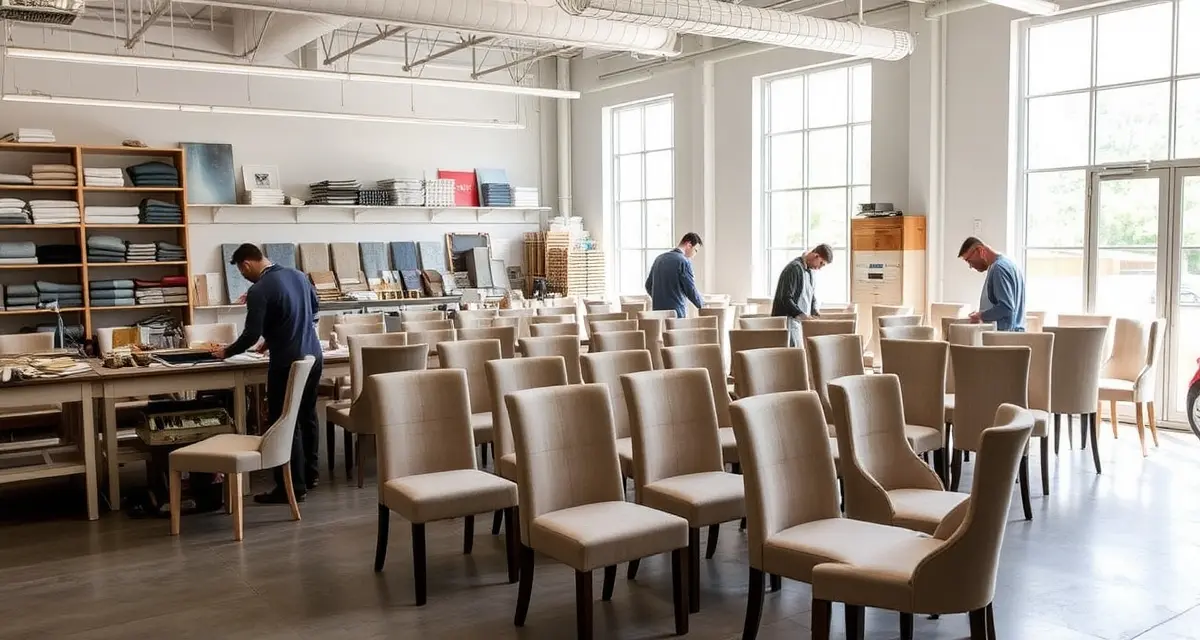
Case Study: Landing a 50-Chair Restaurant Reupholstery Contract
The 50-chair contract generated more revenue than 3 months of residential work, the commercial leverage argument. For one upholstery shop in the Pacific Northwest, landing a restaurant contract was the moment that changed how they thought about what their business could be.
This is the step-by-step account: how the bid came in, how they planned the fabric and timeline, and what they learned.
TL;DR
- Commercial upholstery jobs require fabric with 100,000+ double rubs; standard residential fabric fails quickly in high-traffic environments.
- Contract commercial work typically involves larger yardage quantities, tighter deadlines, and more formal invoicing requirements than residential work.
- Quoting commercial jobs accurately requires understanding the difference between residential and commercial fabric cost and lead time.
- Fire-retardant fabric specifications are common requirements in commercial contracts and must be verified before ordering.
- Multi-location restaurant and hotel chains often require documentation of fabric specification and sourcing for procurement records.
- Commercial clients expect professional invoicing, deposit terms, and written contracts rather than informal arrangements.
How the Contract Came In
The shop wasn't actively pursuing commercial work. The restaurant owner found them through Google Maps, called to ask if they did commercial work, and described the project: 50 dining chairs, all the same style, fabric to be replaced before the restaurant's fifth anniversary reopening.
The shop owner had never done a commercial job at this scale. She'd done 10-15 chairs for a coffee shop two years earlier, but 50 chairs was a different category of commitment.
"My first instinct was to say I couldn't handle it. Then I thought about it and realized the only question was whether I could plan it correctly. The work itself wasn't harder, it was just more of the same work, with a deadline that mattered."
She asked for a week to submit the bid.
Building the Bid
The bid process for a 50-chair contract is different from a residential quote in two ways: the client expects a formal written document, and the price needs to account for commercial margin rather than residential margin.
Measurement: She borrowed a chair from the restaurant to take exact measurements and build her yardage calculation from the actual piece rather than estimates.
Fabric calculation: 50 identical chairs in a single fabric. She calculated 1.3 yards per chair (seat, back, and inside back), times 50 chairs, plus 15% waste allowance for cutting and any defect recovery. Total: approximately 75 yards.
Fabric selection: The restaurant wanted a stain-resistant commercial fabric in a specific burgundy tone. She identified two options from her primary supplier with confirmed Martindale rub counts above 100,000 and requested samples for the client.
Labor calculation: Dining chairs at this style typically took her 45 minutes per chair. For 50 chairs: 37.5 hours of labor. She quoted 40 hours to allow for any complications.
Timeline: She committed to a 4-week turnaround from fabric receipt. The restaurant needed the chairs done 6 weeks from contract signing. This left 2 weeks buffer, which she disclosed in the bid.
Pricing: Total material cost (fabric + foam + supplies): $2,100. Labor at her commercial rate (10% above residential for the contract overhead): $3,200. Total bid: $5,300, plus a $200 rush premium if they needed it in under 3 weeks.
The restaurant signed within 48 hours. They didn't ask for competing bids, the local options were limited and the shop's response time and professional documentation set them apart.
Fabric Planning for Scale
With 75 yards of a single fabric from one dye lot, fabric planning became critical. Commercial jobs require dye lot consistency, chairs upholstered from different dye lots of the same fabric can show visible color differences in certain lighting.
She ordered 80 yards in one order from a single bolt (available from her distributor in that quantity). The extra 5 yards were insurance against defects or cutting errors.
When the fabric arrived, she inspected it for defects across the full length before cutting, a step she added specifically for this job. She found one small defect 12 yards in and documented it. The affected yardage was allocated to cutting waste.
Production Timeline
With 50 identical chairs, she was able to optimize the production schedule in a way that wasn't possible with varied residential work.
Week 1-2: Strip all 50 chairs. Stack frames. Assess and repair frames as needed (4 had loose joints that needed re-gluing). Cut all 50 chair sets of fabric in batch.
Week 2-3: Cover seats and backs in batches of 10.
Week 3-4: Final assembly, quality inspection, and delivery staging.
The batch approach reduced setup and transition time significantly. She estimated the 50-chair job took fewer total hours than 50 individually scheduled residential chairs would have.
Delivery and What Happened Afterward
Delivery was on day 26, 2 days ahead of the committed date. The restaurant installed the chairs before their reopening weekend.
The restaurant owner left a detailed Google review. He also mentioned the shop to two other restaurant owners in his network.
Within 8 weeks of completing the job, the shop had received inquiries from two additional food service operations, both from the original client's referral.
The 50-chair contract had generated $5,300 in revenue. The follow-on commercial work generated in the 12 months after the original job totaled approximately $14,000.
What the Shop Changed After This Job
Added a commercial tier to the pricing structure. Residential pricing and commercial pricing are now formally different, a 10-12% commercial premium that accounts for the coordination overhead, formal documentation, and delivery logistics.
Built a commercial bid template. The documentation from the restaurant bid became the template for all subsequent commercial bids.
Started marketing to commercial clients intentionally. The GBP now lists "commercial seating" as a service. The website has a page specifically for restaurant and hospitality clients.
The commercial upholstery contracts guide covers the bid process in detail. The commercial upholstery yardage planning page covers dye lot management and bulk fabric ordering.
The Owner's Takeaway
"The work wasn't harder. The planning was harder. And I could have done the planning for any job, I just hadn't needed to yet. The lesson for me was that the barrier to commercial work wasn't skill. It was confidence and documentation. Once I knew I could do it, I started looking for the next one."
What fabric specifications are required for commercial upholstery?
Most commercial specifications require a minimum of 100,000 double rubs (Martindale scale) for seating fabric. Fire retardancy to California Technical Bulletin 117-2013 (TB-117) is standard for commercial contract work in most states; some states require additional fire standards. Antimicrobial treatments are common requirements in healthcare settings. Always request and retain the fabric manufacturer's test documentation for any commercial project.
How do I quote a large commercial upholstery contract?
Large commercial contracts require a detailed scope of work, fabric specification list, yardage calculations by piece type, labor rate, and timeline. Break the quote into phases if the project is large. Include terms for schedule changes, fabric substitutions, and what happens if the client-specified fabric is unavailable. A written contract with scope, timeline, payment schedule, and warranty terms is essential for any commercial engagement over a few thousand dollars.
Related Articles
FAQ
Sources
- National Upholstery Association
- Upholstered Furniture Action Council (UFAC)
- Association of Master Upholsterers and Soft Furnishers (AMUSF)
- Business and Institutional Furniture Manufacturers Association (BIFMA)
Get Started with StitchDesk
Commercial upholstery contracts require precise quoting, reliable fabric tracking, and professional documentation that residential-focused tools often lack. StitchDesk handles commercial job management with the same tools it provides for residential work, with no special configuration required. Try StitchDesk free and see how it supports your commercial operations.