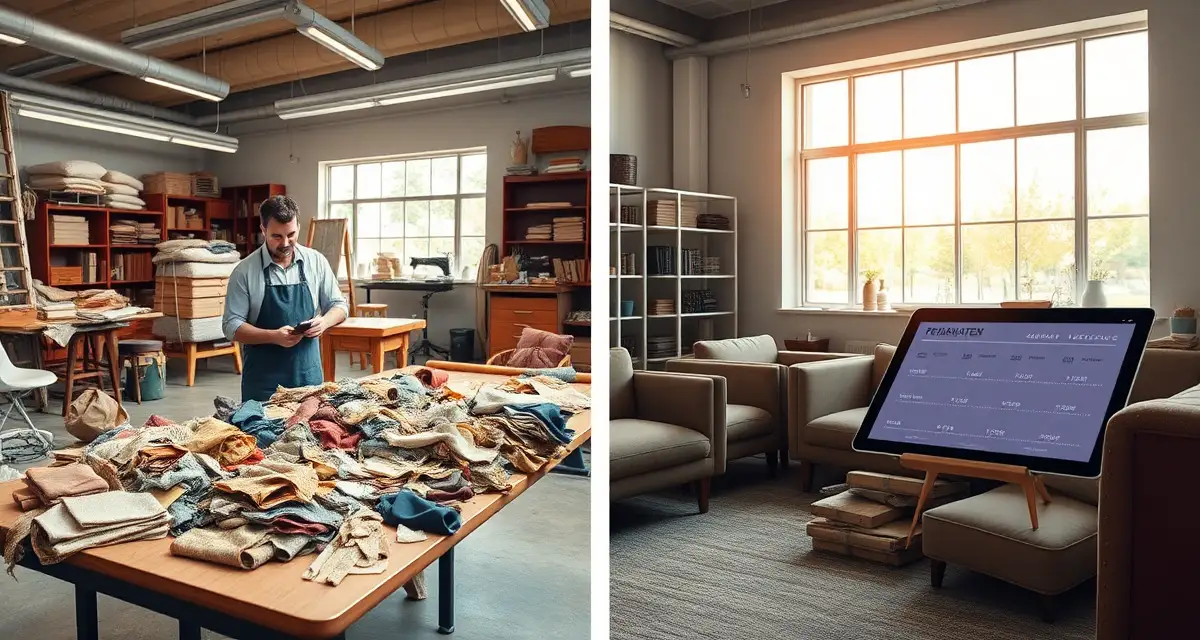
Case Study: How a Residential Shop Reduced Fabric Waste by 60%
Shops with AI fabric calculation reduce shortfall incidents by 65-80% within 30 days of adoption on average. For one residential upholstery shop in the Pacific Northwest, that number was 78%, from an average of 4 shortfall incidents per month to fewer than 1.
This is the story of how they got there, what it cost them, and what changed in practice.
TL;DR
- This guide covers the specific techniques, measurements, and decisions that determine quality outcomes in upholstery work.
- Planning and preparation before cutting begins is the most reliable way to avoid costly errors on any upholstery job.
- Fabric selection, yardage calculation, and structural assessment are the three decisions that most affect the final result.
- Experienced upholsterers develop consistent workflows that ensure quality and efficiency across every job type they handle.
- Documenting job details, material specifications, and client approvals protects both the shop and the client.
- The right tools, materials, and techniques for each job type make a measurable difference in quality and profitability.
The Problem: Shortfalls Were Eating Margin
For the first eight years of operation, the shop's owner estimated fabric yardage the same way she'd learned: a base formula per piece type, adjusted by experience, with a conservative buffer added on top. On most jobs, this worked. On complicated jobs with large pattern repeats or unusual dimensions, it didn't.
"We'd get to the end of a job and be a yard short," she said. "Not every time. Maybe once a week. But when it happened, it always happened at the worst time, when the fabric was from an overseas supplier with a 3-week lead time, or when the bolt was nearly out and we had to reorder and wait for dye-lot matching."
The operational cost of each shortfall was significant:
- A rush reorder from a local supplier typically cost 30-40% above standard pricing
- A standard reorder added 3+ weeks to the job
- Fabric with mismatched dye lots sometimes resulted in free re-covering
Four shortfall incidents per month, averaging $80-150 each in cost premium, added $320-600 monthly in waste. Over a year, that was $3,840-7,200 in recoverable margin.
Beyond the direct cost, the shortfalls disrupted the schedule. Each delayed job pushed back the queue, required client communication, and generated goodwill costs that didn't show up on the fabric invoice.
What Changed: AI Yardage Calculation
The shop started using a job management system with AI-powered fabric yardage calculation. Instead of manual estimation, the tool calculated yardage based on the piece dimensions, fabric width, pattern repeat, and cushion configuration.
The transition required an initial setup period, entering piece dimensions for their most common furniture types and configuring the tool for their standard fabric widths. This took approximately half a day.
The first month revealed two things:
The calculator consistently suggested slightly more yardage than the owner's estimates on complex jobs. On jobs with large pattern repeats, the difference was sometimes 2-3 yards. These suggestions were initially surprising.
When the owner checked her actual usage on completed jobs, the calculator was right. The pattern repeat waste she'd been underestimating was real. The jobs she hadn't had shortfalls on were jobs where she'd been cutting close, she just hadn't noticed because she'd landed on exactly enough.
By month 3, the shop's shortfall rate had dropped to less than one per month. By month 6, some months had none.
The Numbers After 90 Days
| Metric | Before | After 90 Days |
|---|---|---|
| Shortfall incidents per month | 4 | 0.7 |
| Average rush reorder cost premium | $110 |, |
| Monthly cost of fabric shortfalls | $440 | $77 |
| Time per quote (fabric calculation step) | 8 minutes | 2 minutes |
| Client delay incidents due to fabric | 3-4/month | Less than 1/month |
The reduction in client delays had an effect the owner hadn't anticipated: her Google review rate improved. Clients who weren't experiencing unexpected delays left better reviews and were easier to ask for testimonials. The operational improvement had a downstream marketing effect.
What the Owner Says Now
"The piece I didn't expect was the confidence in quoting. Before, I'd add a buffer to my estimate because I wasn't sure. Sometimes the buffer was too small and I'd have a shortfall. Sometimes it was too large and I'd quote more fabric than I needed and the client would wonder if I was padding the quote. Now the number is the number, and it's right."
She also noted that the tool removed an ongoing source of low-level stress. "Fabric shortfalls weren't catastrophic, but they were a recurring problem I had to manage. Every time one happened I had to figure out where to get more fabric, whether the dye lot would match, how to tell the client there was a delay. That's mental overhead that's gone now."
The Broader Impact on Operations
The yardage calculation change had ripple effects beyond just the shortfall rate:
Fabric ordering consolidation. With more accurate per-job yardage, the shop was able to order fabric for multiple jobs at once from the same supplier, reducing the frequency of small individual orders.
Better inventory management. When the calculator showed consistent requirements across similar piece types, the shop could identify which fabrics to keep in stock and which were single-use sourcing.
Faster quoting. The time saved on the manual calculation step compounded across every job. At 5-6 jobs quoted per week, the 6-minute reduction per quote saved approximately 30 minutes of administrative time weekly.
The fabric shortfall prevention guide covers the calculation methodology in detail. If you want to see how the job management system handles fabric calculation, you can explore StitchDesk's features.
Key Takeaways
If you're running a residential upholstery shop and experiencing fabric shortfalls:
- Calculate your actual shortfall frequency and cost. Most shops underestimate this because the costs are spread across multiple line items (rush orders, delays, client credits).
- The primary cause of residential shop shortfalls is pattern repeat underestimation. This is the area where manual calculation consistently falls short.
- AI fabric calculation improves accuracy most on complex jobs, large patterns, unusual dimensions, multi-cushion pieces, which are the exact jobs where shortfalls have the highest cost.
- The time saved on calculation compounds across every quote you send. The shortfall reduction is the headline metric, but the time savings often justify the tool independently.
What are the most common mistakes to avoid in this type of work?
The most common mistakes are underestimating material requirements, starting work before the frame is fully assessed and repaired, and skipping the centering and alignment checks before cutting. Each of these is far more expensive to correct after cutting has begun than to prevent at the planning stage. Taking an extra 15-30 minutes at the assessment and planning stage pays dividends throughout the job.
How do I get the best results from a professional upholsterer?
Come to the consultation with clear measurements, photos of the piece, and an idea of the room's color scheme and intended use. Be specific about how the piece will be used: high traffic, pets, children, or outdoor exposure all affect fabric recommendations. Provide fabric samples or accept guidance on appropriate options for your use case. Approve the proof carefully and ask to see the fabric on the piece before final installation if you are uncertain about a pattern or color choice.
When should I consult a professional rather than doing the work myself?
Consult a professional when the piece has structural issues beyond simple fabric replacement, when the piece has significant financial or sentimental value, or when the fabric or technique (tufting, pattern matching, hand-tacking) requires skills you have not developed. A professional assessment before you begin is free at most shops and can prevent costly mistakes on a piece worth preserving.
FAQ
Sources
- National Upholstery Association
- Association of Master Upholsterers and Soft Furnishers (AMUSF)
- Upholstered Furniture Action Council (UFAC)
- Furniture Today (trade publication)
Get Started with StitchDesk
Running a successful upholstery shop means getting the details right on every job. StitchDesk gives you purpose-built tools for quoting, fabric calculation, job tracking, and client communication, all in one place designed specifically for the trade. Start a free trial and see how StitchDesk supports quality work from intake to delivery.