Upholstery Shop Referral Program: How to Turn Clients into Salespeople
Shops with a formal referral program generate 2 to 3 times more referral leads than shops that rely on organic word of mouth. The difference isn't that one shop does better work, it's that one shop makes the referral process deliberate. Organic word of mouth happens when someone thinks of you at the right moment. A referral program creates that moment on purpose.
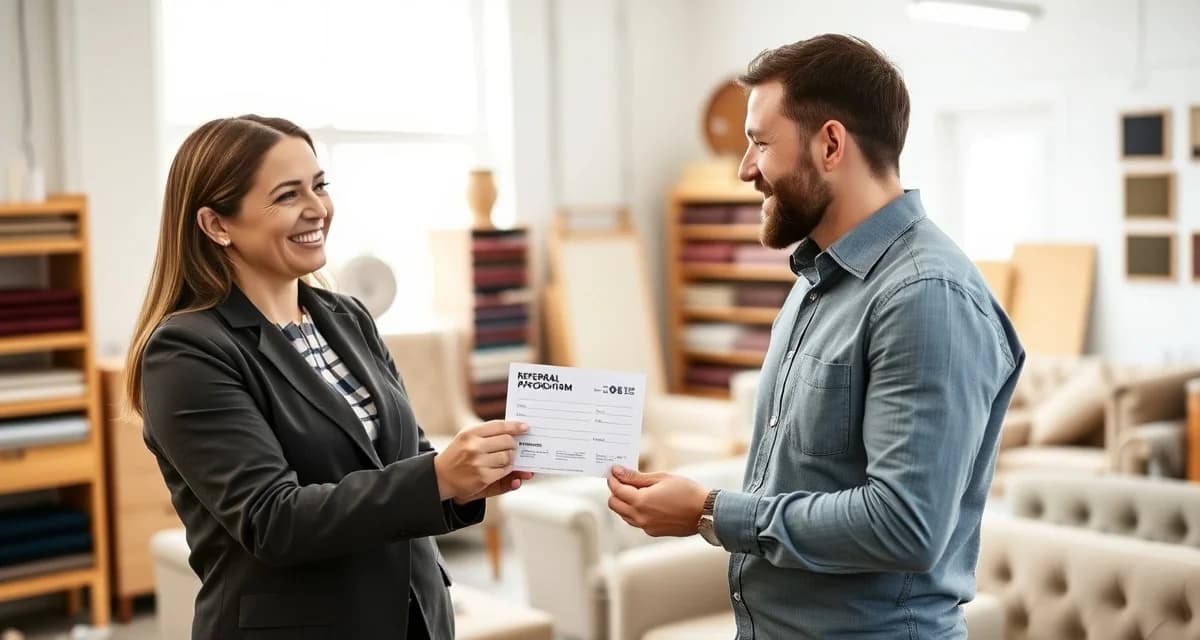
The highest-probability referral trigger is immediately after pickup. The client is holding their finished piece. The transformation is visible. They're excited. That's the moment to make the ask and hand them the mechanism to refer.
TL;DR
- Before-and-after photography is the highest-return marketing investment for an upholstery shop; clients choose shops based on portfolio quality.
- Google Business Profile optimization and review management are the most important local SEO actions for upholstery shops.
- Instagram and Houzz are the most effective platforms for upholstery shops because both are visually driven and interior-design adjacent.
- Referral programs with interior designers and furniture stores generate higher-quality leads than paid advertising for most shops.
- A consistent Google review strategy converts satisfied clients into visible social proof that attracts new clients.
- Most upholstery shops grow fastest through referral quality, not advertising spend: document every job and ask satisfied clients for reviews.
The Referral Program Structure
A referral program has three components: the trigger, the ask, and the incentive.
The trigger: The moment when you make the referral ask. This should always be at pickup, the moment of maximum satisfaction.
The ask: A direct but low-pressure request to refer. It has to be explicit. "If you think of someone who needs upholstery work, we'd love if you'd send them our way" is passive. "Here's our referral card, if you share this with a friend who becomes a client, we'll take $50 off your next job" is specific and actionable.
The incentive: The reason for the client to take action rather than just intend to. Incentives don't have to be large, the goal is to create a concrete, memorable reason to follow through.
Incentive Options
Discount on next job:
10-15% off their next upholstery project per successful referral. This works because it has direct value to repeat clients. Limitations: clients who don't plan to reupholster again soon have no motivation.
Cash credit:
$25-50 credit toward a future job. Similar to the discount but feels more tangible. Works for any future job, not just a specific percentage-off calculation.
Gift card:
$25-50 gift card to a local restaurant, coffee shop, or home goods store. Works for clients who don't have immediate plans for more upholstery. More broadly appealing than a discount on upholstery specifically.
Fabric sample kit:
A curated set of 10-12 fabric swatches from fabrics you love to work with. Low cost to you, high perceived value to a client interested in future reupholstery. The swatches themselves generate future job conversations.
The right choice depends on your client base:
Clients who frequently reupholster or have multiple pieces to do: discount on next job.
One-time clients: gift card or fabric sample kit.
Designer clients: professional recognition (a note, a feature on your social media) plus a discount on a future designer job.
The Referral Card
Give every client a physical referral card at pickup. The card doesn't need to be elaborate:
- Your shop name and logo
- Phone number and website
- "Referred by [Client Name]" field, leave blank for the client to fill in or have them pre-written
- What the referral earns (brief: "Get $50 off your next job when your referral becomes a client")
Cards make the referral tangible. A client who has a card in their wallet or on their fridge is 10x more likely to follow through than one who only received a verbal mention.
If you prefer digital: a simple referral link (even just a text with your number and "Tell them [client name] sent you") is better than nothing.
The Referral Ask at Pickup
Script for the pickup referral ask:
"Your sofa looks great, we're really proud of how this one came out. If you have friends or family with furniture that needs work, we'd love if you'd send them our way. We have a referral card here, if someone you refer becomes a client, we'll give you $50 off your next project. We really appreciate it."
Hand over the referral card as you say this. The physical handoff reinforces the program and gives the client something to hold rather than just remember.
The ask should feel natural, not scripted. The key elements: tell them the specific action (refer someone), the specific benefit (the discount or gift), and give them the mechanism (the card or link).
Tracking Referrals
Keep a referral log. When a new client calls and mentions they were referred by someone, note:
- Who referred them
- Date of the referral job
- Whether it was completed
When the referred job is complete, fulfill the incentive to the referring client:
- Apply the credit to their account for their next job
- Mail or give the gift card
- Acknowledge the referral explicitly: "Just wanted to let you know, [referred client] picked up their chair today. We've added $50 credit to your account. Thank you so much for sending them our way."
The acknowledgment closes the loop and reminds the referring client that the program is real. Clients who receive acknowledgment for a referral are considerably more likely to refer again.
The Designer Referral Program
Designer referrals deserve their own program track. A designer who sends you 2-3 jobs per month is a major revenue source. The program for designers looks different:
- No discount incentive: Discounting a designer's future job prices feels transactional in a way that doesn't suit the professional relationship.
- Priority production slots: Designers appreciate guaranteed fast turnaround on referred client pieces.
- Feature on your social media: Tag the designer when you post a job they referred. This gives them exposure to your followers, a mutual benefit.
- Year-end acknowledgment: A handwritten note or small gift at the holidays acknowledging the relationship. This is relationship management, not incentive marketing, but it builds the loyalty that keeps the referrals coming.
For the broader context of how designer relationships generate the highest-value jobs, the upholstery shop marketing guide covers designer referrals as the top marketing channel by ROI. For building on that initial designer contact into a long-term relationship, see the designer relationship sections in the upholstery shop marketing guide.
Frequently Asked Questions
How do I set up a referral program for my upholstery shop?
Define three elements: the trigger (pickup is always the right moment), the ask (a specific, direct request with the incentive clearly stated), and the incentive (a discount on their next job, a gift card, or a fabric sample kit, choose based on your client base). Create a physical referral card to give at pickup. Keep a referral log so you can track and fulfill incentives. Send an acknowledgment to the referring client when their referral completes a job. Shops with this structure generate 2-3x more referral leads than those relying on organic word-of-mouth.
What incentive should I offer for upholstery referrals?
For repeat clients who regularly reupholster: a discount on their next project (10-15%) or a $25-50 credit toward a future job. For one-time clients: a gift card to a local business they'd enjoy. For clients with future upholstery potential but no immediate plans: a fabric sample kit from your favorite fabrics. The incentive doesn't need to be large, it needs to be concrete and memorable. A vague "we'll take care of you" doesn't generate action. A specific "$50 off your next job" does.
When should I ask clients for referrals?
At pickup, the moment immediately after the client sees the finished piece and before they leave your shop. Client satisfaction peaks at this moment, the visual transformation is fresh, and you're asking while the emotional response is highest. A referral ask at pickup generates far more follow-through than a follow-up email or a mention in an invoice. Hand the client a referral card at the same time as making the ask, the physical card gives them a mechanism to follow through rather than just an intention.
How should I photograph upholstery work for marketing?
Photograph every significant job in consistent, well-lit conditions before delivery. Use natural light from a large window where possible; avoid flash photography which flattens texture. Shoot from the same angle as the 'before' photo so the comparison is clear. Include at least one detail shot showing fabric texture, welt cording, or tufting quality. A consistent before-and-after format across all your portfolio images creates a professional visual identity.
How do I get more Google reviews for my upholstery shop?
Ask every satisfied client at delivery, when their satisfaction is highest and fresh. Make the request easy by sending a direct link to your Google review page via text or email immediately after the handoff conversation. Mention that reviews help other clients find quality upholstery work. Do not offer incentives for reviews, as this violates Google's terms and can result in penalties. Respond to every review, positive and negative, to show that your shop is attentive and professional.
Sources
- National Upholstery Association
- Association of Master Upholsterers and Soft Furnishers (AMUSF)
- Interior Design Society (IDS)
- Furniture Today (trade publication)
Get Started with StitchDesk
The best marketing for an upholstery shop is high-quality before-and-after photography paired with proactive client communication that generates strong reviews. StitchDesk's customer portal and job photo timeline give you the tools to document every job professionally and keep clients informed throughout. Try StitchDesk free and see how it supports your shop's reputation.