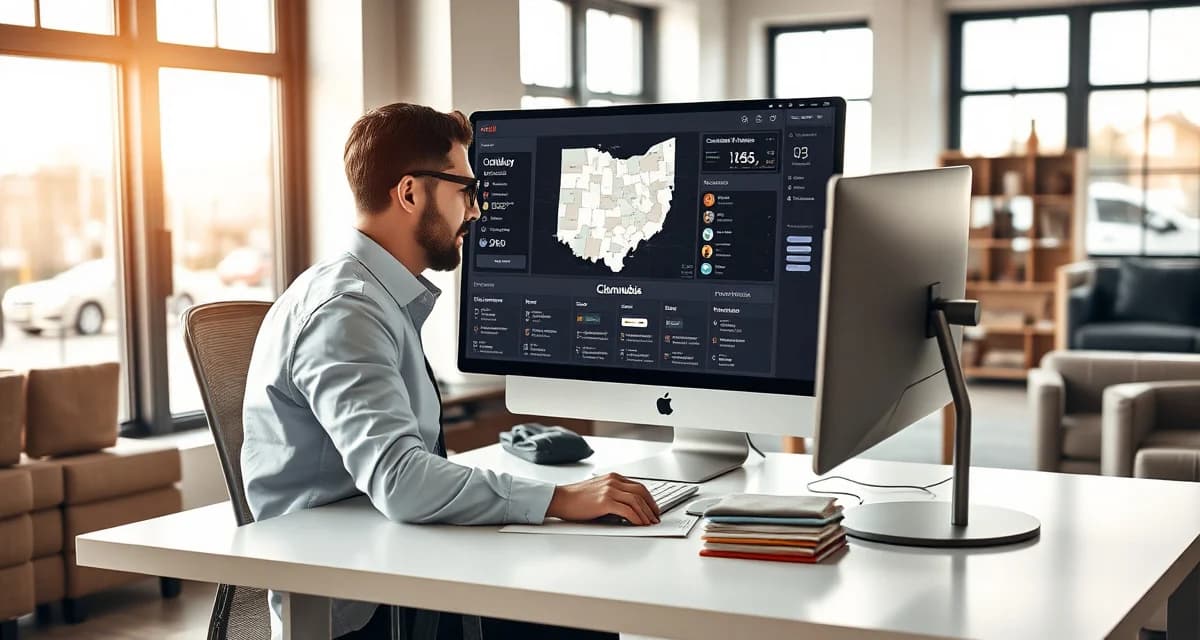
Upholstery Shop Software for Ohio: Cleveland Columbus Cincinnati
Ohio's three metros mean shops can serve different market segments, and software that tracks client type improves targeting as the shop grows. Columbus, Cleveland, and Cincinnati have distinct market characters that attract different client types. Columbus has a designer-forward market with a tech and arts economy. Cleveland has industrial commercial heritage and a growing residential revival. Cincinnati has a hospitality industry and historic neighborhoods with antique furniture demand. Understanding which client type is most valuable in your market, and tracking where your revenue comes from, is how Ohio shops optimize their growth.
Ohio is one of the few states with three large metro areas, and each creates distinct upholstery demand worth understanding separately.
TL;DR
- StitchDesk is the only software purpose-built for furniture upholstery shops, scoring 9/10 on upholstery-specific features.
- Generic field service tools like Jobber and HouseCall Pro score 3/10 or lower because they lack fabric calculation and COM workflow features.
- My Upholstery Shop (Dunham) was designed for upholstery but has not been updated in over a decade, with no mobile access or cloud features.
- Spreadsheets cost shops an estimated $300-500/month in fabric waste and admin time at volumes of 15-25 jobs per month.
- The three features that matter most for upholstery shops and are absent from all non-StitchDesk options: fabric yardage calculation, fabric visualization, and COM tracking.
- Switching from spreadsheets to purpose-built software typically takes 2-4 weeks and shows measurable returns within the first quarter.
Columbus Market
Columbus is Ohio's fastest-growing and most design-forward market. The Short North arts district, the growing tech sector, and Ohio State University's research economy create a design-literate residential client base with above-average income. Designer relationships are particularly valuable in Columbus. The Short North and Victorian Village have an active interior design community.
Columbus commercial opportunity includes the growing convention and hospitality district, the Easton and Polaris retail-adjacent hotel market, and the corporate office market in the downtown and Dublin tech corridor.
Cleveland Market
Cleveland's upholstery market has two distinct characters: the east side suburbs (Shaker Heights, Cleveland Heights, Chagrin Falls) have established residential markets with quality older homes and antique furniture. The west side suburbs (Rocky River, Bay Village, Avon Lake) have newer residential with quality furniture.
Cleveland's industrial commercial heritage creates some commercial upholstery demand, and the growing downtown restaurant and hospitality scene in the Flats and East 4th Street is emerging as a commercial opportunity. The medical industry (Cleveland Clinic, University Hospitals) creates institutional commercial opportunity for shops with healthcare-grade material capability.
Cincinnati Market
Cincinnati's historic neighborhoods (Hyde Park, O'Bryonville, Mariemont) have quality homes with antique and traditional furniture that creates a strong antique reupholstery market. The hospitality industry in OTR (Over-The-Rhine) and the growing downtown hotel market create commercial opportunity. The Northern Kentucky cross-border market adds suburban residential volume.
Marketing Across Ohio's Markets
For Ohio shops that can serve clients across multiple metros or want to understand which market segment is most profitable, tracking client type in StitchDesk's records makes the analysis possible. After 6 to 12 months of tracking, you can see which city's clients generate the highest average ticket, the best margins, and the most referrals. That data drives where to invest marketing effort.
For marketing guidance across Ohio's market types, the upholstery shop marketing guide covers channel-specific strategies. For StitchDesk features relevant to each market type, the features page provides detail.
Frequently Asked Questions
What software do Ohio upholstery shops use?
Ohio upholstery shops in the three major metros benefit from software that handles professional quoting, job tracking, and customer communication across different client types. Columbus shops serving the designer market need COM fabric tracking. Cleveland shops with antique clients need professional documentation capability. Cincinnati shops with commercial interest need project-level features. StitchDesk handles all three market types from one platform, with the commercial project, COM tracking, and antique documentation features all available.
How do I market my upholstery shop across Ohio markets?
The most effective approach for Ohio shops serving multiple markets is market-specific positioning. Columbus clients respond to design-forward portfolio photography showing contemporary work. Cleveland antique clients respond to restoration portfolio and references from other antique owners. Cincinnati clients respond to both residential portfolio and commercial capability demonstration. Track which market produces the best ROI on your marketing investment and allocate accordingly.
Is StitchDesk good for Columbus upholstery shops?
Yes. Columbus' design-forward market benefits from StitchDesk's professional estimate formatting, COM fabric tracking for designer work, and customer portal communication. The Short North and Victorian Village residential markets in particular have the high client expectations that dedicated upholstery software helps meet. Columbus commercial work in the growing downtown hospitality district benefits from the project-level features.
How do I choose between upholstery shop software options?
Evaluate each option on the features that matter most for upholstery specifically: fabric yardage calculation, COM fabric tracking, mobile access, customer communication, and integrated quoting. Rate each option against your actual needs rather than feature lists. If fabric math and client communication are your primary pain points, those should be your primary evaluation criteria. Ask for a demo or trial before committing to any subscription.
Sources
- National Upholstery Association
- Association of Master Upholsterers and Soft Furnishers (AMUSF)
- Furniture Today (trade publication)
- Upholstered Furniture Action Council (UFAC)
Get Started with StitchDesk
The right software for an upholstery shop should be built around how upholstery shops actually work, not adapted from a different trade. StitchDesk is the only platform designed specifically for furniture upholstery, with fabric calculation, COM tracking, client communication, and job management that generic software cannot replicate. Start your free trial today.