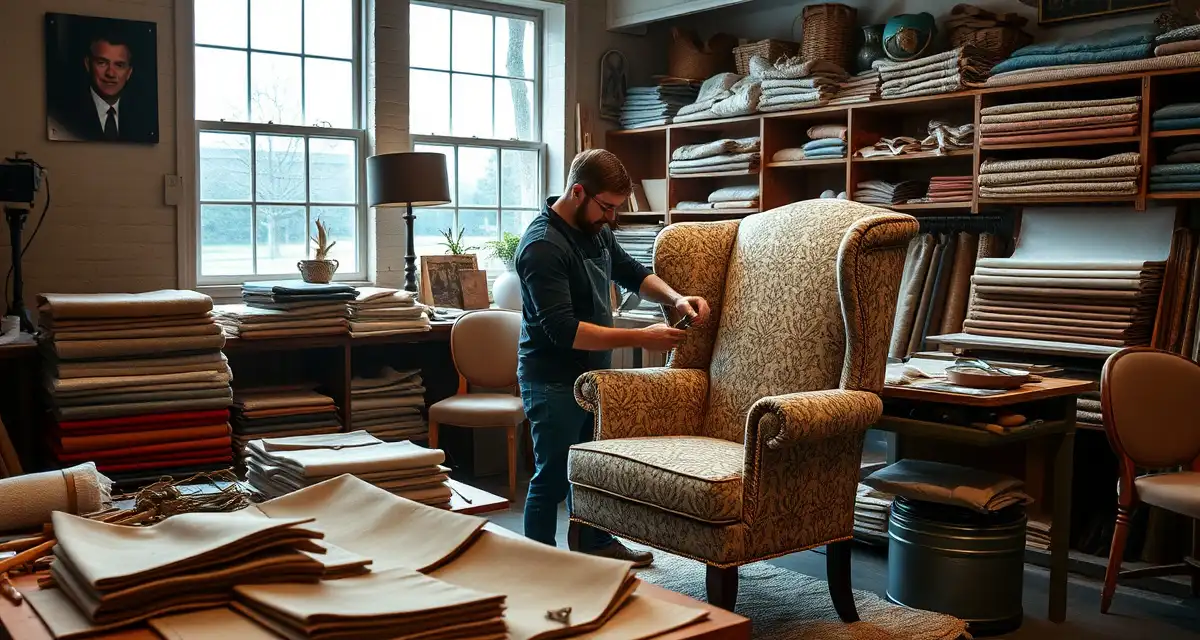
How Much Does Reupholstery Cost?
The real price ranges:
- Dining chair (seat only): $75–$200
- Club chair: $500–$1,100
- Wing chair: $700–$1,400
- Standard sofa (84"): $1,400–$3,500
- Sectional: $2,000–$6,500+
These numbers assume fabric is included. COM (customer's own material) jobs run 30–50% less in labor-only pricing.
TL;DR
- Accurate pricing requires knowing your actual labor rate (overhead + target wage + profit margin), not a rough estimate.
- Most shops undercharge by failing to account for pattern repeat waste, frame repair time, and non-billable admin overhead.
- A documented pricing structure with itemized line items builds client trust and reduces negotiation friction.
- Fabric markup of 20-40% over cost is standard practice in residential upholstery shops.
- Premium work (leather, tufting, custom trim) warrants a premium labor rate, which should be explicit in your quote structure.
- Consistent pricing with clear line items also makes it easier to analyze profitability by job type over time.
What Actually Drives the Price
Three things determine the final cost: labor, fabric, and complexity. Most customers only ask about the total, understanding what's inside the number helps you explain it clearly.
Labor is set by your shop's hourly rate (typically $65–$120/hour in most US markets) multiplied by estimated hours. A dining chair seat takes 30–45 minutes. A sofa takes 18–30 hours. A tufted wing chair with a large pattern can take 20–25 hours.
Fabric cost is yardage × price per yard. A standard performance upholstery fabric runs $12–$25/yard. Designer fabric from a showroom: $35–$90/yard. Some clients bring $150/yard COM from boutique suppliers. At 15 yards for a sofa, that's the difference between a $225 fabric bill and a $2,250 fabric bill on the same piece.
Complexity affects both labor and fabric cost. Pattern matching doubles or triples cutting time. Tufting adds 4–6 hours to a headboard. Antique frames with damaged tack strips add repair time before a single piece of fabric is cut.
Price by Furniture Type
Dining chairs: $75–$200 per chair for seat-only. $150–$350 per chair for fully upholstered. For a set of 6: $450–$2,100 depending on style and fabric.
Club chair: Labor $300–$600. Fabric 4.5–6 yards × $15–$35 = $68–$210. Total with fabric: $500–$1,100. Wing chair runs $700–$1,400.
Standard sofa (84", 3-cushion): Labor $700–$1,500. Fabric 15–20 yards × $15–$35 = $225–$700. Total: $1,400–$3,500. In a designer fabric at $60/yard, fabric alone is $900–$1,200.
Sectional: Labor $1,200–$2,800 for an L-shape. Fabric 25–40 yards (plain) × $15–$35 = $375–$1,400. Total: $2,000–$5,000+ for an L-shape. U-shapes and larger configurations run $4,000–$8,000.
Headboard: Labor $150–$350. Fabric 2.5–4.5 yards × $15–$35 = $38–$158. Total: $250–$600 for most headboards. Tufted velvet headboards: $450–$900.
Reupholstery vs. New Furniture
The math usually favors reupholstery for quality pieces. A solid wood frame sofa from the 1980s or earlier was built better than most new furniture under $2,000. Reupholstering a well-built frame at $1,800 total gives you a piece that will last another 20 years with different fabric. Buying a new $1,800 sofa gives you a new sofa, usually with a particleboard frame and springs that will wear out faster than the original piece.
Where new furniture wins: when the frame is compromised (broken spring unit, cracked frame, significant foam degradation in the structure), or when the original piece is low quality and not worth the labor investment.
The honest conversation with a client: "This frame is worth reupholstering because the structure is sound. You're paying for new fabric and new foam, the frame you already have is better than what you'd get at the same price point in new furniture."
COM and How It Changes the Price
When a client supplies their own fabric, the shop charges labor only plus any shop-supplied materials (foam, batting, tack strip, cambric, thread). Labor-only pricing is typically 40–60% of the full project price.
The catch: COM jobs require more communication upfront. The shop needs to verify the fabric is appropriate for the application, that the yardage is sufficient, and that the client understands they're responsible for additional fabric if there's a shortfall or damage.
A solid COM intake process, including yardage verification before job acceptance, protects both parties. StitchDesk's quote flow includes a COM verification step that calculates whether the client's yardage is sufficient and documents the result in the quote.
Related Articles
- How Much Does It Cost to Reupholster an Ottoman? 2025 Guide
- How Much Does It Cost to Reupholster a Sectional? 2025 Guide
FAQ
Why does reupholstery cost so much?
Reupholstery is skilled hand labor done piece by piece. A sofa reupholstery takes 18–30 hours of a craftsperson's time. At $65–$100/hour, that's $1,170–$3,000 in labor alone before materials. There are no economies of scale, your sofa is being done as a unique piece, not assembled on a production line. The fabric and materials cost is on top of that. For a quality piece, this investment is reasonable and produces a result that outlasts mass-produced furniture.
How do upholstery shops price jobs?
Most shops price by piece type and complexity, not strictly by the hour. A shop might quote a standard sofa at a flat price that represents their average labor time plus standard fabric markup. For unusual pieces or complex work (heavy tufting, antique frame repair, very large sectionals), shops typically quote time-and-materials or flat price with a complexity adjustment. Shops using StitchDesk generate quick visual quotes in under 5 minutes, the system outputs a professional quote with line items that the client can review.
Is it cheaper to reupholster or buy new furniture?
For quality original frames, solid wood construction, 8-way hand-tied springs, pieces from before the 1990s in most cases, reupholstery is usually the better value. You're getting a better frame than you'd get in new furniture at the same price point. For pieces with particleboard frames or failing structures, new furniture is the more economical choice. A good upholstery shop will give you an honest assessment of whether the frame is worth reupholstering.
How do I handle clients who want to negotiate the price?
The most effective response to price negotiation is to explain what the price covers, not to simply lower it. Walk the client through the labor time, fabric cost, and any structural work required. If the client needs a lower price, offer to adjust the scope (simpler fabric, no welt cording, tight seat instead of loose cushion) rather than discounting the same work. Discounting without scope changes devalues your labor and creates an expectation of discounting on future jobs.
Sources
- National Upholstery Association
- Association of Master Upholsterers and Soft Furnishers (AMUSF)
- Upholstered Furniture Action Council (UFAC)
- Furniture Today (trade publication)
Get Started with StitchDesk
Pricing confidence comes from knowing your actual costs and communicating them clearly in every quote. StitchDesk helps upholstery shops build detailed quotes, track job costs against estimates, and develop pricing that protects margins across every job type. Try StitchDesk free and bring precision to your pricing.