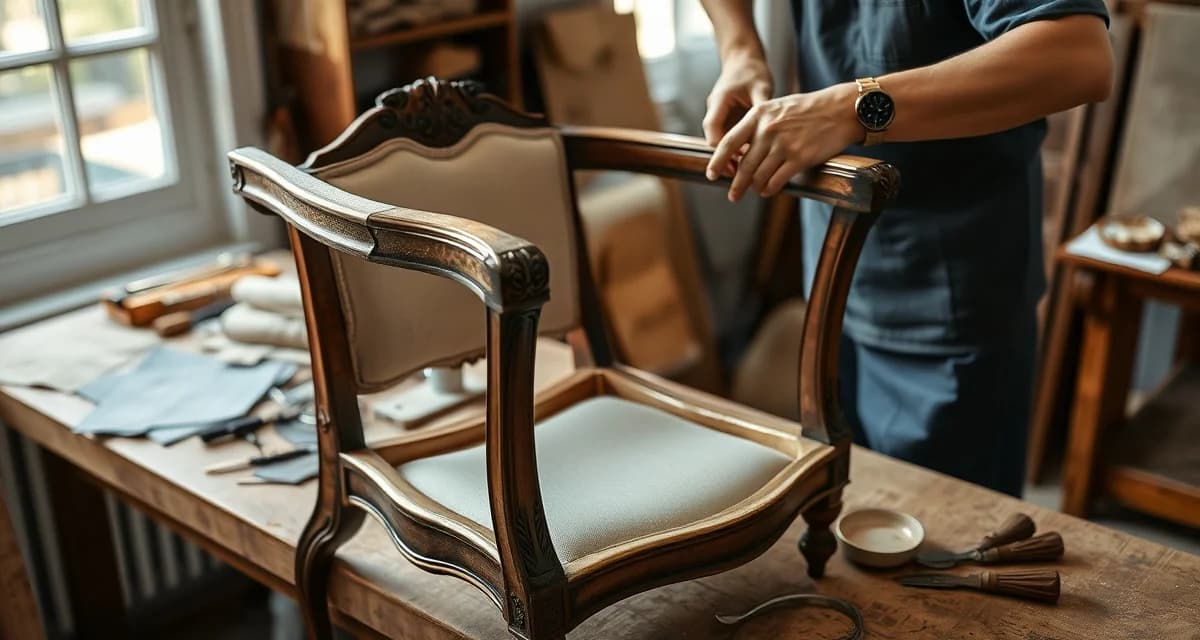
How Much Does It Cost to Reupholster an Antique Chair?
Antique chair reupholstery averages 40 to 80 percent more than modern chairs due to technique and material requirements. A standard modern wingback chair might cost $350-600 to reupholster. The same style in a genuine Victorian antique runs $500-900 or more, depending on whether the springs need retying, the frame needs restoration, and whether period-appropriate materials are specified.
The premium isn't arbitrary. It reflects real labor: hand tacking instead of stapling (slower), coil spring retying instead of foam replacement (specialized), and fabric selection that fits the period (often more expensive per yard).
TL;DR
- Accurate pricing requires knowing your actual labor rate (overhead + target wage + profit margin), not a rough estimate.
- Most shops undercharge by failing to account for pattern repeat waste, frame repair time, and non-billable admin overhead.
- A documented pricing structure with itemized line items builds client trust and reduces negotiation friction.
- Fabric markup of 20-40% over cost is standard practice in residential upholstery shops.
- Premium work (leather, tufting, custom trim) warrants a premium labor rate, which should be explicit in your quote structure.
- Consistent pricing with clear line items also makes it easier to analyze profitability by job type over time.
What Drives the Cost of Antique Chair Reupholstery
Frame repair labor: Many antique chairs arriving for reupholstery need frame work first. Loose joints, cracked rails, and broken corner blocks need to be reglued and reclamped before any fabric goes on. Budget $50-200 for frame repair on an antique chair that needs it.
Spring retying: Victorian and earlier chairs with original coil springs benefit from retying rather than replacement. Retying labor runs $75-150 for a standard parlor chair spring deck. This preserves the original character of the piece.
Hand-tacking premium: Period-appropriate hand tacking instead of modern staple guns adds 1-2 hours to a standard chair job. At typical shop rates of $65-85/hour, that's $65-170 in additional labor.
Horsehair or cotton stuffing: If the client wants period-appropriate materials, horsehair stuffing costs $80-150 more than foam for a standard chair seat. Quality cotton batting is a middle option at $30-60 more than foam.
Period fabric premium: Victorian brocade, damask, and similar period fabrics typically cost $35-70 per yard, compared to $15-35 for standard residential performance fabric. A Victorian parlor chair using 4-5 yards of period brocade adds $100-175 in material cost vs standard fabric.
Price Ranges by Antique Chair Type
Victorian parlor chair (upholstered seat and back):
- Standard technique, period fabric: $450-700
- Period technique (hand tacking), period fabric: $550-900
- Period technique, horsehair stuffing, premium brocade: $700-1,200+
Victorian wingback chair:
- Standard technique, period fabric: $550-850
- Period technique, period materials: $750-1,200
Windsor or ladder-back chair with upholstered seat pad only:
- Standard technique: $120-200
- Period technique: $150-250
Empire-style armchair (full frame):
- Standard technique: $500-800
- Period technique with original spring restoration: $650-1,100
Victorian settee (two-seat):
- Standard technique: $750-1,200
- Period technique, period materials: $1,000-1,800
What Affects the Upper End of the Range
Several factors push antique reupholstery toward the higher end of price ranges:
Spring complexity: A fully intact 8-way coil spring deck that needs retying takes considerably more labor than a simple seat with foam replacement.
Carved show-wood frames: Antique chairs with ornate carved wood frames require hand stitching at frame interfaces rather than stapling, and every section near carved wood is more difficult to finish cleanly.
Original stuffing restoration: Restoring original horsehair stuffing (rather than replacing) is more labor-intensive than putting in new foam.
Custom fabric sourcing: Period-accurate reproduction fabrics sometimes need to be sourced from specialty suppliers with longer lead times and minimum order quantities.
Is It Worth Reupholstering an Antique Chair?
An antique chair worth reupholstering has: solid hardwood frame (oak, walnut, mahogany), hand-crafted joinery, original decorative details, or documented provenance. These factors maintain or increase the chair's value through quality reupholstery.
An antique chair not worth reupholstering has: structural damage that would cost more to fix than the chair is worth, a frame made of secondary wood without decorative merit, or no collectible significance.
A quick value check: a Victorian parlor chair in good condition with quality reupholstery is worth $350-800+ depending on style and maker. The reupholstery cost for quality period-appropriate work is $550-900. That's a tight but often positive value case, especially for family pieces with sentimental value.
For technique details on period-appropriate antique reupholstery, see the antique furniture reupholstery guide.
Frequently Asked Questions
How much to reupholster an antique chair?
Antique chair reupholstery ranges from $350-1,200+ depending on chair style, frame condition, and material choices. A standard Victorian parlor chair with period-appropriate technique and fabric typically costs $550-900. Period materials (horsehair, quality brocade) and additional frame repair push prices toward the upper end. The 40-80% premium over modern chair reupholstery reflects the additional labor for hand tacking, spring retying, and sourcing period fabrics.
Why is antique chair reupholstery more expensive?
Three factors drive the premium: hand tacking instead of stapling takes 1-2 additional hours, spring retying on original coil spring decks is a specialized skill that takes longer than modern foam replacement, and period-appropriate fabric (damask, brocade, velvet) typically costs more per yard than performance alternatives. For pieces where preserving value matters, these costs are justified by the outcome.
Is an antique chair worth reupholstering?
Yes, if: the frame is solid hardwood with good joints, the chair has decorative value (carved details, quality woodwork), the piece has sentimental or collectible significance, or the reupholstery cost is reasonable relative to the chair's finished value. No, if: the frame has structural damage that costs more to repair than the chair is worth, or the piece has no collectible or sentimental value that justifies premium treatment. A quality upholsterer can help you assess which situation you're in.
How do I set an hourly labor rate for my upholstery shop?
Start with your actual cost per hour: divide total monthly overhead (rent, utilities, insurance, supplies, equipment) by your billable hours per month, then add your target wage per hour. Apply a profit margin of 20-35% on top of that base. Most residential upholstery shops in 2025 bill $65-120/hour depending on location and specialization. Urban markets and shops specializing in antiques or premium leather command the higher end of that range.
How do I handle clients who want to negotiate the price?
The most effective response to price negotiation is to explain what the price covers, not to simply lower it. Walk the client through the labor time, fabric cost, and any structural work required. If the client needs a lower price, offer to adjust the scope (simpler fabric, no welt cording, tight seat instead of loose cushion) rather than discounting the same work. Discounting without scope changes devalues your labor and creates an expectation of discounting on future jobs.
Sources
- National Upholstery Association
- Association of Master Upholsterers and Soft Furnishers (AMUSF)
- Upholstered Furniture Action Council (UFAC)
- Furniture Today (trade publication)
Get Started with StitchDesk
Pricing confidence comes from knowing your actual costs and communicating them clearly in every quote. StitchDesk helps upholstery shops build detailed quotes, track job costs against estimates, and develop pricing that protects margins across every job type. Try StitchDesk free and bring precision to your pricing.