How to Price Leather Upholstery: Hide Cost and Labor Guide
Shops that charge leather as square footage rather than hides consistently undercharge for hide waste, a 15-25% pricing gap. Leather pricing works differently from fabric pricing. Understanding how to calculate from hides rather than yards is what prevents systematic underpricing on leather jobs.
TL;DR
- Accurate pricing requires knowing your actual labor rate (overhead + target wage + profit margin), not a rough estimate.
- Most shops undercharge by failing to account for pattern repeat waste, frame repair time, and non-billable admin overhead.
- A documented pricing structure with itemized line items builds client trust and reduces negotiation friction.
- Fabric markup of 20-40% over cost is standard practice in residential upholstery shops.
- Premium work (leather, tufting, custom trim) warrants a premium labor rate, which should be explicit in your quote structure.
- Consistent pricing with clear line items also makes it easier to analyze profitability by job type over time.
Why Leather Is Priced by Hide, Not by Yard
Fabric comes on a bolt with consistent width, uniform dye lot, and predictable usable area per yard. You order exactly what you need plus a waste margin.
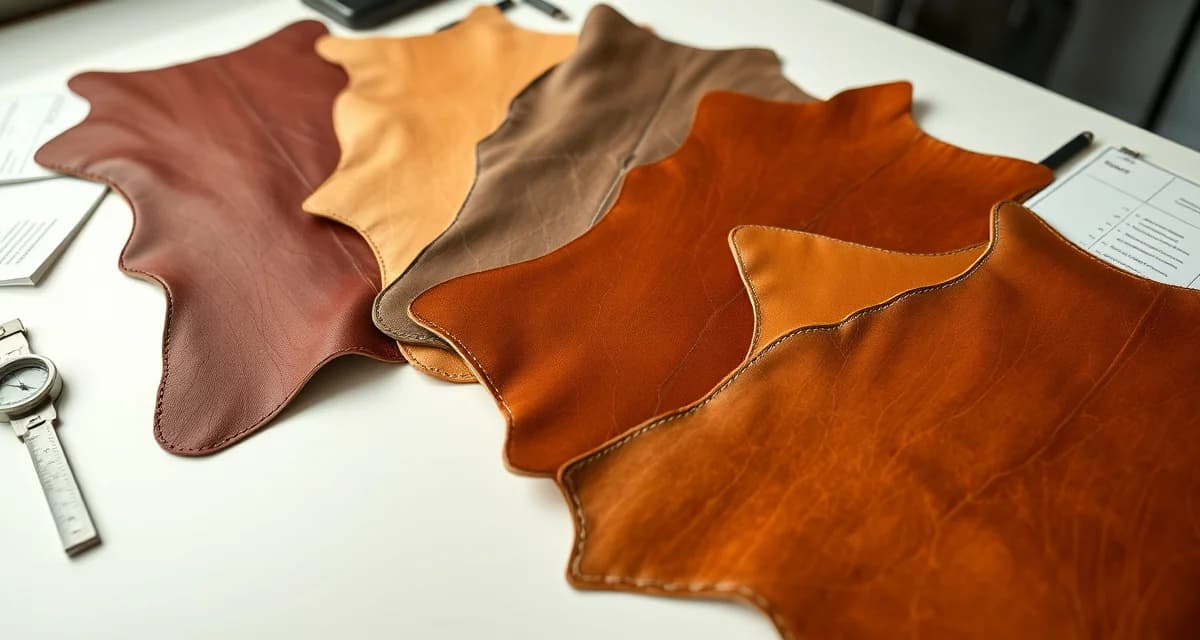
Leather hides are organic, irregularly shaped, and vary in usable area. Each cowhide averages 45-55 square feet but with significant variation, some hides run 40 sq ft, some run 65. The hide also has natural markings, brand marks, and edge irregularities that require selective cutting around. The usable area is always less than the hide's total area.
This waste dynamic makes yardage-equivalent calculations inaccurate. A shop that estimates leather at "equivalent to 14 yards of fabric" and prices accordingly misses the actual hide count and waste overhead.
The Hide-to-Quote Workflow
Step 1: Calculate coverage needed
Measure the piece by surface area. For a standard sofa, measure each surface area you're covering: seat, back, inside arms, outside arms, seat cushions, back cushions. Total the square footage.
Standard residential sofa: 18-22 square feet of coverage needed.
Larger sectional: 30-45 square feet.
Dining chair (seat and back): 3-5 square feet per chair.
Step 2: Add waste factor
Leather requires 20-30% waste allowance for:
- Hide shape irregularities (the edges taper and can't always be used)
- Natural defects that require cutting around
- Skiving (thinning leather at seam areas, which generates waste)
- Matching grain direction on visible panels
Coverage needed + 25% = total square footage to source.
For a sofa needing 20 sq ft: 20 x 1.25 = 25 sq ft total.
Step 3: Convert to hide count
Average hide: 50 sq ft. At 50 sq ft per hide:
- 25 sq ft needed = 1 hide (with remainder)
- 40 sq ft needed = 1 hide (may be tight, evaluate individual hide sizes)
- 55 sq ft needed = 2 hides
When in doubt, round up. Running short on a leather job mid-production is expensive, matching grain and color from a new hide is difficult.
Step 4: Price the hides
Leather grades vary significantly:
- Top-grain leather: $8-18 per square foot at wholesale
- Full-grain leather: $12-25 per square foot
- Corrected-grain leather: $5-10 per square foot
Price by hide count at your wholesale rate, then apply your markup (typically 25-40% on leather, lower than fabric because clients are more price-aware at these amounts).
Step 5: Add the 30% labor premium
Base your labor rate on the piece style (Lawson sofa, wing chair, dining chair), then add 30% for leather-specific work:
- Full hide layout before cutting (each hide must be spread and mapped before any cuts)
- Skiving seam areas (thinning the leather edge so seams lie flat)
- No pins technique (pins leave permanent holes; all fabric positioning uses clips or chalk only)
- Specific needle size (leather needles are different from fabric needles; incorrect needles damage the hide)
- Thread weight (leather requires heavier thread for seam integrity)
If your base labor for a sofa is $600, the leather rate is $780.
Full Leather Sofa Quote Example
Standard 3-cushion Lawson sofa, top-grain leather at $12/sq ft wholesale:
| Component | Calculation | Amount |
|---|---|---|
| Coverage needed | 20 sq ft |, |
| With 25% waste | 25 sq ft |, |
| Hides (at 50 sq ft avg) | 1 hide, 50 sq ft |, |
| Leather cost | 50 sq ft x $12 | $600 |
| Leather at 30% markup | $600 x 1.30 | $780 |
| Supplies (thread, hardware) | Standard | $60 |
| Labor (base sofa) | $600 | $600 |
| Leather labor premium (30%) | $600 x 0.30 | $180 |
| Total | | $1,620 |
How to Present Leather Pricing
Clients choosing leather usually expect it to be expensive. Don't apologize for the price. Present it as what it is: premium material with premium craft.
"Leather is priced by the hide rather than by the yard because each hide is unique. For your sofa, we'll use one full hide at [grade], that's what gives you the consistent grain and color across the whole piece. The labor rate for leather is slightly higher because we do a full layout before cutting and use specific technique at the seams."
The explanation is confident and specific. Clients who've chosen leather respond well to the craft narrative.
The leather upholstery complete guide covers the craft details. The how to price reupholstery jobs guide has the complete pricing methodology.
FAQ
How do I price leather upholstery?
Use the hide-to-quote workflow: calculate coverage needed by surface area, add 20-25% for waste, convert to hide count, price by hide at your markup, and add a 30% labor premium to your base rate. Never price leather at yardage equivalents, hide waste makes this systematically inaccurate. The typical leather labor premium compensates for full hide layout before cutting, skiving at seam areas, no-pin technique, and specific thread and needle requirements.
How do I calculate hide cost in a leather quote?
Calculate total square footage needed (coverage plus 20-25% waste), divide by average hide size (typically 45-55 sq ft), and round up to the next whole hide. Price at your wholesale rate per square foot for that grade of leather, then add your markup. For a standard sofa needing 25 sq ft at $12/sq ft wholesale, the cost is $300 per hide at that grade. At 30% markup, the client pays $390 for the leather material component.
Should I charge more labor for leather upholstery?
Yes. Add a 30% labor premium to your base rate for the piece style. Leather requires more labor at every stage: a full hide layout session before cutting to map usable areas and grain patterns, skiving (thinning the edge) at all seam areas so seams lie flat, no-pin positioning throughout the job (pins leave permanent holes), and specific needle and thread selection. These requirements add 30% to the time of a comparable fabric job. Shops that don't charge this premium lose $100-200 per leather job in unpaid labor time.
How do I set an hourly labor rate for my upholstery shop?
Start with your actual cost per hour: divide total monthly overhead (rent, utilities, insurance, supplies, equipment) by your billable hours per month, then add your target wage per hour. Apply a profit margin of 20-35% on top of that base. Most residential upholstery shops in 2025 bill $65-120/hour depending on location and specialization. Urban markets and shops specializing in antiques or premium leather command the higher end of that range.
How do I handle clients who want to negotiate the price?
The most effective response to price negotiation is to explain what the price covers, not to simply lower it. Walk the client through the labor time, fabric cost, and any structural work required. If the client needs a lower price, offer to adjust the scope (simpler fabric, no welt cording, tight seat instead of loose cushion) rather than discounting the same work. Discounting without scope changes devalues your labor and creates an expectation of discounting on future jobs.
Sources
- National Upholstery Association
- Association of Master Upholsterers and Soft Furnishers (AMUSF)
- Upholstered Furniture Action Council (UFAC)
- Furniture Today (trade publication)
Get Started with StitchDesk
Pricing confidence comes from knowing your actual costs and communicating them clearly in every quote. StitchDesk helps upholstery shops build detailed quotes, track job costs against estimates, and develop pricing that protects margins across every job type. Try StitchDesk free and bring precision to your pricing.