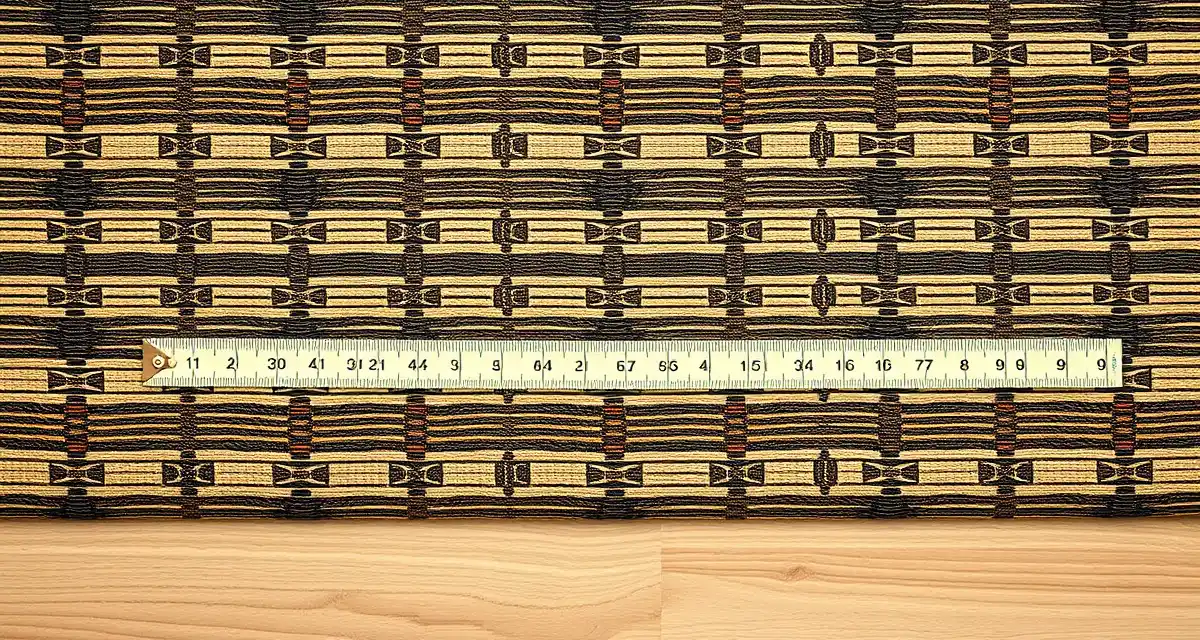
Horizontal Pattern Repeat Calculation for Upholstery: Step by Step
Horizontal-only repeats of 9-13 inches add 1.5-3 yards to a sofa. That's a consistent underestimate from shops that treat horizontal repeats the same way they treat vertical repeats, or don't treat them at all.
Most content on pattern repeats combines horizontal and vertical without explaining how they work differently. This guide focuses specifically on horizontal pattern repeat calculation for upholstery.
TL;DR
- Pattern repeat is the most common source of fabric waste and yardage underestimation in upholstery shops.
- Each cutting zone on a piece must start at the same point in the repeat, meaning waste accumulates across every panel.
- A 27-inch vertical repeat on a 3-cushion sofa can add 4-6 yards of fabric over the same sofa in plain fabric.
- Horizontal and vertical repeats must both be planned; a plaid or geometric with both adds more waste than a single-axis repeat.
- Pattern centering decisions (where the motif falls on the seat face) should be made at the quoting stage, not after cutting begins.
- Always quote pattern repeat work with a zone-by-zone calculation, not a flat percentage buffer.
What Is a Horizontal Pattern Repeat?
The horizontal pattern repeat is the distance across the fabric width from one point in the pattern to the next identical point. On a striped fabric, the horizontal repeat is the stripe unit width. On a geometric, it's the distance across one complete geometric pattern cell. On a floral, it's how far across the fabric you have to move to find the same flower in the same position.
Horizontal repeats affect how panels align side by side, not how much fabric you use running down the bolt.
Here's the key distinction: a vertical repeat (along the bolt length) adds yardage because you need extra fabric length to get each piece to start at the right repeat position. A horizontal repeat affects how you position pieces across the fabric width and whether pieces can be cut side by side or must be offset horizontally.
When Horizontal Repeats Add Yardage
Horizontal repeats add yardage in two situations:
1. Wide pieces wider than one repeat unit: If your sofa inside back is 80 inches wide and the horizontal repeat is 13 inches, the inside back contains approximately 6 horizontal repeat units. All 6 must be properly placed and centered (or aligned to a natural break). This usually works out fine, the horizontal repeat is within the existing fabric width.
2. Pattern centering requirement: If the pattern must be centered on a panel, and the center of the panel falls at an awkward point in the horizontal repeat, you may need to shift the panel horizontally to center a motif. This horizontal shift creates waste at the side edges.
And then there's the third situation that's most commonly missed:
3. Adjacent panels that must align horizontally: On a sofa where the inside back and the inside arm panels meet at a seam, the horizontal pattern must match at that seam. This means the arm panel can't start just anywhere in the horizontal repeat, it must start at the specific point that aligns with where the inside back ends.
This seam-to-seam alignment requirement is what drives horizontal repeat yardage waste.
Side-by-Side Example: Horizontal-Only vs Combined Repeat
Scenario: Standard 3-cushion sofa, fabric with 13-inch horizontal repeat only (no vertical repeat), solid color but with a horizontal stripe pattern.
Without repeat consideration: The inside back (80 inches wide) and inside arm (22 inches wide) are cut side by side from the 54-inch width. They don't fit side by side (80 + 22 = 102 inches > 54 inches), so they're cut on separate lengths. No alignment issue because it's a "solid" color with no repeat.
Wait, that's the same answer whether or not there's a horizontal repeat on a simple solid color fabric with no repeat-dependent alignment requirement. The horizontal repeat matters specifically when:
- The pattern has a defined horizontal repeat that must be matched at seams
- Two panels that join at a seam (like inside back to outside arm) must have continuous pattern across the seam
The Real Horizontal Repeat Calculation
For a sofa where the inside back meets the inside arm at a continuous visible seam:
Step 1: Measure where the pattern falls at the end of the inside back panel (the seam edge).
Step 2: Position the inside arm panel so its starting edge pattern matches the inside back's ending edge pattern.
Step 3: Calculate where on the bolt the arm panel must start, if the match point falls 8 inches into a 13-inch repeat, you lose 8 inches of fabric between where the back panel ended and where the arm panel must begin.
Step 4: Calculate this offset for every seam where adjacent panels must match horizontally.
For a sofa with 6 visible horizontal panel junctions, each with an average 6-7-inch offset waste on a 13-inch repeat:
- 6 junctions × 6.5 inches = 39 inches = 1.08 yards of horizontal alignment waste
The pattern repeat guide upholstery has a complete treatment of both horizontal and vertical repeats together. Use the pattern repeat calculator upholstery to calculate both simultaneously for any patterned job.
Horizontal Repeats in Practice
For stripes, the horizontal repeat is typically easy to work with. Stripes that run vertically (warp stripes) have a clear horizontal repeat and matching at seams is straightforward, align the corresponding stripe at each seam.
For geometrics with horizontal AND vertical repeats, calculate both effects independently and add them together. The horizontal effect from panel-to-panel seam alignment waste is separate from the vertical effect of having to start each piece at the right point in the bolt length.
How Much Extra Fabric a 13-Inch Horizontal Repeat Adds
For a standard 3-cushion Lawson sofa:
- Horizontal alignment waste at back-to-arm junctions: 1-1.5 yards
- Horizontal alignment waste at arm-to-front border junction: 0.25-0.5 yards
- Centering premium if required: 0.5-1 yard
- Total horizontal repeat extra: 1.5-3 yards
Add this to any vertical repeat waste for the total pattern premium.
Related Articles
FAQ
What is a horizontal pattern repeat in upholstery?
A horizontal pattern repeat is the distance across the fabric width from one point in the pattern to the next identical point. It determines how the pattern falls across the width of a panel and how adjacent panels align at seams. Horizontal repeats create extra yardage waste when panels that share a seam must match at the seam, the fabric between one panel's seam edge and the next matching point in the repeat is waste.
How do I calculate yardage for a horizontal pattern repeat?
Identify each seam where adjacent panels must match horizontally (back to arm, arm to front, etc.). For each such seam, the average waste is half the repeat size (in the worst case, you waste almost a full repeat; in the best case, the panels align perfectly). Average this over your 5-8 horizontal seam junctions and multiply by the number of junctions. For a 13-inch repeat with 6 junctions: approximately 6.5 inches average waste × 6 junctions = 39 inches = 1.1 yards extra.
How much extra fabric does a 13-inch horizontal repeat add?
A 13-inch horizontal repeat adds approximately 1.5-3 yards to a standard sofa, depending on the number of horizontal panel junctions and whether centering is required. This is on top of any vertical repeat waste, if the fabric also has a 13-inch vertical repeat, the combined pattern waste is 3.5-5 yards on a sofa. Always calculate horizontal and vertical repeat effects separately and sum them for the total pattern premium.
How do I calculate yardage for a large pattern repeat?
Calculate each cutting zone separately. For each zone, round up to the next full repeat. Sum the adjusted zones and add a 15-20% buffer. For a 27-inch repeat, a seat cushion panel that measures 22 inches still requires a full 27-inch repeat allocation, wasting 5 inches. Multiply this across 8-12 zones on a sofa and the waste adds up to 4-6 yards over the plain-fabric calculation. Zone-by-zone calculation is the only reliable method.
Should I charge extra for pattern repeat work?
Yes. Pattern repeat work adds material cost (extra yardage) and labor cost (planning time, careful alignment during cutting and installation). Both should be reflected in the quote. For clients providing COM fabric with a pattern repeat, calculate and communicate the additional yardage requirement before accepting the fabric. For shop-supplied fabric, build the pattern repeat waste into your material cost and add a pattern complexity labor charge.
Sources
- National Upholstery Association
- Association of Master Upholsterers and Soft Furnishers (AMUSF)
- Upholstered Furniture Action Council (UFAC)
- Furniture Today (trade publication)
Get Started with StitchDesk
Pattern repeat work is where fabric errors are most common and most costly. StitchDesk's yardage calculator handles pattern repeats zone by zone, not as a flat buffer, so your quotes for patterned fabric are accurate before the first cut. Start a free trial and eliminate the most expensive source of fabric waste in your shop.