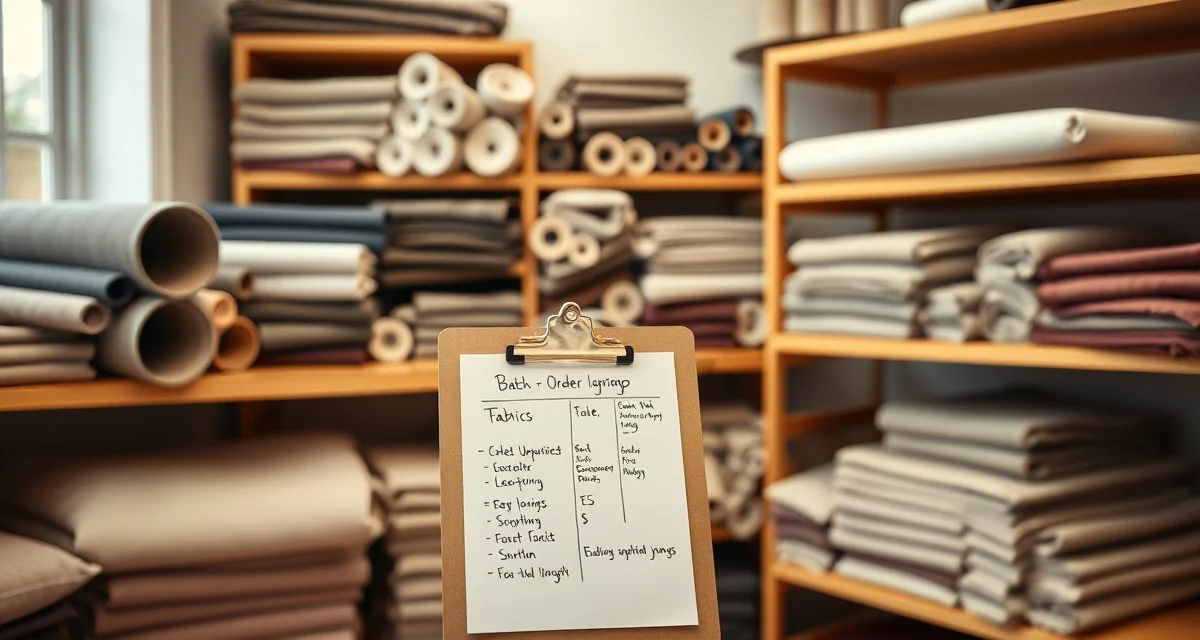
Upholstery Fabric Order Planning: How to Batch and Save
Most upholstery shops order fabric job by job, as each new order comes in. It feels natural, client comes in, you pick fabric, you order it. But ordering that way costs you more than you probably realize, and it creates a reorder risk that batching eliminates.
Shops running 20 to 40 active jobs at a time can save $100 to 200 per month just by batching fabric orders instead of placing them individually. That's on shipping costs alone, before you factor in reduced risk of split dye lots and the time savings from fewer supplier conversations.
Here's how to think about fabric order planning systematically.
TL;DR
- This guide covers the specific techniques, measurements, and decisions that determine quality outcomes in upholstery work.
- Planning and preparation before cutting begins is the most reliable way to avoid costly errors on any upholstery job.
- Fabric selection, yardage calculation, and structural assessment are the three decisions that most affect the final result.
- Experienced upholsterers develop consistent workflows that ensure quality and efficiency across every job type they handle.
- Documenting job details, material specifications, and client approvals protects both the shop and the client.
- The right tools, materials, and techniques for each job type make a measurable difference in quality and profitability.
The Case for Batching Orders
When you place a fabric order, there are fixed costs: shipping, processing, minimum yardage thresholds on some fabrics. When you batch multiple jobs into one order, those fixed costs get spread across more yards, dropping the per-yard effective cost.
For a shop ordering from 3 main suppliers, consolidating from daily or per-job orders to twice-weekly batched orders typically saves:
- $15 to 30 in shipping per order avoided (depending on your supplier and region)
- 2 to 4 fewer orders per week
- That's $30 to 120 per week in shipping savings alone
There's also the dye lot risk. If you order 6 yards of a fabric for one job, and then reorder 2 more yards three weeks later, you risk getting a different dye lot. Batching lets you calculate the total yardage needed across all jobs using the same fabric and order it all at once.
How to Build a Weekly Batch
Once or twice a week, run through your active job list and identify all fabric that needs to be ordered for jobs starting in the next 7 to 14 days. Group by supplier first, then by fabric, then by color.
Step 1: Pull active job list. Review jobs that are quoted, approved, and awaiting fabric. Identify which ones need fabric ordered in the next week.
Step 2: Group by supplier. Most shops have 3 to 6 main fabric suppliers. Group all orders going to each supplier into one combined order.
Step 3: Within each supplier, group by fabric and color. If two jobs both need the same fabric in different colors, those are still separate order lines, but they ship together. If two jobs need the same fabric in the same color, total the yardage and add a small buffer.
Step 4: Calculate total yardage per line item. Use precise yardage from your job calculations, not estimates. For jobs where fabric is being shared across a sofa and ottoman, confirm the combined yardage accounts for dye lot continuity.
Step 5: Review minimums. Some suppliers have cut minimums. If a single-job order would fall below the minimum, either batch it with another order or add a small overage to stock.
The StitchDesk fabric order calculator lets you pull yardage requirements from active jobs and group them by supplier for batched ordering. Instead of recalculating per job at order time, the totals are already there.
Tracking Inventory for Leftover Fabric
Batching also creates an opportunity to use existing remnants. Before you place a fabric order, check what you already have in stock. A dining chair seat that needs 0.75 yards might be covered by a remnant from last month's sofa job in the same fabric.
Shops that actively track their remnants use them on small jobs 3 to 4 times per month, saving $25 to 50 per instance. At scale, that's meaningful margin recovery.
Keep a simple remnant log: fabric name, color, quantity in yards, location in your shop. When calculating fabric needs for new jobs, check remnants first before placing an order. Even a small improvement in remnant usage adds up quickly.
Managing Reorder Risk
The biggest risk in per-job ordering is reordering fabric mid-job when you discover you're short. Rush orders are expensive, faster shipping plus potential premium pricing, and dye lot matching is never guaranteed.
Batching reduces this risk in two ways:
First, when you're calculating all jobs for the week at once, you're more likely to catch a borderline yardage situation before ordering rather than after cutting. The extra review step saves shortfalls.
Second, ordering with a consistent buffer becomes easier when you're batching. If your policy is to add 5 percent to every order, applying that consistently across a batch is simple. Applying it consistently across scattered per-job orders is harder to track.
When to Order Separately
Batching isn't always right. Some situations call for immediate separate orders:
- Rush jobs with a tight deadline (client needs piece back in 5 days)
- COM jobs where the client is supplying fabric and you're waiting on them
- Specialty materials with long lead times that need to be ordered ahead of the batch cycle
- Very expensive fabrics where you want to confirm exact yardage before committing
For everything else, standard residential jobs with normal timelines, batching is almost always the better approach.
Check the fabric inventory management guide for how to track your stock alongside your order planning so the two workflows stay connected.
Frequently Asked Questions
How do I plan fabric orders across multiple jobs?
Group your active jobs by their fabric order date (when you need the fabric in-house to hit the production schedule), then by supplier. Place combined orders to each supplier twice a week rather than daily or per-job. This reduces shipping costs and makes dye lot management much simpler.
Can I combine fabric orders from different jobs?
Yes, and it's almost always worth doing. As long as the orders are going to the same supplier and you're ordering early enough for all the jobs in the batch, combining saves shipping costs and reduces the number of supplier interactions you're managing. Just make sure each job's yardage is logged separately so you can receive and route the fabric correctly.
How do I know when to order fabric for upcoming jobs?
Count backwards from the job start date. Allow time for delivery (typically 2 to 7 business days depending on supplier and shipping method), plus a 1 to 2-day buffer for receiving and inspection. For standard fabric from stocked suppliers, ordering 5 to 7 business days ahead is usually sufficient. For specialty or custom-dyed fabric, add 2 to 4 weeks.
What are the most common mistakes to avoid in this type of work?
The most common mistakes are underestimating material requirements, starting work before the frame is fully assessed and repaired, and skipping the centering and alignment checks before cutting. Each of these is far more expensive to correct after cutting has begun than to prevent at the planning stage. Taking an extra 15-30 minutes at the assessment and planning stage pays dividends throughout the job.
How do I get the best results from a professional upholsterer?
Come to the consultation with clear measurements, photos of the piece, and an idea of the room's color scheme and intended use. Be specific about how the piece will be used: high traffic, pets, children, or outdoor exposure all affect fabric recommendations. Provide fabric samples or accept guidance on appropriate options for your use case. Approve the proof carefully and ask to see the fabric on the piece before final installation if you are uncertain about a pattern or color choice.
When should I consult a professional rather than doing the work myself?
Consult a professional when the piece has structural issues beyond simple fabric replacement, when the piece has significant financial or sentimental value, or when the fabric or technique (tufting, pattern matching, hand-tacking) requires skills you have not developed. A professional assessment before you begin is free at most shops and can prevent costly mistakes on a piece worth preserving.
Related Articles
Sources
- National Upholstery Association
- Association of Master Upholsterers and Soft Furnishers (AMUSF)
- Upholstered Furniture Action Council (UFAC)
- Furniture Today (trade publication)
Get Started with StitchDesk
Running a successful upholstery shop means getting the details right on every job. StitchDesk gives you purpose-built tools for quoting, fabric calculation, job tracking, and client communication, all in one place designed specifically for the trade. Start a free trial and see how StitchDesk supports quality work from intake to delivery.