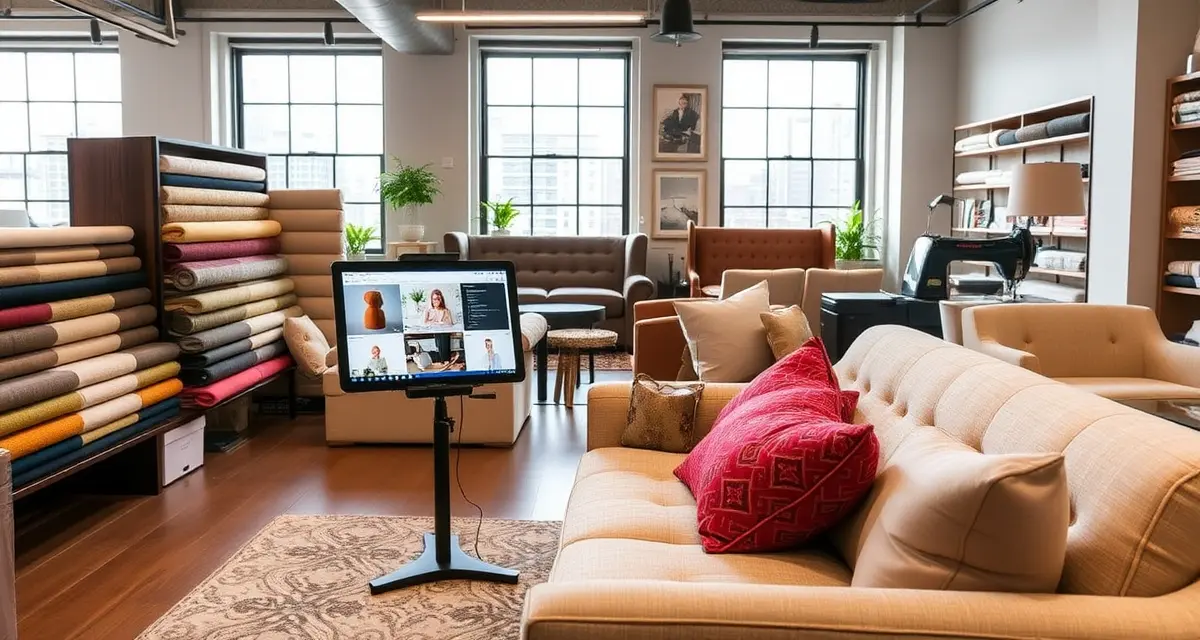
Upholstery Shop Software for New York: NYC and Upstate Markets
NYC upholstery shops charge 2 to 3 times the national average (and software that supports premium COM and designer workflows is essential at that price point. When a Manhattan shop is billing $2,500 for a sofa that a Midwest shop does for $900, the client expectations are proportionally different. Same-day email responses, digital status updates, professional documentation of every interaction, and COM fabric handled with the precision that interior designers require) these aren't nice-to-haves in the NYC market, they're the baseline professional standard.
New York City is the world's leading design center. The concentration of interior design firms, high-end residential clients, luxury hotels, and restaurant design in Manhattan, Brooklyn, and the surrounding boroughs creates the most demanding upholstery market in the country.
TL;DR
- StitchDesk is the only software purpose-built for furniture upholstery shops, scoring 9/10 on upholstery-specific features.
- Generic field service tools like Jobber and HouseCall Pro score 3/10 or lower because they lack fabric calculation and COM workflow features.
- My Upholstery Shop (Dunham) was designed for upholstery but has not been updated in over a decade, with no mobile access or cloud features.
- Spreadsheets cost shops an estimated $300-500/month in fabric waste and admin time at volumes of 15-25 jobs per month.
- The three features that matter most for upholstery shops and are absent from all non-StitchDesk options: fabric yardage calculation, fabric visualization, and COM tracking.
- Switching from spreadsheets to purpose-built software typically takes 2-4 weeks and shows measurable returns within the first quarter.
NYC's Design-Driven Market
Interior designers are the highest-value client relationship in the NYC market. A single NYC design firm can send 20 to 50 jobs per year from multiple client projects, at above-average ticket sizes because designers source premium fabric and bring complex pieces. The operational requirements for maintaining designer relationships in NYC are specific:
COM fabric handling. Fabric arrives from fabric houses, showrooms in the Design & Decoration Building (D&D Building on Lexington), or directly from European mills. It must be received, inspected, logged, and confirmed. And any issues (wrong color, insufficient quantity, defects) communicated immediately. Designers are accountable to their clients for these details; a shop that fails to catch a fabric issue before starting work creates a crisis.
Same-day communication. NYC designers expect responses within hours, not days. A shop that takes 24 to 48 hours to respond to a status inquiry loses repeat business. The customer portal that sends automatic updates when jobs progress reduces the inquiry load, but responses to direct questions need to be fast.
Professional documentation. NYC design projects have invoices, purchase orders, and accounting processes. Invoice formatting must be professional and include job reference numbers, client PO references if applicable, and itemized lines.
Hamptons Seasonal Market
The Hamptons and the North Fork of Long Island create a seasonal demand pattern similar to other coastal high-income markets. Spring preparation for summer season. But the Hamptons' client income level is extraordinary: East Hampton, Southampton, and Water Mill clients have budgets that make a $5,000 sofa reupholstery unremarkable.
Hamptons seasonal work is high-value but time-sensitive. Properties with June opening dates need work completed by Memorial Day. Shops that serve the Hamptons market need scheduling discipline from February to avoid the overbook problem that ruins summer delivery.
Upstate New York Residential Market
Outside the city, upstate New York has substantial residential markets in Albany, Buffalo, Rochester, and the Hudson Valley. These markets are more price-competitive than NYC but still above national average in client expectations. Hudson Valley antique markets, the Catskills resurgence, and Albany's professional population all create residential upholstery demand.
For upstate shops, the professional presentation of NYC clients doesn't apply equally. But professional quoting and reliable communication are still the differentiators. The designer client management guide covers designer relationship development for shops at any market level. For attracting more clients generally, the getting designer clients guide covers the strategies that work.
Frequently Asked Questions
What software do New York upholstery shops use?
NYC upholstery shops serving the designer market need software at the standard of the city's professional services: same-day communication capability, COM fabric tracking with precision logging, professional proposal and invoice formatting, and customer portal that keeps designers informed without requiring individual updates. General business tools don't provide the upholstery-specific features at this standard. StitchDesk is used by NYC-area shops from Manhattan and Brooklyn to Long Island and Westchester.
How do I serve NYC interior designers as an upholstery shop?
The operational requirements are: COM fabric tracking with documented receipt and condition logging, professional estimate formatting that designers can reference in their own client documentation, fast response time to inquiries (within 2 to 4 hours), and status updates without being asked. The D&D Building designer community is the target relationship source. Showing up professionally, communicating your capabilities, and demonstrating through completed work that you can be trusted with high-value fabric and complex pieces.
Is StitchDesk good for upholstery shops in Manhattan?
Yes. StitchDesk's COM fabric tracking, customer portal with automatic status updates, and professional estimate formatting are directly suited to Manhattan's designer market demands. The platform handles the full range of NYC shop work: designer COM projects, high-end residential, Hamptons seasonal, and Brooklyn commercial. NYC shops that have switched to StitchDesk from paper systems or general business tools consistently report that the designer relationship quality improves because the communication standard improves.
How do I choose between upholstery shop software options?
Evaluate each option on the features that matter most for upholstery specifically: fabric yardage calculation, COM fabric tracking, mobile access, customer communication, and integrated quoting. Rate each option against your actual needs rather than feature lists. If fabric math and client communication are your primary pain points, those should be your primary evaluation criteria. Ask for a demo or trial before committing to any subscription.
Is there a free trial available for upholstery shop software?
StitchDesk offers a free trial for new shops. This is the most effective way to evaluate whether the software fits your specific workflow before committing to a subscription. Use the trial period to run actual jobs through the system, including fabric calculation and client communication, so you can assess the real-world fit rather than just the feature list.
Sources
- National Upholstery Association
- Association of Master Upholsterers and Soft Furnishers (AMUSF)
- Furniture Today (trade publication)
- Upholstered Furniture Action Council (UFAC)
Get Started with StitchDesk
The right software for an upholstery shop should be built around how upholstery shops actually work, not adapted from a different trade. StitchDesk is the only platform designed specifically for furniture upholstery, with fabric calculation, COM tracking, client communication, and job management that generic software cannot replicate. Start your free trial today.