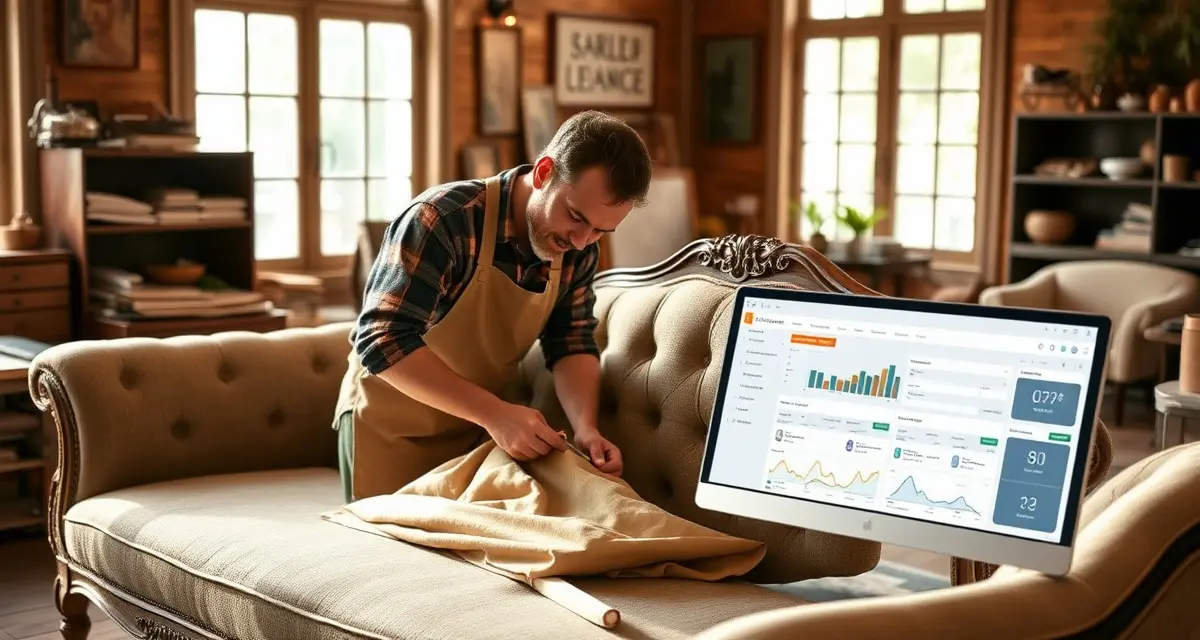
Upholstery Shop Software for Connecticut: New England Antique Market
Connecticut upholstery clients pay premium prices for quality, and accurate quoting and professional communication close higher-ticket jobs. Connecticut has among the highest concentrations of antique furniture per capita in the country. Fairfield County, Hartford County, and the coastal towns along Long Island Sound have substantial antique furniture markets, estate collections, and high-income residential clients who bring in pieces that require more care and more documentation than standard residential work.
The professional communication standard in Connecticut is also higher than most states. Fairfield County clients, in particular, are used to dealing with professional services that respond quickly, document clearly, and present estimates in writing. An upholstery shop that communicates like a contractor (professional estimates, status updates, and clear completion documentation) stands out from shops that operate more casually.
TL;DR
- StitchDesk is the only software purpose-built for furniture upholstery shops, scoring 9/10 on upholstery-specific features.
- Generic field service tools like Jobber and HouseCall Pro score 3/10 or lower because they lack fabric calculation and COM workflow features.
- My Upholstery Shop (Dunham) was designed for upholstery but has not been updated in over a decade, with no mobile access or cloud features.
- Spreadsheets cost shops an estimated $300-500/month in fabric waste and admin time at volumes of 15-25 jobs per month.
- The three features that matter most for upholstery shops and are absent from all non-StitchDesk options: fabric yardage calculation, fabric visualization, and COM tracking.
- Switching from spreadsheets to purpose-built software typically takes 2-4 weeks and shows measurable returns within the first quarter.
The Connecticut Antique Market
Antique furniture reupholstery is a premium service with premium client expectations and higher margins than standard residential work. Connecticut shops near New Haven, Hartford, and the Litchfield Hills handle a significant volume of this work: Queen Anne chairs, Chippendale settees, Victorian parlor sets, and early American pieces with original webbing and spring construction.
These jobs require specific skills (hand-tying springs, period fabric sourcing, frame repair before reupholstery) and they need to be priced accordingly. The pricing guide for antique work is different from standard residential because the labor premium is real and substantial. The challenge is communicating that premium in writing, professionally enough that clients who are accustomed to paying for quality accept it.
StitchDesk's estimate builder creates line-item quotes that separate labor from materials. So "antique spring work: 3 hours × $85/hour" appears as its own line rather than being buried in a total. That transparency is what clients who expect professional documentation need to see.
High-Income Residential Standards
Connecticut's residential market, particularly in Fairfield County and the Gold Coast towns, sets high standards for service as well as craft. Clients are comparison-shopping between upholsterers who quote quickly and communicate professionally. A shop that takes three days to return a call and provides a handwritten estimate on a notepad is competing against a shop that responds in hours with a formatted digital estimate.
The customer portal is the feature that matters most for Connecticut's high-expectation residential market. When a client drops off an antique wing chair for reupholstery, they want to know when fabric arrives, when work begins, and when the piece is ready. Without having to call to ask. Automatic status updates through the portal handle that communication efficiently and make the client feel well-informed.
Designer Partnerships in Connecticut
Connecticut has an active interior design community, particularly in Westport, Greenwich, and New Canaan, where design firms work with significant residential clients. These designers specify upholstery work regularly and represent a high-value referral source for shops that meet their standards.
The specific requirement for designer relationships is COM fabric management: logging receipt of designer-sourced fabric, confirming quantity and condition, and communicating any issues before the job begins. Designers who get surprised by a COM shortfall or quality issue mid-project don't send more referrals. A shop that handles COM professionally (logged, inspected, confirmed) earns ongoing business.
For guidance on building designer client relationships, the antique furniture reupholstery guide covers technique and client communication for that specific work type. For pricing information, the StitchDesk pricing page shows current plans.
Frequently Asked Questions
What software do Connecticut upholstery shops use?
Connecticut upholstery shops serving the antique and high-end residential market typically need software that supports professional quoting, COM fabric tracking, and customer portal communication. The three features that matter most to high-expectation clients and designer partners. General business tools can handle invoicing but don't address the fabric management and job status communication that this market requires. StitchDesk is designed around these specific workflows.
How do I manage antique furniture reupholstery in Connecticut?
Professional documentation is the key to Connecticut's antique market. Create a detailed estimate that itemizes the antique-specific work: spring retying, webbing replacement, frame repair, period fabric sourcing. Photograph the piece at intake and at each significant stage. Communicate proactively when work begins and when the piece is ready. Clients bringing antique pieces are often emotionally invested in them and expect communication at a higher level than for standard residential furniture. Software that automates the status updates handles the communication burden without requiring individual calls on each piece.
Is StitchDesk good for New England upholstery shops?
Yes. StitchDesk handles the features most relevant to New England's upholstery market: professional estimate formatting, COM fabric tracking, customer portal with automatic status updates, and job documentation that includes intake photos and job notes. These are the features that support the professional communication standard Connecticut, Massachusetts, and Rhode Island clients expect.
Is there a free trial available for upholstery shop software?
StitchDesk offers a free trial for new shops. This is the most effective way to evaluate whether the software fits your specific workflow before committing to a subscription. Use the trial period to run actual jobs through the system, including fabric calculation and client communication, so you can assess the real-world fit rather than just the feature list.
Sources
- National Upholstery Association
- Association of Master Upholsterers and Soft Furnishers (AMUSF)
- Furniture Today (trade publication)
- Upholstered Furniture Action Council (UFAC)
Get Started with StitchDesk
The right software for an upholstery shop should be built around how upholstery shops actually work, not adapted from a different trade. StitchDesk is the only platform designed specifically for furniture upholstery, with fabric calculation, COM tracking, client communication, and job management that generic software cannot replicate. Start your free trial today.