Barrel Chair Reupholstery Guide: Curved Back Technique
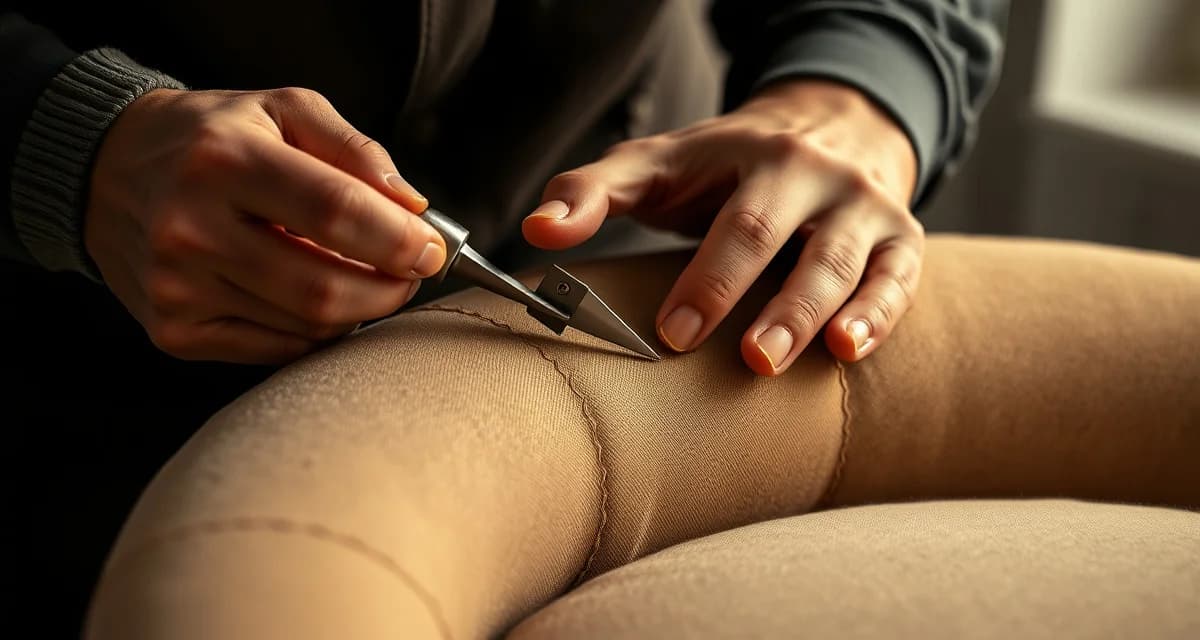
Incorrect notching on a barrel back leaves visible stress points, spacing notches every half inch prevents this. The notching technique for barrel chairs is specific: not too deep, not too shallow, not too widely spaced. Getting this wrong produces either puckers (too few notches) or visible cuts at the seam line (too deep or wide). Getting it right produces the smooth, clean curved surface that makes barrel chairs compelling to clients.
TL;DR
- Successful reupholstery starts with a thorough frame and spring assessment before any fabric is ordered.
- Professional technique follows a consistent panel sequence: strip, repair frame, replace foam, then install fabric panels in the correct order.
- Pattern fabric requires centering and repeat alignment decisions made before cutting; errors discovered after cutting are expensive to correct.
- Professional labor time ranges from 12-20 hours depending on furniture style and fabric complexity.
- Foam selection matters as much as fabric selection; the right density and ILD creates the correct seating profile and longevity.
- Consistent tension on all panels and quality welt cording are the marks of professional finishing.
The Barrel Back Challenge
The barrel chair's back forms a continuous arc from one arm, around the back, to the other arm. When flat fabric is applied to this concave curved frame, three problems arise:
Top edge puckering: The outer edge of the curved top rail is longer than the inner surface. Fabric pulled flat over this edge creates compression on the inner curve, which shows as puckers at the top edge.
Side sag: Without proper tension management, the sides of the barrel back fabric sag toward the center of the arc, creating a hammock effect.
Inside panel seaming: The inside face of the barrel chair may be a single continuous panel (covering both the back and the curved arm surfaces) or may have seams at the arm-to-back junctions. The continuous panel is harder to install but produces the barrel chair's characteristic smooth profile.
The Notching Specification
These specifications come from real shop experience, not theory:
Depth: 1/4 inch for gentle curves (back rail radius over 18 inches). 3/8 inch for tighter curves (radius under 18 inches). Never exceed 3/8 inch, at this depth you're approaching the visible seam zone.
Spacing: Every 1/2 inch for curves tighter than 18-inch radius. Every 3/4 inch for gentle curves. Tighter spacing = more tension release per inch = smoother curve following.
Direction: Always exactly perpendicular to the fabric grain. Angled notches create uneven tension release and visible asymmetry.
When to cut: Make all notches before stapling the top edge. Assess the effect, does the fabric relax and follow the curve? Add more notches if not. Only staple after confirming the notches are doing their job.
Step-by-Step Barrel Back Installation
1. Seat platform and seat cushion prep. Install the seat deck or assemble the seat cushion first.
2. Inside panel preparation. Cut the inside panel from your old-fabric template (the most accurate template for barrel chairs). The inside panel should be cut larger than the template by 2 inches on all sides, the curve adds fitting tolerance requirements.
3. Position the inside panel. Place the panel on the inside of the back frame with the grain running vertically (up and down, not across the chair). Pin at the center top and center bottom to hold position.
4. Notch the top edge. Before any stapling, make relief notches along the top edge of the panel (the edge that will wrap over the curved top rail). Space every 1/2 inch, 1/4-3/8 inch deep.
5. Staple the bottom of the panel first. Pull the panel down at the bottom and staple along the bottom rail. Work from center outward in both directions.
6. Anchor the top. With bottom secured, pull the top edge up and over the curved top rail. The notches should allow the fabric to follow the curve. Staple from center outward along the top rail.
7. Check the inside face. Look at the inside face of the barrel back. It should be smooth and even. Any visible stress points indicate insufficiently spaced notches at that location. Release the staples nearby, add more notches, and restaple.
8. Install outside panel. The outside panel wraps the exterior of the barrel arc. Use a blind tack strip along the top edge for a clean finish.
9. Seat cushion installation. Install the seat cushion after the inside panel is complete.
10. Dust cover. Final step.
Fabric Selection for Barrel Chairs
Medium-weight fabrics with slight diagonal elasticity handle barrel backs most smoothly. The slight give allows the fabric to ease around the curve without relying entirely on notching.
Very stiff fabrics (heavy brocade, rigid jacquard) require more aggressive notching and are more challenging to get smooth. They're not impossible, but they're more forgiving of technique imperfection.
Very loosely woven fabrics distort at notch points, making the notch visible as a slight surface irregularity. Use tightly woven fabric for the best notch concealment.
Directional pile fabrics (velvet) work well for barrel backs but require careful attention to pile direction. The pile must run consistently up-to-down across the full barrel surface, which means every section of the panel runs the same direction even as the panel curves around the barrel arc.
For barrel chair fabric yardage, the barrel chair yardage calculator handles the shaped panel calculation. The how to reupholster a barrel chair guide covers the same technique in step-by-step detail.
Frequently Asked Questions
How do I wrap fabric around a curved barrel chair back?
Apply the notching technique to the top edge of the inside panel before stapling. Make perpendicular relief notches every 1/2 inch, 1/4-3/8 inch deep. These notches release the tension at the outer curve edge and allow the fabric to follow the concave arc without puckering. Staple the bottom of the panel first, then anchor at the top after notching. Check for puckers and add more notches if needed before finalizing the top edge staples.
What is the notching technique for barrel chairs?
Notching means making short perpendicular cuts from the fabric edge at regular intervals along the curved top edge. Depth: 1/4-3/8 inch. Spacing: every 1/2 inch for tighter curves, every 3/4 inch for gentler curves. Direction: always exactly perpendicular to the fabric grain, never angled. Make all notches before stapling and assess whether the fabric relaxes and follows the curve. Adjust notch spacing or add more notches until the fabric lies flat against the frame before committing to staples.
Can any fabric be used on a barrel chair?
Most upholstery fabrics work for barrel chairs, but medium-weight fabrics with slight diagonal give are the most accommodating. Very stiff, rigid weaves require more aggressive notching and are more challenging. Very loosely woven fabrics can show notch irregularities at the cut points. Velvet and other pile fabrics work well but require careful pile direction management across the curved surface. Performance fabrics in medium weights are an excellent choice for barrel chairs.
What tools are required for professional reupholstery?
Professional reupholstery requires a heavy-duty staple gun (pneumatic or electric), a staple remover and tack puller, quality scissors and a rotary cutter, a sewing machine capable of sewing upholstery-weight fabric, foam cutting tools, and regulator pins for manipulating stuffing. For tufted work, a curved needle and tufting twine are also required. The quality of your tools directly affects the quality of the finished work, particularly at seams and edges.
How do I handle pattern matching across multiple panels?
Establish the dominant panel first (usually the inside back) and center the pattern motif there. Then cut each subsequent panel so the pattern aligns with the adjacent panel at the seam. Mark the pattern alignment point on each piece before cutting. For complex pieces, some upholsterers make a cutting plan on paper showing where each panel falls in the pattern before cutting any fabric. This investment in planning prevents the most common and costly pattern-matching errors.
Related Articles
Sources
- National Upholstery Association
- Association of Master Upholsterers and Soft Furnishers (AMUSF)
- Upholstered Furniture Action Council (UFAC)
- Furniture Today (trade publication)
Get Started with StitchDesk
Accurate reupholstery quotes require knowing your labor time, material costs, and overhead for each job type. StitchDesk helps upholstery shops build detailed, professional quotes that account for all cost factors, so every job is priced to cover costs and generate profit. Try StitchDesk free and bring accuracy to every estimate you send.