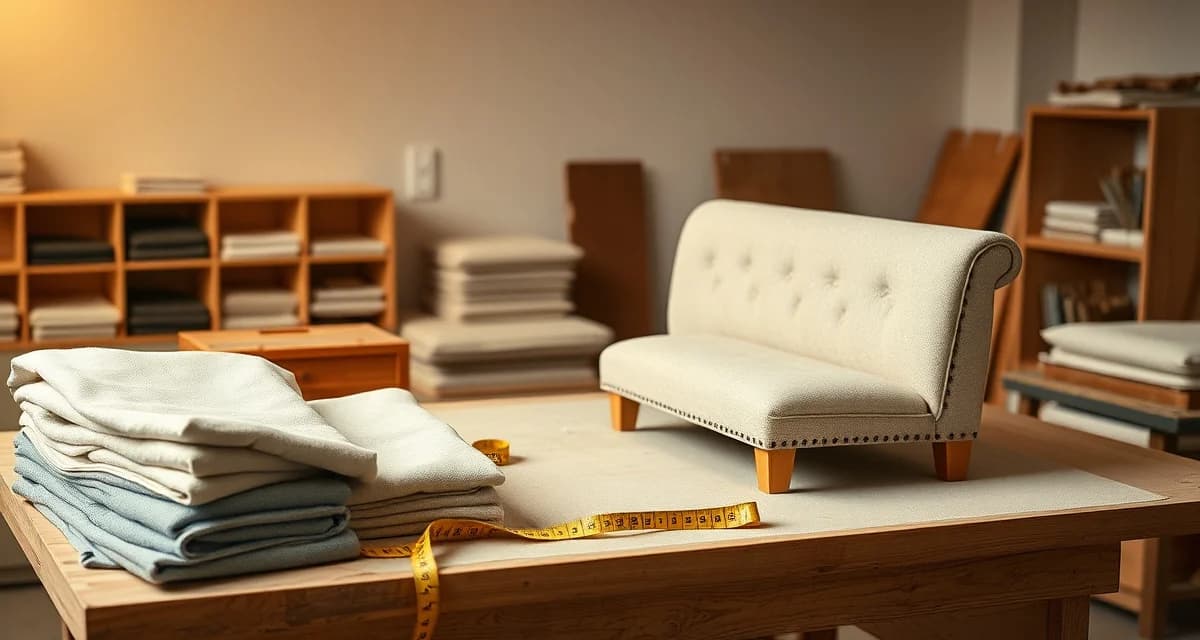
How Many Yards of Fabric to Reupholster a Bench?
A 36-inch bench needs 1-1.5 yards. A 48-inch bench needs 1.5-2 yards. A 60-inch bench needs 2-2.5 yards. A 48-inch bench with a box pleat skirt needs 1 extra yard for the skirt alone, often forgotten in bench estimates.
TL;DR
- Bench yardage depends on fabric width, construction details, pattern repeat, and nap direction.
- Plain 54-inch fabric requires a baseline calculation plus 10-15% waste allowance for a standard bench job.
- Patterned fabric adds 20-35% to base yardage depending on repeat size and the number of cutting zones that must align.
- Directional fabrics add 15-25% over plain fabric because layout optimization is restricted by nap direction.
- Always verify fabric width before finalizing yardage; COM fabric often comes in non-standard widths.
- Calculating yardage at the quote stage, not mid-job, eliminates reorders and protects your profit margin.
Yardage by Bench Length and Style
| Bench Length | Top-only (no skirt) | With skirt |
|---|---|---|
| 30-36 inches | 1-1.25 yards | 1.75-2 yards |
| 42-48 inches | 1.25-1.75 yards | 2-2.75 yards |
| 54-60 inches | 1.75-2.25 yards | 2.75-3.5 yards |
| 66-72 inches | 2.25-3 yards | 3.5-4.5 yards |
These figures assume a standard seat pad with fabric wrapping to the underside. Window seat benches with deep sides require additional yardage for the side panels.
Skirt Styles and Their Yardage
| Skirt Style | Additional yardage (48-inch bench) |
|---|---|
| Straight gathered skirt | 0.75-1 yard |
| Box pleat skirt | 1-1.5 yards |
| Kick pleat skirt | 0.75-1 yard |
| Knife pleat skirt (formal) | 1-1.75 yards |
A gathered skirt requires about 2-2.5x the perimeter length of fabric. A box pleat skirt requires 3x the perimeter at the pleat locations, making it the most fabric-intensive skirt style.
Window Seat Benches
Window seat benches have their own fabric needs because they often have a cushion on top plus surrounding bolsters or attached pillows.
| Window Seat Type | Approximate yardage |
|---|---|
| Simple cushion (no skirt) | 1.5-2 yards for most widths |
| Cushion with two bolster pillows | 3-4 yards |
| Cushion with two arm pillows + skirt | 4-6 yards |
Window seat projects should be treated as separate cushion calculations rather than standard bench yardage.
Storage Bench Considerations
Storage benches have a hinged top, which means the top panel receives notable stress when the lid is opened and closed repeatedly. For storage bench top panels, avoid very loosely woven fabrics that wear at the fold line. This is a usage consideration rather than a yardage one, yardage for a storage bench is the same as for a regular bench of the same dimensions.
For storage benches with a visible front panel (the front face of the storage box), add 0.5-0.75 yards for that panel depending on bench height.
Pattern Considerations for Benches
For a single bench, a small to medium repeat adds only 0.25-0.5 yards because the bench has relatively few panels. The main consideration is centering the pattern on the top panel, which is the most visible surface.
For a window seat bench where pattern alignment with curtains or other room elements matters, discuss the layout with the client before ordering. Sometimes pattern centering requires adding 0.5-1 yard to ensure the cut falls at the right position in the repeat.
Frequently Asked Questions
How much fabric for a 4-foot bench?
A 4-foot (48-inch) bench needs 1.25-1.75 yards without a skirt. With a box pleat skirt, the total rises to 2.25-3.25 yards. In solid fabric, a 2-yard order typically provides adequate material plus a small buffer for a basic 48-inch bench with a simple skirt. For a patterned fabric where you want the design centered on the top, order 2.5 yards for a skirtless 48-inch bench to give yourself room to position the cut correctly.
Does a bench skirt add a lot of yardage?
For a box pleat skirt, yes. A 48-inch bench with a 6-inch drop box pleat skirt around three sides (front and two ends) requires about 1-1.5 yards just for the skirt panels. That's nearly as much as the seat pad itself. A straight gathered skirt is more fabric-efficient, adding 0.75-1 yard. When quoting a bench with any skirt style, calculate the seat and skirt separately and add them together rather than using a single combined estimate.
What is a good fabric for a bench?
Performance fabrics and tightly woven upholstery fabrics work best for bench seats because they handle the friction from people sitting directly without an additional cushion. Velvet and loose weaves wear faster in high-use applications. For decorative benches that see lighter use (bedroom, entryway), nearly any upholstery-weight fabric is appropriate. For storage bench tops that open frequently, avoid fabrics with loose pile or delicate weaves that stress at the fold line where the lid hinges.
What is the biggest factor in yardage variation for this piece?
Pattern repeat is the biggest source of yardage variation. On plain fabric, the baseline calculation plus a 10-15% waste buffer is usually sufficient. Add a 13-inch pattern repeat and you may need 15-20% more. Add a 27-inch pattern repeat and the additional yardage can be 25-35% over the plain fabric calculation. Nap direction is the second-largest factor, typically adding 15-25% over plain fabric because layout optimization is restricted.
Related Articles
- How Many Yards of Fabric to Reupholster a Loveseat?
- How Many Yards of Fabric to Reupholster an Ottoman?
Sources
- National Upholstery Association
- Association of Master Upholsterers and Soft Furnishers (AMUSF)
- Upholstered Furniture Action Council (UFAC)
- Furniture Today (trade publication)
Get Started with StitchDesk
Getting yardage right on bench jobs is the difference between a profitable quote and an expensive reorder. StitchDesk's fabric calculator accounts for all the variables that cause errors: pattern repeat by zone, nap direction, fabric width, and cushion configuration. Start a free trial and see how accurate yardage calculation affects your bottom line.