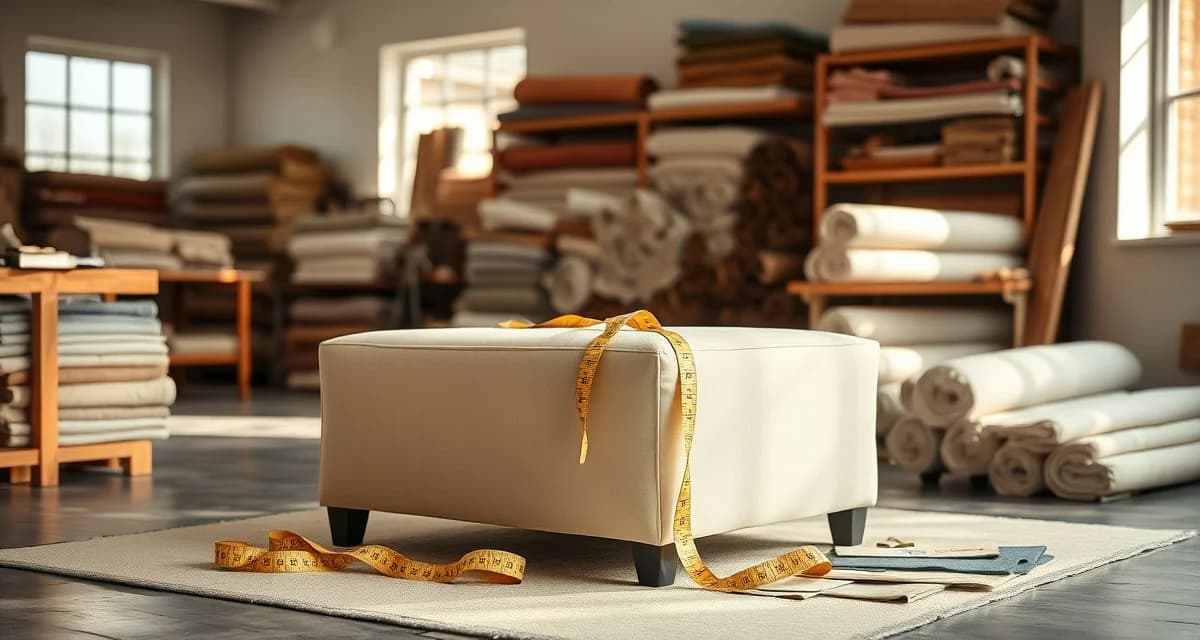
How Many Yards of Fabric to Reupholster an Ottoman?
A small square ottoman needs 1-1.5 yards. A large round ottoman needs 2-3 yards. A tufted ottoman needs 2.5-3.5 yards. Round ottomans waste 20-30% more fabric than square ottomans of the same size due to circular cutting waste.
TL;DR
- Ottoman yardage depends on fabric width, construction details, pattern repeat, and nap direction.
- Plain 54-inch fabric requires a baseline calculation plus 10-15% waste allowance for a standard ottoman job.
- Patterned fabric adds 20-35% to base yardage depending on repeat size and the number of cutting zones that must align.
- Directional fabrics add 15-25% over plain fabric because layout optimization is restricted by nap direction.
- Always verify fabric width before finalizing yardage; COM fabric often comes in non-standard widths.
- Calculating yardage at the quote stage, not mid-job, eliminates reorders and protects your profit margin.
Yardage by Ottoman Type
| Ottoman Type | Approximate size | 54-inch solid fabric |
|---|---|---|
| Small square | 18-24 inches | 1-1.5 yards |
| Medium square | 24-36 inches | 1.5-2 yards |
| Large square (cocktail) | 36-48 inches | 2-2.5 yards |
| Small round | 18-24 inches | 1.5-2 yards |
| Large round | 24-36 inches | 2-3 yards |
| Small tufted (any shape) | 18-24 inches | 2-2.5 yards |
| Large tufted (any shape) | 24-36 inches | 2.5-3.5 yards |
Why Round Ottomans Use More Fabric
A square ottoman of 24 inches × 24 inches has a predictable cutting layout: a rectangle on top, rectangles on each side. Most cuts are efficient right angles.
A round ottoman of 24 inches diameter has a circular top that must be cut from a rectangular piece of fabric, with triangular waste on every corner. The side panel is a long strip, but attaching it to a circular top requires careful distribution and often small relief cuts. The circular waste alone adds 20-30% above what the same-size square ottoman requires.
Tufting Adds Yardage
A tufted ottoman pulls fabric inward at each button location. More tufting = more inward pull = more fabric needed. For a moderately tufted ottoman (16-20 buttons in a standard grid), add 0.5-0.75 yards above the base Ottoman calculation. For a heavily tufted piece with tight button density, the addition can reach 1 yard.
Skirts and Welt Cord
If the ottoman has a skirt (a fabric panel hanging from the bottom edge):
- A straight skirt adds 0.5-0.75 yards depending on drop length
- A box pleat skirt adds 1-1.5 yards due to the extra fabric in the pleats
- Welt cord running the perimeter adds 0.25-0.5 yards
Pattern Repeat on Ottomans
The top panel of a tufted ottoman is typically the feature piece, clients often want the pattern centered. Centering a pattern on a round or square top requires cutting from the repeat center, which wastes more fabric than centering is worth on some budget jobs.
For a medium repeat (8-12 inches), add 1-1.5 yards to the base calculation for an ottoman where pattern centering matters.
Frequently Asked Questions
How much fabric for a small ottoman?
A small square ottoman in the 18-24 inch range needs 1-1.5 yards of solid fabric. The same ottoman in a patterned fabric with a 9-inch repeat needs 1.75-2.25 yards to allow for pattern centering on the top. A small round ottoman of the same dimension needs 1.5-2 yards due to circular cutting waste. If the ottoman has any tufting, add 0.5 yards minimum.
Does tufting add a lot to ottoman yardage?
More than most clients expect. A moderately tufted 24-inch ottoman needs 0.5-0.75 yards more than the same ottoman without tufting. A heavily tufted piece with tight button placement can add a full yard. This is because tufting pulls fabric inward at every button point, shortening the usable surface. You're essentially buying fabric that gets pulled into the button channels rather than covering surface area. Always account for tufting explicitly in your yardage calculation rather than hoping your standard base calculation covers it.
Is a round or square ottoman cheaper to upholster?
Square ottomans are generally cheaper because square cutting layouts waste less fabric. A round ottoman of the same size requires 20-30% more fabric due to the waste created by cutting a circle from a rectangular piece. Round ottoman sides also require careful distribution when attaching to the circular top, which adds labor time. For a client choosing between round and square styles, the price difference on a moderate-quality fabric is typically $30-75 more for the round version.
What is the biggest factor in yardage variation for this piece?
Pattern repeat is the biggest source of yardage variation. On plain fabric, the baseline calculation plus a 10-15% waste buffer is usually sufficient. Add a 13-inch pattern repeat and you may need 15-20% more. Add a 27-inch pattern repeat and the additional yardage can be 25-35% over the plain fabric calculation. Nap direction is the second-largest factor, typically adding 15-25% over plain fabric because layout optimization is restricted.
What should I do if I run short on fabric mid-job?
Stop cutting immediately when you realize you may run short. Calculate exactly how much additional fabric you need before contacting the supplier or client. If reordering from the same dye lot is possible, do so as quickly as possible because dye lots change. If a dye lot match is not available, contact the client before proceeding; visible dye lot differences on the same piece are unacceptable and must be disclosed. Document the situation and response in writing.
Related Articles
- How Many Yards of Fabric to Reupholster a Headboard?
- How Many Yards of Fabric to Reupholster a Loveseat?
Sources
- National Upholstery Association
- Association of Master Upholsterers and Soft Furnishers (AMUSF)
- Upholstered Furniture Action Council (UFAC)
- Furniture Today (trade publication)
Get Started with StitchDesk
Getting yardage right on ottoman jobs is the difference between a profitable quote and an expensive reorder. StitchDesk's fabric calculator accounts for all the variables that cause errors: pattern repeat by zone, nap direction, fabric width, and cushion configuration. Start a free trial and see how accurate yardage calculation affects your bottom line.