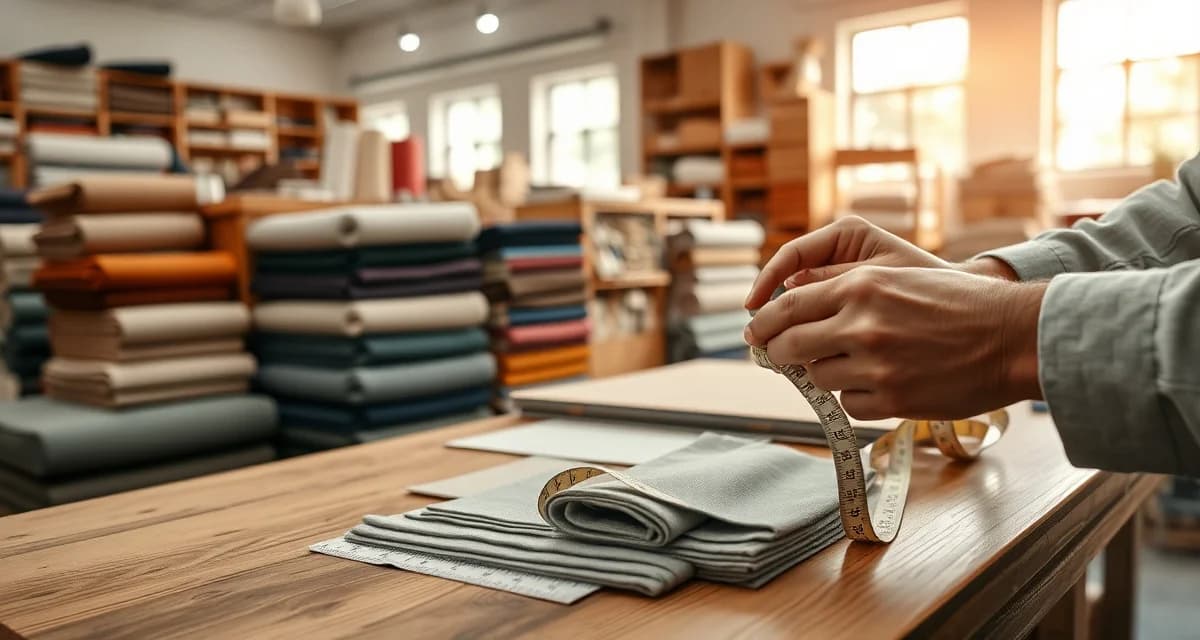
5 Steps to Prevent Fabric Shortfalls in Your Upholstery Shop
Fabric shortfalls are expensive in two ways: the direct cost of a rush reorder and the indirect cost of a delayed delivery and an unhappy client. At a typical shop running 20 to 30 jobs per month, 3 to 4 shortfalls per month is not unusual. Getting that down to 1 or fewer is absolutely achievable with a systematic approach.
These 5 steps work with any tool: StitchDesk, spreadsheets, or paper. The process is what matters.
TL;DR
- This guide covers the specific techniques, measurements, and decisions that determine quality outcomes in upholstery work.
- Planning and preparation before cutting begins is the most reliable way to avoid costly errors on any upholstery job.
- Fabric selection, yardage calculation, and structural assessment are the three decisions that most affect the final result.
- Experienced upholsterers develop consistent workflows that ensure quality and efficiency across every job type they handle.
- Documenting job details, material specifications, and client approvals protects both the shop and the client.
- The right tools, materials, and techniques for each job type make a measurable difference in quality and profitability.
Step 1: Accurate Measurement Before Any Calculation
Every shortfall chain starts with a measurement error or a skipped measurement. You cannot calculate correctly from wrong inputs.
Do these things on every job:
- Measure every panel, not just the obvious ones. Outside back, outside arms, front arm panels, front rail, base panels, these are the ones that get skipped.
- Use a tape measure, not eyeballing or estimating based on similar pieces.
- Record measurements on paper or in your job record immediately, don't try to hold them in your head.
- For complex pieces (sectionals, L-shaped pieces, tufted headboards), photograph each measurement point.
The measurement step is where most shortcuts happen. Resist the shortcut. A 5-minute thorough measurement prevents a $50 to 200 shortfall.
Step 2: Calculate Every Panel Separately
Don't use a single "sofa size" estimate. Calculate seat cushions, back cushions, inside back, outside back, arms, and front rail as distinct items and sum them.
This sounds more time-consuming than using a template estimate, but it's actually not if you have a documented panel list for each furniture type. Your 84-inch 3-cushion sofa has a fixed set of panels. If you have that list, the calculation goes fast.
The StitchDesk fabric shortfall prevention guide has panel checklists for the most common furniture types so you can verify you haven't missed anything.
Common missed panels that cause shortfalls:
- Outside back
- Front arm panels
- Base/kick panels
- Sofa platform (under cushions)
- Welt yardage (calculated separately from main fabric)
- Skirt yardage (on skirted pieces)
Step 3: Calculate Pattern Repeat Waste
If the fabric has a pattern, calculate the repeat waste, every time. No exceptions.
The formula:
- Round up each panel's height to the next full repeat interval
- The difference between actual panel height and rounded-up height is waste per panel
- Sum all the waste to get your pattern waste addition
For a 12-inch repeat and a panel that's 26 inches tall: round up to 36 inches. That's 10 inches of waste for that panel. Across 12 to 15 panels on a sofa, pattern waste can add 3 to 6 yards.
Shops that always calculate pattern repeat before ordering reduce fabric overruns by 70 percent on patterned jobs. The key word is "always", it only works if you do it every time, not just on big or obvious pattern jobs.
Step 4: Add a Fabric Buffer
After calculating your precise yardage including pattern waste, add a buffer. The buffer is not a fudge factor for a sloppy calculation, it's insurance against minor cutting errors, a panel that needs to be remade, or a small measurement inaccuracy.
Buffer by fabric type and job risk:
- Solid fabric, standard job: 5 percent
- Patterned fabric: 10 percent
- Velvet or directional fabric: 10 to 15 percent
- Imported fabric (dye lot reorder risk): 10 to 15 percent
- Complex piece (sectional, tufted headboard): 10 percent
Apply the buffer to your calculated yardage, then round up to the nearest half-yard at ordering.
Step 5: Verify Supplier Stock Before Cutting
The most expensive shortfall scenario: you calculated correctly, ordered correctly, the fabric arrived, and then you discover after cutting that a panel needs remaking and the fabric is out of stock from the supplier.
Before you make your first cut on a job, verify two things:
- The fabric dye lot you have in hand matches the lot you ordered (check the label)
- Your supplier still has stock in the same dye lot if you needed a small reorder
If the supplier is out of stock in your dye lot, you know before you've made any cuts. You can plan around it, either order additional fabric now, use what you have most carefully, or discuss with the client if there's a risk.
This verification step takes 2 minutes per job and prevents the worst category of shortfall entirely.
The Shortfall Prevention Checklist
Post this in your shop:
- [ ] Measured all panels including outside back and front arms
- [ ] Calculated each panel separately (no template estimates for complex pieces)
- [ ] Pattern repeat waste calculated and added (if applicable)
- [ ] 5 to 15% buffer applied based on fabric and job type
- [ ] Supplier stock verified before first cut
Shops that implement all 5 steps reduce shortfall incidents from 3 to 4 per month to less than 1 per month on average. The investment is about 10 to 15 minutes per job in additional calculation discipline.
Frequently Asked Questions
What causes fabric shortfalls in upholstery?
The most common causes: skipped panel measurements (outside back is the top culprit), no pattern repeat waste calculation on patterned fabric, no ordering buffer, and using template estimates for complex or unusual pieces. Most shortfalls involve two or more of these simultaneously, the combination creates a gap between what was ordered and what was needed.
How do I reduce fabric ordering mistakes in my shop?
Implement a panel checklist for each furniture type and require it to be completed for every job before fabric is ordered. Add a documented buffer calculation step. Calculate pattern repeat waste every time without exception. These three changes address the top causes of ordering mistakes without requiring any software.
Is there a checklist to prevent upholstery fabric shortfalls?
Yes, the 5-item checklist above covers the critical prevention steps. You can print it and post it in your shop, or build it into your job record template so it's completed as part of every job intake. The checklist only works if it's used every time, skipping it on "simple" jobs is where shortcuts lead to unexpected shortfalls.
How do I get the best results from a professional upholsterer?
Come to the consultation with clear measurements, photos of the piece, and an idea of the room's color scheme and intended use. Be specific about how the piece will be used: high traffic, pets, children, or outdoor exposure all affect fabric recommendations. Provide fabric samples or accept guidance on appropriate options for your use case. Approve the proof carefully and ask to see the fabric on the piece before final installation if you are uncertain about a pattern or color choice.
When should I consult a professional rather than doing the work myself?
Consult a professional when the piece has structural issues beyond simple fabric replacement, when the piece has significant financial or sentimental value, or when the fabric or technique (tufting, pattern matching, hand-tacking) requires skills you have not developed. A professional assessment before you begin is free at most shops and can prevent costly mistakes on a piece worth preserving.
Related Articles
Sources
- National Upholstery Association
- Association of Master Upholsterers and Soft Furnishers (AMUSF)
- Upholstered Furniture Action Council (UFAC)
- Furniture Today (trade publication)
Get Started with StitchDesk
Running a successful upholstery shop means getting the details right on every job. StitchDesk gives you purpose-built tools for quoting, fabric calculation, job tracking, and client communication, all in one place designed specifically for the trade. Start a free trial and see how StitchDesk supports quality work from intake to delivery.