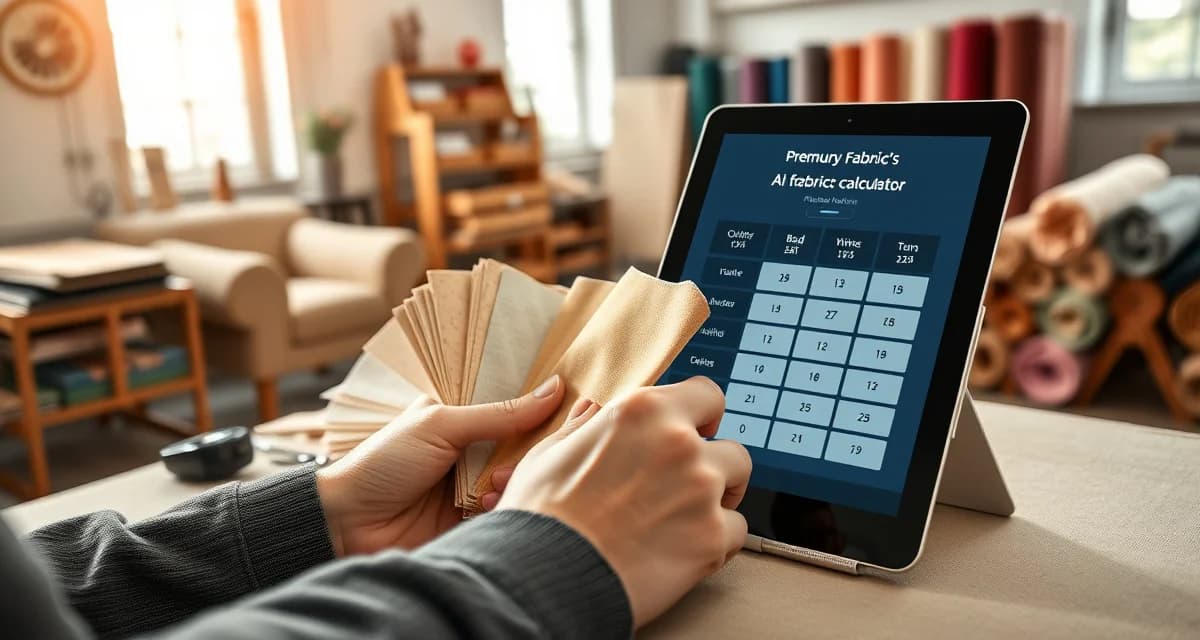
AI Fabric Calculator for Upholstery Shops: What It Does and Why It Matters
Human yardage error rate is 15-20% per complex job. AI calculation reduces this to under 2%. That gap exists because complex upholstery yardage calculation involves five or more simultaneous variables, and human working memory reliably fails when tracking that many factors at once. AI doesn't forget the nap direction adjustment when it's also tracking the pattern repeat. A human brain under time pressure often does.
This guide explains what an AI fabric calculator does differently than a spreadsheet or manual math, and why the errors it prevents matter.
TL;DR
- This guide covers the specific techniques, measurements, and decisions that determine quality outcomes in upholstery work.
- Planning and preparation before cutting begins is the most reliable way to avoid costly errors on any upholstery job.
- Fabric selection, yardage calculation, and structural assessment are the three decisions that most affect the final result.
- Experienced upholsterers develop consistent workflows that ensure quality and efficiency across every job type they handle.
- Documenting job details, material specifications, and client approvals protects both the shop and the client.
- The right tools, materials, and techniques for each job type make a measurable difference in quality and profitability.
The Variables in Upholstery Yardage Calculation
A simple solid-fabric job on a basic chair has perhaps two meaningful variables: the total surface area of the panels and the fabric width. Manual calculation handles this reasonably well.
A complex job, patterned velvet on a tufted Chesterfield, or a large-repeat linen on a barrel chair, involves all of these simultaneously:
Fabric width: 54-inch, 60-inch, 48-inch, 72-inch, and wider or narrower widths all require different cutting layouts. The same job in 54-inch fabric uses more yardage than in 60-inch because the narrower width produces more cutting waste.
Panel dimensions and count: A Chesterfield has a different panel map than a Lawson sofa. A barrel chair has more complex panels than a standard club chair. Getting the panel count and dimensions right for each specific piece type is the foundation of accurate calculation.
Pattern repeat: A fabric with a 13-inch vertical repeat and 10-inch horizontal repeat requires each panel to be cut at the start of a repeat cycle so the pattern aligns across panels. The additional yardage for a large repeat on a multi-cushion sofa can run 2-4 yards above the base calculation.
Nap direction: Pile fabrics (velvet, chenille, microsuede) have a directional nap. All panels must run in the same direction. Depending on piece configuration, this constraint forces less efficient cutting layouts, adding yardage.
Tufting allowance: Tufted construction pulls fabric inward at button locations, requiring additional yardage beyond the flat panel area. The allowance varies by button density and foam depth.
Waste factor: Every cutting job produces trim waste. The waste percentage varies by panel shape complexity, fabric width, and cutting layout efficiency.
Tracking all six variables simultaneously in your head or in a simple spreadsheet formula is where errors accumulate.
What AI Does Differently
A spreadsheet formula is static. You write the formula once and it calculates the same variables the same way every time. If you forget to account for nap direction, the formula doesn't know. If you update the repeat dimensions for one job, you have to remember to update them, and if you're working quickly, you might not.
AI calculation is dynamic. StitchDesk's calculator:
Uses piece-type templates: The calculator knows that a Chesterfield sofa has 14+ panels with specific geometry that a Lawson doesn't share. You don't re-enter the panel structure for every job. The template carries the right panel map for that piece type.
Applies variable adjustments sequentially: When you enter a 13-inch vertical repeat, the calculator adjusts the yardage for every panel that needs pattern alignment. It doesn't miss a panel because you were thinking about something else.
Flags nap-directional fabrics: When you specify a pile fabric, the calculator automatically applies the nap direction constraint to the cutting layout. The flag can't be forgotten because it's triggered by the fabric type you enter.
Calculates waste by configuration: The waste percentage isn't a generic 10% applied to everything. It varies by piece complexity, panel count, and cutting layout efficiency based on the specific job parameters.
Updates in real time: Change the fabric width from 54 to 60 inches and the calculation updates immediately. Change the pattern repeat and the yardage adjusts. You see the impact of each change before you finalize.
The Error Cases AI Prevents
The forgotten repeat: You remember the repeat on the sofa body but apply the formula without adding repeat allowance for the cushion tops. AI: can't forget, it's in the calculation structure.
The nap direction undercount: You calculate for the main panels but forget to add the nap adjustment for the inside arms. AI: applies the constraint to the full panel set.
The fabric width mistake: You have the calculation right but entered 60-inch width when the actual fabric is 54 inches. AI: width is a confirmed input, not an assumption. When you receive the fabric and confirm width, updating the input triggers a recalculation.
The tufted headboard shortfall: Tufting allowance is easily skipped in a quick estimate because it feels like a small number. It isn't. A heavily tufted king headboard in velvet needs 1-1.5 extra yards for tufting. Missing this causes a shortfall on a premium-fabric job. AI: tufting allowance is a specific input field, not an afterthought.
Who Benefits Most
The error reduction is most valuable for shops that regularly work with:
- Patterned decorative fabrics
- Velvet, chenille, and other pile fabrics
- Tufted construction (headboards, ottomans, sofas)
- Complex piece types (barrel chairs, wing chairs, Chesterfields)
- High-value fabrics where a shortfall means an expensive reorder
At 15-20 jobs per month with 30% complex work, eliminating the 15-20% error rate on those jobs prevents 1-2 shortfalls per month. At $100-150/shortfall, that's $100-300/month in direct savings from this single feature.
For the calculator in action within a full workflow, the StitchDesk features overview covers how it connects to quoting and job management. For how it compares to manual methods across all software options, see upholstery software with fabric calculator.
Frequently Asked Questions
What does an AI fabric calculator do for upholstery?
An AI fabric yardage calculator takes furniture piece type, dimensions, fabric width, pattern repeat, nap direction, tufting, and waste factor as inputs and calculates the exact yardage required for the job. Unlike a manual formula or spreadsheet, it applies all variables simultaneously using piece-specific panel templates, adjusts for nap direction constraints automatically, and accounts for pattern alignment across every panel. The result is a yardage number you can order from a supplier with confidence rather than a manual estimate with a safety buffer added.
Is AI yardage calculation more accurate than manual?
Considerably more accurate on complex jobs. Manual yardage calculation on jobs involving pattern repeat, nap direction, and tufting has an error rate of 15-20% in practice. AI calculation on the same jobs has an error rate under 2%. The gap exists because AI doesn't forget to apply nap direction when it's also calculating repeat, doesn't miss a panel when counting, and doesn't round estimates up or down based on gut feel. On simple solid-fabric jobs, the accuracy gap is smaller because there are fewer variables to track. On complex jobs, it's the difference between regular shortfalls and near-zero shortfall rates.
How does StitchDesk's AI fabric calculator work?
StitchDesk's calculator uses piece-type templates for all common furniture types, sofas, chairs, sectionals, recliners, headboards, ottomans, and more, that encode the standard panel count and geometry for each piece. You enter the specific dimensions for the job, the fabric width, and the fabric characteristics (pattern repeat dimensions if applicable, nap direction for pile fabrics, tufting if applicable). The calculator applies the panel template to your dimensions, adjusts for all fabric constraints, applies a waste factor appropriate for the complexity level, and outputs a total yardage number. The calculation takes under 60 seconds and produces a result you can forward to your supplier.
What are the most common mistakes to avoid in this type of work?
The most common mistakes are underestimating material requirements, starting work before the frame is fully assessed and repaired, and skipping the centering and alignment checks before cutting. Each of these is far more expensive to correct after cutting has begun than to prevent at the planning stage. Taking an extra 15-30 minutes at the assessment and planning stage pays dividends throughout the job.
How do I get the best results from a professional upholsterer?
Come to the consultation with clear measurements, photos of the piece, and an idea of the room's color scheme and intended use. Be specific about how the piece will be used: high traffic, pets, children, or outdoor exposure all affect fabric recommendations. Provide fabric samples or accept guidance on appropriate options for your use case. Approve the proof carefully and ask to see the fabric on the piece before final installation if you are uncertain about a pattern or color choice.
When should I consult a professional rather than doing the work myself?
Consult a professional when the piece has structural issues beyond simple fabric replacement, when the piece has significant financial or sentimental value, or when the fabric or technique (tufting, pattern matching, hand-tacking) requires skills you have not developed. A professional assessment before you begin is free at most shops and can prevent costly mistakes on a piece worth preserving.
Sources
- National Upholstery Association
- Association of Master Upholsterers and Soft Furnishers (AMUSF)
- Upholstered Furniture Action Council (UFAC)
- Furniture Today (trade publication)
Get Started with StitchDesk
Running a successful upholstery shop means getting the details right on every job. StitchDesk gives you purpose-built tools for quoting, fabric calculation, job tracking, and client communication, all in one place designed specifically for the trade. Start a free trial and see how StitchDesk supports quality work from intake to delivery.