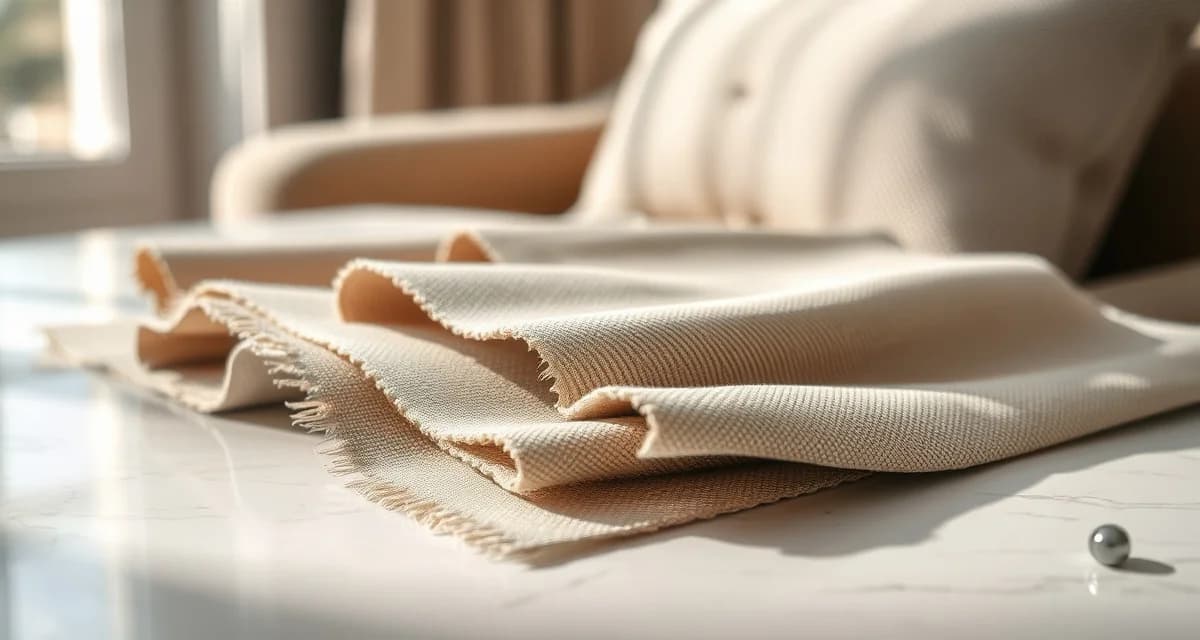
High Traffic Upholstery Fabric Guide: Commercial and Family Rooms
High traffic is relative. A fabric that lasts 10 years on a formal living room chair that gets used twice a week will fail in 18 months on a restaurant booth seat that holds 40 customers a day. The fiber type, weave structure, and Wyzenbeek rub count that you spec for residential family room seating and for commercial hospitality seating are genuinely different.
Getting this wrong doesn't just cost you a callback, it costs you a client relationship and potentially a commercial contract.
TL;DR
- This guide covers the specific techniques, measurements, and decisions that determine quality outcomes in upholstery work.
- Planning and preparation before cutting begins is the most reliable way to avoid costly errors on any upholstery job.
- Fabric selection, yardage calculation, and structural assessment are the three decisions that most affect the final result.
- Experienced upholsterers develop consistent workflows that ensure quality and efficiency across every job type they handle.
- Documenting job details, material specifications, and client approvals protects both the shop and the client.
- The right tools, materials, and techniques for each job type make a measurable difference in quality and profitability.
Understanding "High Traffic" by Setting
Residential family room: 2 to 4 people using furniture daily. Kids, pets, food and drinks on the sofa. This is moderate to heavy residential use. Minimum 25,000 to 30,000 Wyzenbeek double rubs. Performance fabric strongly preferred.
Residential formal living room: Light use, guests occasionally, no everyday use. Standard residential fabric at 15,000 to 20,000 rubs is appropriate. Premium aesthetics over durability.
Small office or waiting room: 10 to 30 people per day using chairs. Requires 50,000 rubs minimum. Vinyl or high-durability commercial fabric.
Hospitality (hotel lobby, lounge): Heavy intermittent use, public setting. 50,000 to 100,000 rubs. Contract-grade fabric mandatory.
Restaurant or bar seating: Extremely high use, exposure to food, drinks, cleaning chemicals. 100,000+ rubs. Commercial vinyl or solution-dyed contract fabric. No exceptions.
Recommending a 30,000-rub fabric for a restaurant causes failure within 12 to 18 months of installation. That's an unhappy client, a potential dispute, and a reputation hit.
Rub Count as a Selling Tool
The Wyzenbeek rub count guide explains the testing method in detail. For the purposes of fabric recommendation, here's how to use rub count in client conversations:
Don't just cite the number, translate it. "This fabric is rated at 100,000 double rubs" means nothing to most clients. "This fabric will withstand the equivalent of 25 years of daily use in a family room" means something.
For commercial clients, frame it as liability protection: "Specifying the correct commercial-grade fabric protects your investment. If we use residential fabric and it fails in 18 months, that's a full redo cost in year 2."
Best Fiber Types for High-Traffic Upholstery
Polyester and polyester blends: The workhorse of high-traffic upholstery. Good rub counts, resists fading, easy to clean. Performance fabrics are almost all polyester-based. Widely available in commercial grades.
Solution-dyed acrylic: The dye is in the fiber itself, not applied to the surface. This means color doesn't fade even with repeated cleaning and UV exposure. Standard for outdoor and hospitality settings.
Nylon: Excellent abrasion resistance. Historically used in commercial settings before performance polyester became dominant. Still a good choice for extremely high-traffic seats.
Vinyl and faux leather: Not technically a fabric, but the default for restaurant booths, healthcare seating, and anywhere that needs to be wiped down with cleaning chemicals. Zero absorption. Very high durability.
What to avoid for high traffic: Natural fibers (cotton, linen, wool) in anything beyond light residential use. They wear, stain, and fade faster than synthetics under heavy use.
Weave Structure Matters Too
Even within the same fiber type, weave structure affects durability. Tight, flat weaves (plain weave, twill weave) hold up better to abrasion than loose weaves or textured surfaces. Loop pile fabrics like bouclé look great but the loops catch and pull under repeated use.
For commercial applications, the general rule is: the tighter and flatter the weave, the more durable the fabric. Reserve textured and looped weaves for low-traffic residential decorative pieces.
Yardage Planning for High-Traffic Jobs
High-traffic commercial jobs often mean scale, not one restaurant chair but 40, not one hotel lobby chair but 200. At that scale, yardage planning becomes critical.
For commercial scale work, calculate yardage per piece precisely and multiply by piece count, then add a buffer:
- Up to 20 pieces: add 5 percent buffer
- 20 to 50 pieces: add 7 to 10 percent buffer (scale errors compound)
- 50+ pieces: add 10 to 15 percent buffer and order from a single dye lot
See the commercial upholstery guide for the full framework on pricing and executing commercial-scale jobs.
Frequently Asked Questions
What upholstery fabric is best for high traffic?
For residential high-traffic use (family rooms, heavily used sofas), performance fabrics in polyester weaves with 25,000 to 50,000 Wyzenbeek double rubs are the best recommendation. For commercial use, contract-grade fabrics with 100,000+ rubs, or commercial vinyl, are required. The specific recommendation depends on the setting, a restaurant needs different fabric than a hotel lobby.
How many rubs should commercial upholstery fabric have?
For commercial settings, the baseline is 100,000 Wyzenbeek double rubs. Light commercial use (offices, low-traffic waiting rooms) can use 50,000 to 75,000 rubs. High-impact commercial use (restaurants, bars, healthcare) should be 100,000 rubs or above, with vinyl or coated fabrics as an alternative for areas exposed to frequent cleaning chemicals.
What is the most durable upholstery fabric for restaurants?
Commercial-grade vinyl or coated faux leather is the most practical choice for restaurant seating because it can be wiped down with standard cleaning products repeatedly without degrading. For restaurants that want a fabric look, solution-dyed commercial polyester with 100,000+ rubs is the appropriate choice. Never use residential fabric in a restaurant setting, it will fail, and it becomes your problem.
What are the most common mistakes to avoid in this type of work?
The most common mistakes are underestimating material requirements, starting work before the frame is fully assessed and repaired, and skipping the centering and alignment checks before cutting. Each of these is far more expensive to correct after cutting has begun than to prevent at the planning stage. Taking an extra 15-30 minutes at the assessment and planning stage pays dividends throughout the job.
How do I get the best results from a professional upholsterer?
Come to the consultation with clear measurements, photos of the piece, and an idea of the room's color scheme and intended use. Be specific about how the piece will be used: high traffic, pets, children, or outdoor exposure all affect fabric recommendations. Provide fabric samples or accept guidance on appropriate options for your use case. Approve the proof carefully and ask to see the fabric on the piece before final installation if you are uncertain about a pattern or color choice.
When should I consult a professional rather than doing the work myself?
Consult a professional when the piece has structural issues beyond simple fabric replacement, when the piece has significant financial or sentimental value, or when the fabric or technique (tufting, pattern matching, hand-tacking) requires skills you have not developed. A professional assessment before you begin is free at most shops and can prevent costly mistakes on a piece worth preserving.
Sources
- National Upholstery Association
- Association of Master Upholsterers and Soft Furnishers (AMUSF)
- Upholstered Furniture Action Council (UFAC)
- Furniture Today (trade publication)
Get Started with StitchDesk
Running a successful upholstery shop means getting the details right on every job. StitchDesk gives you purpose-built tools for quoting, fabric calculation, job tracking, and client communication, all in one place designed specifically for the trade. Start a free trial and see how StitchDesk supports quality work from intake to delivery.