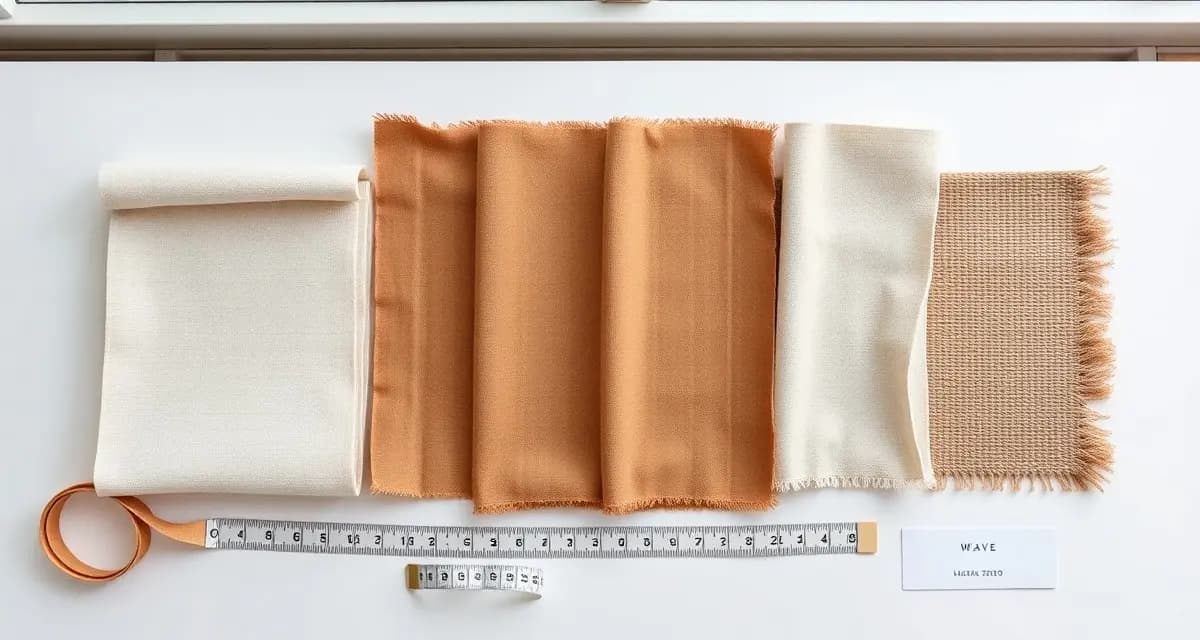
Cotton Fabric Yardage Calculator for Upholstery: Weave Matters
Not all cotton is the same. When it comes to calculating fabric yardage, the difference between a tight canvas weave and a loose slub weave is real and measurable. The cotton fabric yardage calculator you need doesn't treat all cotton as one thing. It adjusts the waste factor based on weave type.
Loose-weave cotton frays 30% more at seams than tight-weave fabric. That extra fraying requires more seam allowance to prevent failure, which changes how much yardage you need per cut piece. Generic tools that use the same 10% waste factor for all cotton are consistently wrong for loose-weave fabrics.
TL;DR
- Accurate yardage calculation for cotton fabric jobs prevents costly fabric shortfalls and over-ordering that erode margin.
- Pattern repeats are the most common source of yardage errors; always calculate each cutting zone separately, not as a flat percentage.
- Nap-direction fabrics (velvet, chenille, mohair) require 15-25% more yardage than the same job in plain fabric.
- Fabric width significantly affects yardage: the difference between 54-inch and 60-inch fabric can be 1-2 yards on the same piece.
- Always add a 10-15% buffer on plain fabric and 15-20% on patterned fabric to account for cutting waste.
- Entering measurements accurately at the quoting stage eliminates the need to reorder mid-job.
Why Weave Type Changes Your Yardage
Cotton fabric spans a wide spectrum from tightly woven canvas and duck cloth to loosely woven slub cotton and open-weave textures. These aren't just aesthetic differences. They behave differently when cut and sewn.
Tight-weave cotton (canvas, duck, ticking): low fray risk, holds a clean cut edge. Seam allowances of 3/8 inch are typically sufficient. Waste factor: 8-10%.
Mid-weave cotton (standard upholstery cotton, cotton twill): moderate fray risk. Seam allowances of 1/2 inch recommended. Waste factor: 12-14%.
Loose-weave cotton (slub, open-weave, raw cotton): high fray risk. Seam allowances of 5/8 inch or more required. Waste factor: 16-18%.
The weave-type selector in a proper calculator adjusts waste percentage from 8% for tight canvas to 18% for loose slub weaves automatically. That's not a small number. On a sofa that needs 14 yards of base fabric, an 18% waste factor brings the order to 16.5 yards vs 15.4 yards at 10%.
Cotton Weave Types and Their Upholstery Characteristics
Tight-Weave Cotton (Canvas, Duck, Ticking)
Canvas and duck cloth are among the most durable cotton fabrics for upholstery. They're also the easiest to work with. They don't fray excessively, they hold seams well, and they upholster predictably.
For cotton upholstery guide reference, canvas and duck are best suited for high-traffic furniture, children's pieces, and any application where durability matters more than softness.
Mid-Weave Cotton (Twill, Sateen, Chintz)
Mid-weight cotton twill is probably the most common upholstery cotton. It has some drape and softness while still being dimensionally stable enough to hold its shape over time.
Chintz is a glazed cotton that looks great initially but the glaze wears off with use, leaving a dull surface. Good for statement pieces, not for everyday furniture.
Loose-Weave Cotton (Slub, Open-Weave)
Slub cotton has an irregular, textured appearance that's currently popular in designer interiors. It looks casual and organic. But it frays badly at cut edges and requires generous seam allowances.
If your client has selected a slub cotton, budget for the higher waste factor and consider using a serger to finish all cut edges before construction begins.
Pattern Repeats on Cotton
Cotton is one of the most common fabrics for printed patterns, including florals, geometrics, toiles, and stripes. When your cotton fabric has a print, add the pattern repeat waste on top of the weave waste factor.
A loose-weave slub cotton with an 18-inch floral print is a double-hit: 16-18% waste for weave type plus 15-25% extra for the pattern repeat. For a sofa at base 13 yards, you could be looking at 17-19 yards of actual order. That's a number that surprises shops every time.
Use the fabric yardage calculator with both material type and pattern repeat settings active simultaneously to get the right figure.
Cotton Yardage Quick Reference
| Furniture Type | Tight-Weave | Mid-Weave | Loose-Weave |
|---|---|---|---|
| Dining chair | 1.1-1.3 yards | 1.2-1.5 yards | 1.4-1.7 yards |
| Accent chair | 5.5-6.5 yards | 6-7.5 yards | 7-8.5 yards |
| Loveseat | 9-10.5 yards | 10-12 yards | 11-13 yards |
| Sofa (3-cushion) | 13-15 yards | 14.5-17 yards | 16-19 yards |
FAQ
What type of cotton is best for upholstery?
For most upholstery applications, medium-to-heavyweight cotton twill or canvas is the best choice. Duck cloth (10-12 oz) holds up well to everyday use and is easy to work with. Avoid lightweight muslin or loose open-weave cottons for high-traffic pieces. If your client wants the look of slub or texture cotton, consider a cotton-polyester blend in that aesthetic, which will be more durable and easier to sew.
How much cotton fabric do I need for a sofa?
A solid, tight-weave cotton sofa with a standard 3-cushion Lawson configuration needs approximately 13-15 yards at 54-inch width. Mid-weave cotton needs 14.5-17 yards for the same sofa. Loose-weave or slub cotton needs 16-19 yards. Always verify the weave type before ordering. Cotton yardage varies by weave tightness, and the range is wide.
Does cotton weave affect how much yardage I need?
Yes, considerably. The difference between a tight canvas and a loose slub cotton can be 2-4 yards on a sofa. Tight weaves use 8-10% waste factor; loose weaves need 16-18% to account for the extra seam allowance required to prevent fraying. A calculator that uses one waste factor for all cotton fabrics will underestimate loose-weave jobs consistently.
Should I add a buffer to calculated yardage?
Yes. A 10-15% buffer is standard on plain fabric to account for cutting waste and minor errors. On patterned fabric, use 15-20% above the pattern-adjusted calculation. For COM fabric that cannot be reordered if you run short, some upholsterers increase the buffer to 20-25%. The cost of a modest buffer is far lower than the cost of sourcing additional fabric after cutting has begun.
Sources
- National Upholstery Association
- Association of Master Upholsterers and Soft Furnishers (AMUSF)
- Upholstered Furniture Action Council (UFAC)
- Furniture Today (trade publication)
Get Started with StitchDesk
Getting yardage right on cotton jobs is the difference between a profitable quote and an expensive reorder. StitchDesk's fabric calculator accounts for all the variables that cause errors: pattern repeat by zone, nap direction, fabric width, and cushion configuration. Start a free trial and see how accurate yardage calculation affects your bottom line.