Facebook for Upholstery Shops: Local Groups and Before-After Strategy
Facebook isn't where you build a following. For an upholstery shop, it's where you show up in front of the right local neighborhood at the exact moment someone's asking for a referral. Facebook before-after posts in local neighborhood groups generate 5-12 inquiries per post in active communities. That number will vary by neighborhood size, but the conversion quality is consistently high because the audience is people who live near you and trust local recommendations.
The two-track strategy that works for upholstery shops: a business page for credibility and reviews, and local group posting for active lead generation. They serve different functions and need different approaches.
TL;DR
- Before-and-after photography is the highest-return marketing investment for an upholstery shop; clients choose shops based on portfolio quality.
- Google Business Profile optimization and review management are the most important local SEO actions for upholstery shops.
- Instagram and Houzz are the most effective platforms for upholstery shops because both are visually driven and interior-design adjacent.
- Referral programs with interior designers and furniture stores generate higher-quality leads than paid advertising for most shops.
- A consistent Google review strategy converts satisfied clients into visible social proof that attracts new clients.
- Most upholstery shops grow fastest through referral quality, not advertising spend: document every job and ask satisfied clients for reviews.
Setting Up Your Facebook Business Page
Your Facebook Business Page is the first thing people check when someone recommends you in a local group. If they click through to an empty or outdated page, you lose the lead. If they see a professional page with work photos, reviews, and a clear description, they call.
Create your page under "Local Business" and choose the service category for upholstery or home furnishings. Use your actual business name. Your cover photo should be a high-quality before-after showing your best work. Your profile photo can be a logo or a shop photo.
Fill in every section: hours, phone number, address, website if you have one. A complete page looks legitimate. An incomplete page looks abandoned. In the About section, write a one-paragraph description of what you do and where you serve. Keep it factual, not salesy.
Post at least once a week. Finished job photos are your best content. Short, factual captions work better than long marketing copy. "Sofa reupholstered in performance velvet for a family in Riverside. Took about 10 days from pickup to delivery." That's enough.
Local Group Posting Strategy
Facebook local neighborhood groups and "buy/sell/trade" groups are where the real residential lead generation happens. These groups have thousands of local members who actively ask for service recommendations.
The first step is finding the right groups. Search Facebook for your city name plus "neighborhood," "community," "residents," or "local deals." Join five to ten of the most active groups in areas you serve. Read the rules of each group before posting. Many neighborhood groups allow business posts as long as they're not spammy.
When someone posts asking for upholstery recommendations, respond immediately. A quick, professional reply with your page link and a brief description of your work gets seen by everyone who views that thread. These are the highest-converting leads you'll get on Facebook because the person is actively looking.
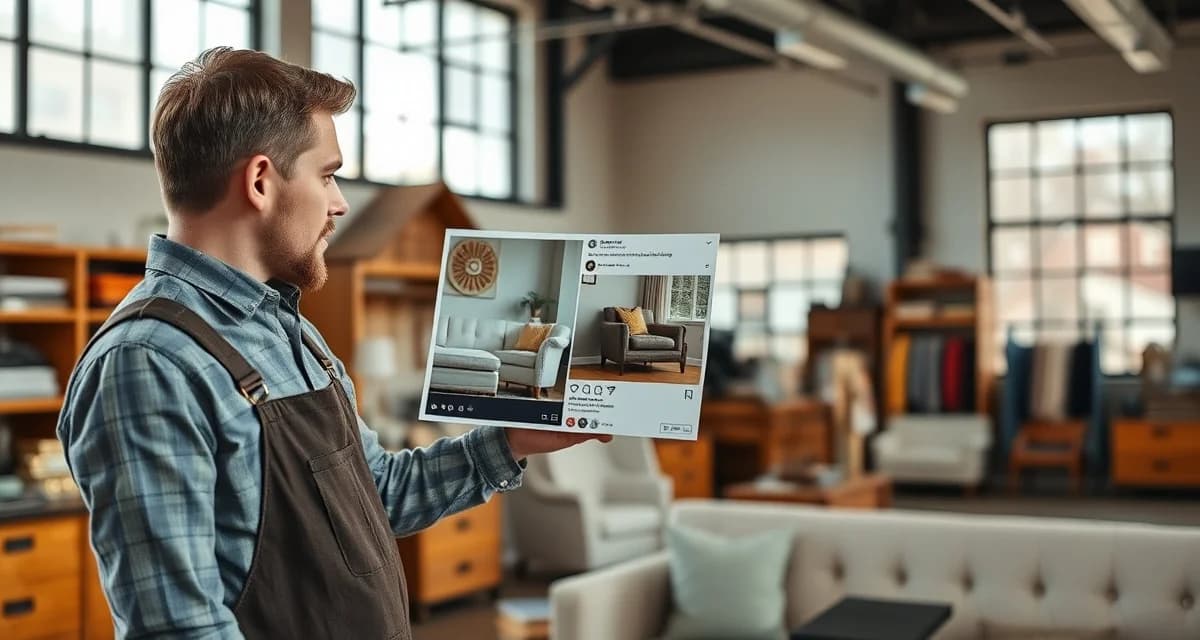
For your own posts, before-after photos are the format. Post a split image or two side-by-side photos showing the transformation. The caption should mention the neighborhood if possible, be conversational, and include a call to action: "We pick up and deliver in the area. DM us or call [number] for a quote."
Active communities can generate 5-12 inquiries from a single post. Not all groups are that responsive, but when you find one that is, post there regularly. Just don't post the same content repeatedly in the same group. Rotate your best jobs and vary the captions.
What Content Gets Engagement
Not all upholstery content performs equally on Facebook. Here's what works:
Before-after photos with a visible transformation. The more dramatic the difference, the more shares and comments you get. A trashed velvet armchair turned into a pristine piece gets more engagement than a subtle re-cover.
Jobs with interesting fabrics. Boucle, patterned velvet, and statement colors generate comments. People who see bold fabric choices often tag friends who are decorating.
Videos showing a detail. A 15-second clip of a finished tufted cushion or a pull-through on welt cord gets watched and shared. You don't need production quality. Just steady lighting and a clear subject.
"We just completed this for a neighbor" framing. Hyper-local language connects with neighborhood group audiences and signals that you serve their specific area.
Reviews and Recommendations on Facebook
Facebook lets clients post reviews directly to your business page. These reviews show up in Google search results sometimes too, so they matter beyond Facebook itself.
Ask satisfied clients to leave a Facebook review in addition to Google. The platforms reinforce each other. Someone who finds you through a neighborhood group recommendation will often check your Facebook page for reviews before calling.
Respond to every review. Thank the positive ones specifically (not with generic copy) and handle negative ones calmly and directly.
Connecting Facebook to Your Marketing System
Facebook leads from local groups tend to inquire via Messenger or phone call. Make sure your Messenger is monitored during business hours. A response within an hour catches the lead while they're still in decision mode. A response the next day often arrives after they've already called someone else.
Combine your Facebook strategy with your Instagram approach and the broader marketing guide for upholstery shops. Facebook tends to reach an older residential demographic; Instagram skews younger and is better for designer clientele. Both are worth running simultaneously.
Frequently Asked Questions
How do I use Facebook to market my upholstery shop?
Use two tracks simultaneously. First, maintain an active Facebook Business Page with regular before-after posts, a complete profile, and reviews. Second, join local neighborhood groups in your service area and post before-after photos from recent jobs with your contact info. When someone in a local group asks for an upholstery recommendation, respond quickly and professionally. The combination of a credible page to click through to and active presence in local groups is what generates consistent residential leads from Facebook.
Should I post upholstery jobs in Facebook groups?
Yes, as long as you follow the group's rules and post genuine content from real jobs. Most local neighborhood and community groups allow business posts that are genuinely helpful and locally relevant. Before-after photos from a job in that neighborhood are exactly the kind of content group members find valuable. Don't post generic promotions or the same content repeatedly. Keep captions conversational, mention the neighborhood if possible, and include your contact info. Engagement in active neighborhood groups can be surprisingly strong for a service like upholstery.
How do I set up a Facebook Business Page for upholstery?
Go to Facebook and select "Create a Page," then choose "Business or Brand." Set your category to upholstery or home services. Use your real business name, add a cover photo showing your best work (a before-after split image works well), and fill in every field: phone, address, hours, and a brief description of your services. Post at least a few times before actively promoting your page so visitors see a real, active business rather than an empty profile. Request your first few reviews from satisfied clients to get social proof started.
How should I photograph upholstery work for marketing?
Photograph every significant job in consistent, well-lit conditions before delivery. Use natural light from a large window where possible; avoid flash photography which flattens texture. Shoot from the same angle as the 'before' photo so the comparison is clear. Include at least one detail shot showing fabric texture, welt cording, or tufting quality. A consistent before-and-after format across all your portfolio images creates a professional visual identity.
How do I get more Google reviews for my upholstery shop?
Ask every satisfied client at delivery, when their satisfaction is highest and fresh. Make the request easy by sending a direct link to your Google review page via text or email immediately after the handoff conversation. Mention that reviews help other clients find quality upholstery work. Do not offer incentives for reviews, as this violates Google's terms and can result in penalties. Respond to every review, positive and negative, to show that your shop is attentive and professional.
Sources
- National Upholstery Association
- Association of Master Upholsterers and Soft Furnishers (AMUSF)
- Interior Design Society (IDS)
- Furniture Today (trade publication)
Get Started with StitchDesk
The best marketing for an upholstery shop is high-quality before-and-after photography paired with proactive client communication that generates strong reviews. StitchDesk's customer portal and job photo timeline give you the tools to document every job professionally and keep clients informed throughout. Try StitchDesk free and see how it supports your shop's reputation.