Before and After Photography for Upholstery Jobs: Phone Camera Tips
Shops that post consistent before-after photos gain 3 to 5 new residential leads per month from social media alone. That's without paid advertising, without a marketing agency, and without any special photography equipment. A modern phone camera is sufficient. What separates the posts that generate leads from the ones that get ignored is consistency, lighting, and the 5-shot sequence.
TL;DR
- Before-and-after photography is the highest-return marketing investment for an upholstery shop; clients choose shops based on portfolio quality.
- Google Business Profile optimization and review management are the most important local SEO actions for upholstery shops.
- Instagram and Houzz are the most effective platforms for upholstery shops because both are visually driven and interior-design adjacent.
- Referral programs with interior designers and furniture stores generate higher-quality leads than paid advertising for most shops.
- A consistent Google review strategy converts satisfied clients into visible social proof that attracts new clients.
- Most upholstery shops grow fastest through referral quality, not advertising spend: document every job and ask satisfied clients for reviews.
The 5-Shot Sequence
For every upholstery job, take these 5 shots:
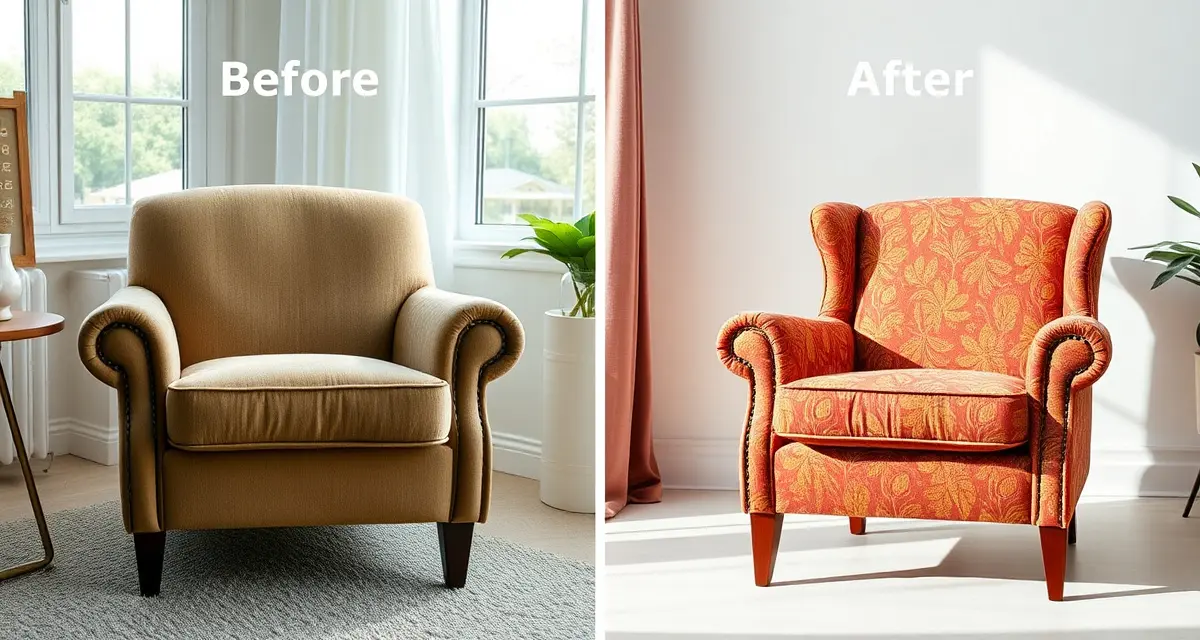
Shot 1: Before front view. Photograph the piece at its arrival state, from the front at a slight angle (about 45 degrees from the front face). This angle shows three planes: the front, one side, and the top. Include the full piece in frame with a few inches of space at all edges.
Shot 2: Before close-up of damage or wear. A tight shot of the most worn area, the armrest, the seat cushion front edge, the outside back. This shot establishes why the piece needed reupholstery and sets up the contrast in the after shot.
Shot 3: After front view. Same angle and framing as Shot 1. This is the primary comparison shot. Same angle, same framing = clear visual comparison.
Shot 4: After close-up. Same area as the before close-up, now showing the new fabric. This before-after pair is often more compelling than the full-view comparison because it shows the transformation detail.
Shot 5: After context shot. A slightly wider view that shows the piece in a more natural setting, or a different angle that shows the full beauty of the finished result. Cushions arranged naturally, any styling done. This is the aspirational shot.
Lighting: The Most Important Variable
Lighting matters more than camera quality. A well-lit photo from a 4-year-old phone beats a poorly lit photo from the latest model.
Natural light is your best option. Move pieces near a window for photography when possible. North-facing window light (indirect) is ideal, consistent, soft, and without harsh shadows. South or west-facing window light in direct sun creates bright spots and deep shadows that obscure detail.
When natural light isn't available: Use two light sources placed on opposite sides of the piece. This eliminates the single-source shadow that makes fabric look uneven. An inexpensive ring light (used as a fill, not a main light) or two portable LED panels work well in shop environments.
Avoid overhead fluorescent. Shop fluorescent lighting creates color cast and unflattering shadows. Turn off the overheads and use portable lights for photography.
Consistent light for before and after. If you photograph the before in different light than the after, the comparison is harder to read and the after may not look as dramatic even if the transformation is notable. Set up your photography spot in the same location with the same lighting for both shots on every job.
Staging for Impact
For the before photo: Photograph the piece as it arrived. Don't tidy it or stage it, the worn state is the contrast point. Move it to your photography spot and shoot.
For the after photo: Fluff cushions and arrange them naturally. Remove any shop debris, tape, or tools from the frame. Straighten the piece so it's square to the camera. For pieces with decorative details (nailhead, trim), confirm those details are fully finished and visible.
Background: A clean, neutral background reads better than a cluttered shop. A white wall, a piece of neutral fabric hung behind the piece, or an outside area with a plain backdrop all work. Cluttered backgrounds compete with the piece visually.
Height and angle: Position the camera at roughly the seated eye level for chairs and sofas (about 3 feet off the ground). This is how the piece is seen and used. Photos taken from standing height look different from how we experience furniture.
What Not to Do in Upholstery Photography
Not from too far away. If the piece is a small dot in the frame, the fabric can't be seen. Fill the frame.
Not from directly in front. Head-on shots flatten the piece. The slight-angle view that shows three planes is more dimensional and more interesting.
Not in mixed lighting. Mixing daylight from a window with fluorescent overhead creates color shift and uneven tone.
Not without the before. A beautiful after photo without a before photo is decorative content. A before and after comparison is proof of transformation. The comparison is what generates the lead.
Posting for Lead Generation
The caption matters almost as much as the photo.
Describe the job specifically. "Lawson sofa in Sunbrella Performance Linen, 14 yards, 8-year-old frame in perfect condition" tells the viewer more than "sofa reupholstery."
Include location. "Available in [your city]" or "delivered to [neighborhood]" tells potential clients you serve their area.
Include a call to action. "DM us for a quote" or "Link in bio to get started" gives interested viewers a next step.
Post consistently. 3-4 posts per week beats 1 post per week regardless of photo quality. Consistent posting keeps you visible in follower feeds.
For the full upholstery shop marketing approach, the upholstery shop marketing guide covers all marketing channels by ROI. For how to set up photo-based customer communication, see the customer portal guide for upholstery shops.
Frequently Asked Questions
How do I photograph upholstery jobs?
Use the 5-shot sequence: before front view, before close-up of wear, after front view (same angle), after close-up of same area, and an after context shot. Shoot in natural window light when possible, or use two portable light sources to eliminate single-source shadows. Position the camera at seated eye level, roughly 45 degrees from the front face of the piece. Clean neutral background and consistently staged cushions produce the most compelling after shots.
What is the best lighting for upholstery photography?
Natural light from a north-facing window is ideal for consistent, soft illumination without harsh shadows. If natural light isn't available, use two portable LED panels positioned on opposite sides of the piece to eliminate single-source shadows. Avoid overhead fluorescent lighting, which creates unflattering color cast and shadow patterns. Consistent lighting between your before and after shots makes the transformation more visually impactful.
How do I take before and after photos for my upholstery shop?
Establish a dedicated photography spot in your shop with consistent, good lighting. Take the before photo at the piece's arrival state without staging. After completing the job, return to the same spot with the same lighting and take the after from the same angle and distance. Use the 5-shot sequence: two before shots (full view + close-up of wear), three after shots (matching full view, matching close-up, and a context/beauty shot). Post the comparison pair, not just the after.
How should I photograph upholstery work for marketing?
Photograph every significant job in consistent, well-lit conditions before delivery. Use natural light from a large window where possible; avoid flash photography which flattens texture. Shoot from the same angle as the 'before' photo so the comparison is clear. Include at least one detail shot showing fabric texture, welt cording, or tufting quality. A consistent before-and-after format across all your portfolio images creates a professional visual identity.
Sources
- National Upholstery Association
- Association of Master Upholsterers and Soft Furnishers (AMUSF)
- Interior Design Society (IDS)
- Furniture Today (trade publication)
Get Started with StitchDesk
The best marketing for an upholstery shop is high-quality before-and-after photography paired with proactive client communication that generates strong reviews. StitchDesk's customer portal and job photo timeline give you the tools to document every job professionally and keep clients informed throughout. Try StitchDesk free and see how it supports your shop's reputation.