Instagram for Upholstery Shops: Before-After Content That Gets Leads
Upholstery shops posting 4 times per week on Instagram for 3 months average 8 to 15 new residential leads per month. This isn't paid advertising, it's organic reach from consistent before-after content. The upholstery business is inherently visual. Before-and-after transformation is one of the most engaging content formats on the platform. The shops that don't post are leaving those leads to the shops that do.
This guide covers the specific content strategy that generates local leads: what to post, when to post it, and how to turn followers into phone calls.
TL;DR
- Before-and-after photography is the highest-return marketing investment for an upholstery shop; clients choose shops based on portfolio quality.
- Google Business Profile optimization and review management are the most important local SEO actions for upholstery shops.
- Instagram and Houzz are the most effective platforms for upholstery shops because both are visually driven and interior-design adjacent.
- Referral programs with interior designers and furniture stores generate higher-quality leads than paid advertising for most shops.
- A consistent Google review strategy converts satisfied clients into visible social proof that attracts new clients.
- Most upholstery shops grow fastest through referral quality, not advertising spend: document every job and ask satisfied clients for reviews.
Why Before-After Works on Instagram
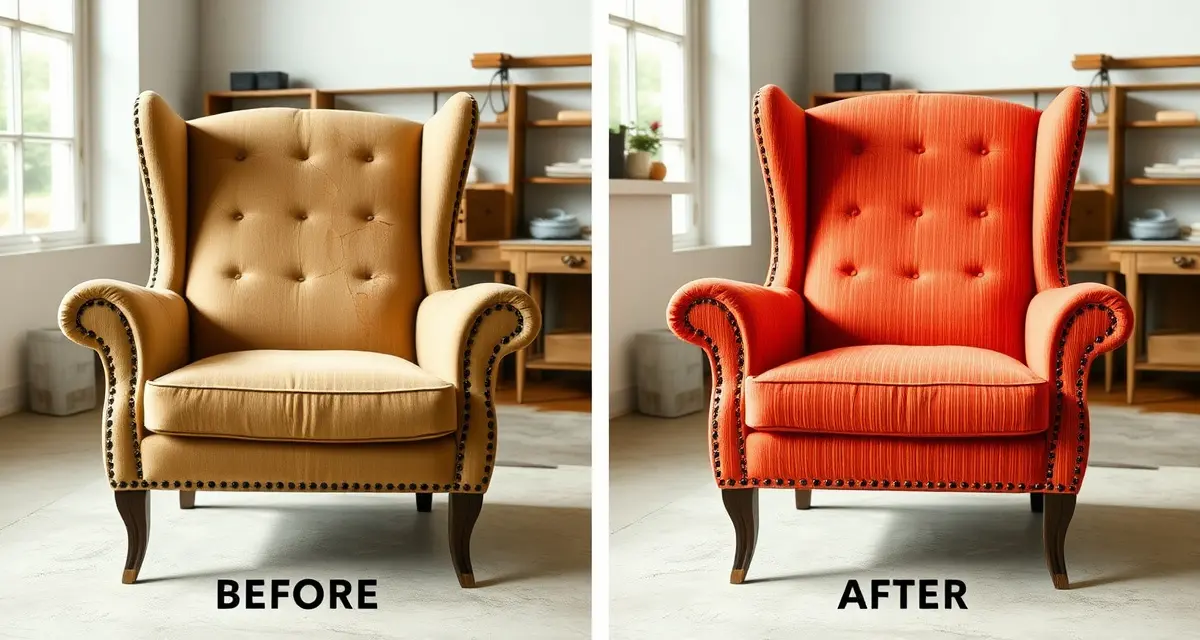
Before-after content drives engagement because it tells a complete story in two images: problem and solution. The viewer sees themselves in the before (worn furniture they want to fix) and desires the after (the transformation they want). This isn't abstract marketing, it's direct demonstration of your value.
For upholstery specifically, the before-after pair also answers the question "is it worth reupholstering?" more powerfully than any written explanation. Showing a thread-bare 1970s armchair next to the same chair in rich velvet closes more jobs than any quote page.
The 4-Post Week Content Calendar
Posting 4 times per week is achievable and effective. Here's the structure:
Post 1 (Monday): Before-after comparison
Your highest-performing post type. Two photos together, arrival state and finished state, same angle and framing, with a caption describing the job.
Caption formula: "[Piece type] → reupholstered in [fabric name and color]. [Interesting detail about the job or the piece.] [Call to action.] [Location.] [Hashtags.]"
Example: "Lawson sofa → reupholstered in Sunbrella Performance Linen, Dove Gray. This 1980s sofa had great bones but fabric that needed to go. Now it's ready for another 40 years. DM us for a quote. Serving Austin and surrounding area. #austinupholstery #reupholstery #sofatransformation"
Post 2 (Wednesday): Process or detail post
A single photo of work in progress, a close-up of welt cord, a tufting detail, a fabric close-up, or a teardown photo showing the frame. Educational content, "here's what's inside your sofa", performs well because it's information the viewer hasn't seen before.
Caption formula: "[What you're showing and why it matters.] [Brief educational point.] [Hashtags.]"
Example: "This is what a properly tensioned inside arm looks like before the outside panel goes on. Even tension across the full panel is what prevents the sagging and pulling you see on cheap recoveries. Every job gets checked at this stage before we close it up. #upholsterycraft #furniturereupholstery #austinupholstery"
Post 3 (Friday): Finished beauty shot
The aspirational shot, the completed piece, well staged, showing the full result. This doesn't need to be a before-after pair; it's a standalone "this is what we make" post. These build brand aspiration and attract designer followers.
Caption formula: "[Describe the piece and fabric.] [What makes this particular job notable.] [Hashtags.]"
Post 4 (Weekend): Client story or testimonial
A post featuring a piece with context about the client's story. "This wingback belonged to [client's] grandmother and has been in the family for 60 years." These posts get saved and shared more than other content types, people connect with the story of a meaningful piece being preserved.
Caption formula: "[The piece's story.] [What was done.] [Outcome.] [Hashtags.]"
Instagram Reels for Upholstery Shops
Reels (short videos, 15-60 seconds) receive considerably more reach than static posts. A Reel that shows the transformation, bare frame to finished upholstery in 30 seconds, can reach thousands of people who don't follow you.
Simple Reel format:
- Before shot (2-3 seconds)
- Work in progress clips (10-15 seconds total)
- After reveal (3-5 seconds)
- End card with shop name and "DM for a quote"
You don't need video editing skills. Instagram's built-in Reels editor handles basic assembly. Take short clips during production (tacking fabric, cutting welt, installing cushions), combine with before and after stills, and add a trending audio track.
A Reel posted once per week alongside your 4 static posts puts your content in the Reels feed, a separate discovery surface from the main feed.
Hashtag Strategy
Hashtags increase discoverability for people who don't follow you.
Local hashtags (highest value for lead generation):
- #[yourcity]upholstery (e.g., #austinupholstery)
- #[yourcity]interiordesign
- #[yourcity]homes
- #[yourcity]interiors
Trade hashtags (reach designers and industry):
- #reupholstery
- #upholstery
- #upholsterywork
- #fabricupholstery
- #furniturereupholstery
Content-specific hashtags:
- #sofatransformation (for sofa jobs)
- #chairreupholstery
- #tufted (for tufted work)
- #velvetupholstery
- #beforeandafter
Use 10-15 hashtags per post. Mix local and trade. The local hashtags are what generate leads in your area, prioritize them.
Converting Instagram Followers to Clients
Instagram reach means nothing if it doesn't generate leads. Three elements convert followers to calls:
1. Clear location in every post
Mention your city in every caption. Not just in your bio, in the caption itself. Someone who sees your photo in the upholstery hashtag doesn't know where you are unless you tell them. "Serving Austin and surrounding areas" in every post makes your location immediately clear.
2. A specific call to action
"DM us for a quote" works. "Link in bio to get started" works. "Call [number]" works. Passive captions with no direction get saved but don't generate action. Every post should end with one clear next step.
3. DM response speed
When someone DMs you about a job, respond within a few hours if possible. Same-day response is the standard that generates quotes. A DM that waits 48 hours loses most prospects to whoever responded faster.
Profile optimization:
- Bio: "[City] upholstery shop. Custom fabric for every piece. DM for a quote." Short, clear, location included.
- Link in bio: Your website or a link to your contact/quote page.
- Story highlights: Organize highlights by service type (Sofas, Chairs, Dining, etc.) so visitors can browse your portfolio by category.
What Not to Do on Instagram
Don't post only finished pieces without context. A beautiful finished sofa with no caption or story is decorative content. It doesn't generate leads the way a before-after with the story does.
Don't forget your location. The most common mistake. You post great photos but never mention where you are. Potential clients scroll past because they don't know if you serve their area.
Don't go silent for weeks. Consistency matters more than occasional perfection. Four imperfect posts per week outperform one polished post per week for lead generation. Regular posting keeps you in the feed of people who've followed you.
Don't ignore comments. Reply to every comment, even with a simple acknowledgment. Comments signal engagement to the algorithm and build trust with potential clients watching the thread.
For the full photography process that generates all this content, the before-and-after photography guide covers the 5-shot sequence for every job. For the broader marketing strategy that Instagram fits into, the upholstery shop marketing guide covers all channels by ROI.
Frequently Asked Questions
How do I use Instagram to market my upholstery shop?
Post 4 times per week: a before-after comparison (Monday), a process or detail photo (Wednesday), a finished beauty shot (Friday), and a client story (weekend). Include your city in every caption and end with a clear call to action ("DM for a quote"). Use 10-15 hashtags per post, mixing local hashtags (#[city]upholstery, #[city]interiordesign) with trade hashtags (#reupholstery, #furniturereupholstery). Add one Reel per week showing the transformation from bare frame to finished piece: Reels reach considerably more people than static posts. After 90 days of consistent posting, most shops see 8-15 new residential leads per month from the channel.
What should I post on Instagram for my upholstery business?
Four content types in rotation: (1) Before-and-after comparison posts, your highest-performing content, showing the transformation in two photos with a caption describing the piece, fabric, and job; (2) Process and detail photos, welt close-ups, teardown reveals, fabric cutting, work in progress; (3) Finished beauty shots, the completed piece, well staged; (4) Client stories, posts with the backstory of a meaningful piece ("this wingback belonged to..."). Before-after posts generate the most direct leads. Process posts generate the most saves. Client stories get the most shares. Rotate all four for maximum reach.
How do I get Instagram followers for my upholstery shop?
Consistent posting is the primary growth driver, the algorithm favors accounts that post regularly over accounts that post sporadically. Use local hashtags (#[yourcity]interiordesign, #[yourcity]upholstery) to appear in searches from people in your area. Post Reels to access the Reels discovery feed, which reaches non-followers more aggressively than static posts. Engage with other local businesses and design accounts (comment genuinely, not just emoji). Ask clients at pickup if they'd like to be tagged when you post their piece, tagged posts reach their followers and can generate follow-backs from local potential clients.
How should I photograph upholstery work for marketing?
Photograph every significant job in consistent, well-lit conditions before delivery. Use natural light from a large window where possible; avoid flash photography which flattens texture. Shoot from the same angle as the 'before' photo so the comparison is clear. Include at least one detail shot showing fabric texture, welt cording, or tufting quality. A consistent before-and-after format across all your portfolio images creates a professional visual identity.
How do I get more Google reviews for my upholstery shop?
Ask every satisfied client at delivery, when their satisfaction is highest and fresh. Make the request easy by sending a direct link to your Google review page via text or email immediately after the handoff conversation. Mention that reviews help other clients find quality upholstery work. Do not offer incentives for reviews, as this violates Google's terms and can result in penalties. Respond to every review, positive and negative, to show that your shop is attentive and professional.
Sources
- National Upholstery Association
- Association of Master Upholsterers and Soft Furnishers (AMUSF)
- Interior Design Society (IDS)
- Furniture Today (trade publication)
Get Started with StitchDesk
The best marketing for an upholstery shop is high-quality before-and-after photography paired with proactive client communication that generates strong reviews. StitchDesk's customer portal and job photo timeline give you the tools to document every job professionally and keep clients informed throughout. Try StitchDesk free and see how it supports your shop's reputation.