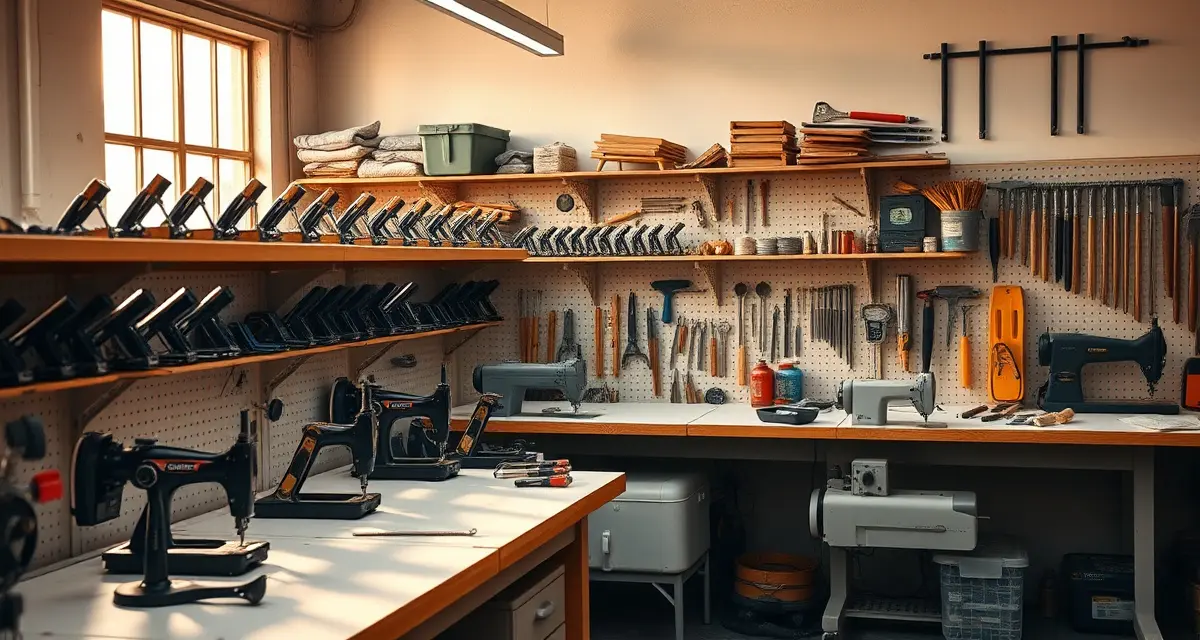
Upholstery Shop Tools Guide: What You Need and What to Buy First
Upgrading from a manual to a pneumatic stapler at 20 jobs per month saves 1 to 2 hours per day, the clearest ROI tool purchase in upholstery. That's not a coincidence. The pneumatic stapler is the tool you use thousands of times per job. It's the one where the difference between a $40 manual tool and a $180 pneumatic tool is felt on every single staple.
The principle behind this guide is staged buying: buy what you need for your current volume, then upgrade as the ROI becomes clear. Don't spend $5,000 on tools for a shop doing 5 jobs per month.
TL;DR
- A well-managed upholstery shop tracks every job from intake to delivery with documented status at each stage.
- Fabric management, including ordering, receiving, storing, and allocating by job, is operationally the most complex part of running an upholstery shop.
- Client communication (status updates, completion photos, delivery scheduling) reduces inbound calls and increases repeat business.
- Shops that document their workflow can train new employees faster and maintain consistent quality during growth periods.
- Measuring key metrics (jobs per week, average ticket, fabric waste rate) is the foundation of informed business decisions.
- Professional shop management tools pay for themselves through reduced errors and faster quoting, typically within the first quarter.
Tier 1: Starting Tools (Up to 10 Jobs Per Month)
These are the tools you need before taking your first job. Total investment: $300-600.
Manual staple gun: A quality manual staple gun ($25-50) handles the low volumes of an early shop. It's slow compared to pneumatic but entirely functional for low-volume work.
Tack puller / ripping chisel: For removing old fabric and tacks. A good ripping chisel ($15-30) is essential, a dull or weak one makes teardown miserable. Also a magnetic tack puller for pulling cut tacks from wood frames.
Tack hammer: For applying cut tacks on traditional work, driving stubborn staples flush, and general frame work.
Regulator needle: A long, heavy needle for adjusting foam and batting beneath fabric without removing installed panels. Essential for fine-tuning cushion fill and smoothing material under a fabric layer that's already installed.
Curved needles: For hand-stitching in tight areas, closing open seams, attaching trim in areas a machine can't reach.
Sharp scissors (8-10 inch): Fabric scissors for cutting. Never use these on anything except fabric, cutting through foam or thread dulls the blades.
Tape measure, chalk or marking tool, straight edge: Standard measuring and marking tools.
Webbing stretcher: For stretching jute webbing tight before tacking. One of the few specialized tools that has no adequate substitute.
Foam knife or serrated bread knife: For cutting foam. An electric foam cutter is better (Tier 2), but a sharp serrated knife handles foam cutting in the early stages.
Tier 2: Growth Tools (10-25 Jobs Per Month)
At 10+ jobs per month, the time cost of under-equipped tools starts to show. Total additional investment: $400-800.
Pneumatic staple gun: This is the Tier 2 upgrade that matters most. A pneumatic upholstery stapler ($150-250 for a quality tool, requires an air compressor) drives staples with less fatigue, faster, and with more consistent depth than a manual stapler. At 10+ jobs per month, the time savings are measurable within the first week.
Air compressor: Required for the pneumatic stapler. A 2-3 gallon pancake compressor ($80-150) is adequate for a solo shop. A larger tank is better if you're running the stapler continuously for long sessions.
Electric foam cutter: An electric hot-wire or oscillating foam cutter ($80-200) cuts foam accurately and quickly. Trying to cut dense seat foam with a knife produces uneven edges that affect the finished result. At 10+ jobs per month, a foam cutter pays for itself in the first month.
Spring stretcher and tying needle: For spring repair work. If you're doing any traditional sofa work with coil springs, these are necessary.
Tier 3: High-Volume Shop Tools (25+ Jobs Per Month)
At 25+ jobs per month, production efficiency determines profitability. Total additional investment: $1,500-5,000.
Industrial walking foot sewing machine: The essential sewing machine for upholstery. A walking foot machine handles the heavy upholstery fabrics, vinyl, and leather that a standard sewing machine can't manage. Cost: $800-2,000 for a quality used industrial machine, $2,000-4,000 for new.
The walking foot machine handles 90% of upholstery sewing: cushion covers, welt/piping, seaming upholstery fabric. It's the one machine every shop needs before any other.
Commercial-grade pneumatic stapler: Upgrade from the entry-level pneumatic to a commercial-grade tool ($250-400) that handles high-volume use without wear and accepts a wider range of staple sizes.
Band saw or jig saw: For frame repairs, cutting plywood seat platforms, and modifying frames. Not needed for basic upholstery, but essential if you do any frame work.
Foam splitting or band saw (foam-capable): For splitting foam sheets to custom thicknesses. An electric carving knife handles this at lower volumes; a foam band saw at high volume.
The Sewing Machine Decision
The walking foot industrial machine is the most important equipment purchase after the pneumatic stapler. For upholstery shops, the machine options are:
Walking foot machine: The essential first machine. Handles upholstery fabric, vinyl, heavy canvas, piping. This is what you need for 90% of residential work.
Cylinder arm machine: Used for tight cylindrical work, boat seat tubes, fitted automotive panels, areas where the flat bed walking foot machine can't reach. Specialty tool for automotive and marine work.
Post bed machine: For sewing attached on 3D objects, shoes, bags, saddles. Rarely needed in residential upholstery.
Buy the walking foot machine first. Add specialty machines only if the job type demand justifies the investment. For the specific machine types and job correlations, the upholstery sewing machine guide covers the full decision.
Tool Maintenance
Tools that aren't maintained slow you down and produce poor results.
Pneumatic stapler: Oil daily before use (2-3 drops of pneumatic tool oil). Clean the magazine weekly. Replace worn driver blades before they start jamming.
Scissors: Have your fabric scissors sharpened every 6-12 months. Dull scissors drag fabric and produce inaccurate cuts.
Sewing machine: Clean lint from the bobbin area after every use. Oil according to the manufacturer's schedule. Have the machine professionally serviced annually.
Regulator needles: Replace bent or dulled needles. A bent regulator needle can snag fabric from inside a panel.
For the supplies that go along with these tools (staples, foam, thread, batting), the upholstery shop supplies guide covers stocking recommendations and par levels. For the broader shop management approach, see the upholstery shop management guide.
Frequently Asked Questions
What tools do I need to start an upholstery shop?
The Tier 1 starting kit covers everything for a shop doing up to 10 jobs per month: a manual staple gun, ripping chisel and tack puller, tack hammer, regulator needle, curved needles, sharp scissors, tape measure and chalk, a webbing stretcher, and a foam knife. Total investment is $300-600. Add a pneumatic stapler and air compressor as soon as you reach 10 jobs per month, that upgrade pays for itself in the first month of use at that volume.
When should I buy a pneumatic staple gun?
At 10 jobs per month, the time savings from a pneumatic stapler justify the investment within the first month. A typical sofa job requires 400-600 staple strikes. At 10 jobs per month, that's 4,000-6,000 staple strikes per month. The time and fatigue difference between a manual and pneumatic stapler at that volume is notable, typically 1-2 hours per day. The pneumatic stapler and compressor together cost $250-400 and save enough time at 10+ jobs per month to be the highest-ROI tool purchase available.
What sewing machine do upholstery shops use?
The walking foot industrial sewing machine is the essential upholstery machine. It handles the heavy, multi-layer materials of upholstery work (thick fabrics, vinyl, leather, piping) that standard sewing machines can't manage reliably. A quality used industrial walking foot machine costs $800-2,000. A new entry-level industrial walking foot machine costs $1,200-2,000. This machine handles welt/piping sewing, cushion cover construction, and any upholstery seaming, the three sewing tasks that appear on nearly every job.
How do I track multiple jobs at different stages simultaneously?
A job tracking system, whether paper-based or software-based, should give you a clear view of every active job's current stage at a glance. The minimum useful stages are: intake received, fabric ordered, fabric received, work in progress, quality check, ready for pickup/delivery, completed. Software that shows all active jobs on a single dashboard with current stage and due date eliminates the mental overhead of tracking multiple jobs manually.
Sources
- National Upholstery Association
- Association of Master Upholsterers and Soft Furnishers (AMUSF)
- Upholstered Furniture Action Council (UFAC)
- Furniture Today (trade publication)
Get Started with StitchDesk
A well-run upholstery shop is built on consistent processes, accurate information, and clear client communication. StitchDesk gives you the tools to manage all three from intake to delivery, without the overhead of paper systems or generic software that does not understand the trade. Start a free trial and see how StitchDesk fits your workflow.