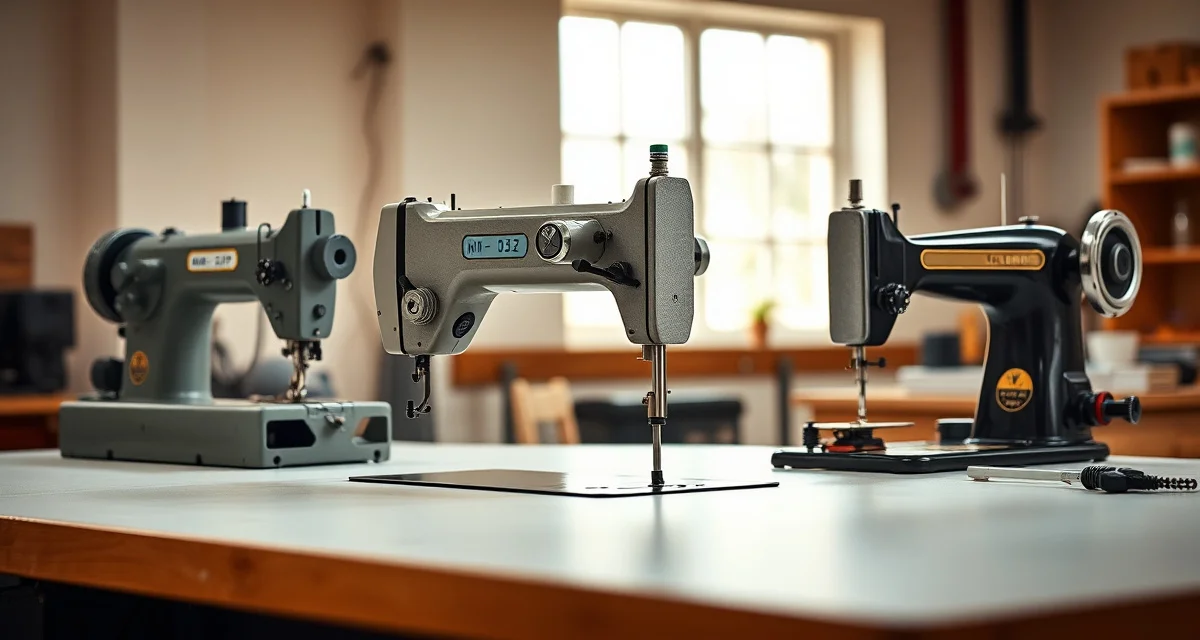
Upholstery Sewing Machine Guide: Which Machine for Which Job
A walking foot machine is the only required machine for 90% of residential upholstery. The cylinder arm and post bed machines are specialty tools with specific use cases, important to know about, but not what you should spend money on before the walking foot is in place.
This guide explains what each machine type does, which jobs require it, and in what order to buy them.
TL;DR
- A well-managed upholstery shop tracks every job from intake to delivery with documented status at each stage.
- Fabric management, including ordering, receiving, storing, and allocating by job, is operationally the most complex part of running an upholstery shop.
- Client communication (status updates, completion photos, delivery scheduling) reduces inbound calls and increases repeat business.
- Shops that document their workflow can train new employees faster and maintain consistent quality during growth periods.
- Measuring key metrics (jobs per week, average ticket, fabric waste rate) is the foundation of informed business decisions.
- Professional shop management tools pay for themselves through reduced errors and faster quoting, typically within the first quarter.
Why Standard Sewing Machines Don't Work for Upholstery
A standard household sewing machine is designed for single and double layers of lightweight fabric. Upholstery work involves multiple layers of heavy fabric, vinyl, leather, and piping cord, often all at once. A standard machine skips stitches, breaks needles, and produces uneven tension on these materials.
The difference is the feed mechanism. Standard machines use a bottom feed dog, a set of teeth below the presser foot that move the fabric. When you have multiple thick layers, the bottom feed pulls the lower layer faster than the upper layer, causing the layers to shift and the seam to curve or pucker.
Upholstery machines use a walking foot (also called compound feed or upper feed) that feeds both the top and bottom layers simultaneously. This is what keeps thick upholstery materials aligned through the stitch.
Machine Type 1: Walking Foot Machine
What it is: An industrial sewing machine with a synchronized upper and lower feed mechanism. Also called a compound feed machine or unison feed machine. The foot "walks" along the top of the material while the feed dogs move the bottom, both move at the same rate.
What it handles:
- All upholstery fabric weights, including heavy decorator fabrics, canvas, and outdoor fabrics
- Vinyl and faux leather
- Full-grain leather up to 3-4oz thickness
- Piping/welt construction (feeding thick fabric over piping cord)
- Cushion cover seaming (multiple layers at boxing corners)
- Multiple layers of fabric for reinforced seams
What it doesn't handle well:
- Very tight tubular shapes (cylindrical covers less than 4 inches in diameter)
- Attached work on 3-dimensional objects
Why it's the first machine to buy:
It handles the sewing on nearly every residential upholstery job. Welt construction, cushion cover construction, seaming, all of this is walking foot work. The vast majority of upholstery shops operate with only a walking foot machine for their entire residential business.
What to buy:
For a new shop or solo upholsterer, a used industrial walking foot machine in good condition is the most cost-effective starting point.
- Used industrial machine (Japanese, $800-1,500): Juki, Brother, Mitsubishi, and Singer industrial walking foot machines from the 1980s-2000s are workhorses. Available used through sewing machine dealers and online. Many shops run these machines for decades.
- New entry-level industrial ($1,200-2,000): Juki LU-1508, Consew 206RB, and similar entry-level industrial machines. Adequate for residential volumes up to 30-40 jobs per month.
- New professional industrial ($2,500-5,000): Higher-duty machines for higher volume. Necessary for commercial work, leather work, or shops doing 50+ jobs per month.
Needle and thread for upholstery:
- Needle: Size 18-21 (leather needle for leather/vinyl, regular point for fabric)
- Thread: Bonded nylon or polyester, 69 weight (standard) or 92 weight (heavy upholstery and leather)
Machine Type 2: Cylinder Arm Machine
What it is: An industrial sewing machine with a horizontal cylinder-shaped arm extending to the right of the needle, instead of the flat bed of a standard machine. Fabric can be wrapped around the cylinder, allowing you to sew the inside of tubular shapes.
What it handles:
- Automotive seat covers that need to be sewn in a tube shape
- Marine cushion covers with complex shapes
- Baseball mitt-style seaming on tight-fitting furniture covers
- Any sewn work where the fabric needs to wrap around the arm to reach the needle
What it does not replace: A walking foot machine. The cylinder arm machine doesn't have a walking foot in most configurations, so it can't handle the multiple thick layers of standard upholstery construction.
When to buy one:
If you're doing automotive interior work regularly, a cylinder arm machine becomes necessary. Most residential furniture upholstery shops never need one. If you occasionally get a job that requires cylinder arm work, consider subcontracting the sewing rather than buying the machine for occasional use.
Cost: $1,500-4,000 for a used or new industrial cylinder arm machine.
Machine Type 3: Post Bed Machine
What it is: A sewing machine with a vertical post (instead of a horizontal bed) extending up from the machine base. The post allows you to sew on attached 3-dimensional objects, you bring the object to the machine and sew around the post.
What it handles:
- Saddles, bags, and leather goods
- Shoe construction
- Complex attached work on shaped objects
What it does not replace: A walking foot machine or cylinder arm machine.
When upholstery shops need one:
Rarely. Post bed machines are specialty tools for leather goods and saddlery more than furniture upholstery. Unless you're doing notable leather goods work or fine saddlery alongside your upholstery, a post bed machine is not a furniture upholstery tool.
Buying Sequence
Step 1 (day one): Walking foot industrial machine. This is your primary production tool. Everything else waits until the walking foot is working and paid for.
Step 2 (when automotive/marine volume justifies it): Cylinder arm machine, only if you're doing enough automotive or marine work to make the investment cost-effective.
Step 3 (if leather goods work develops): Post bed machine, only for shops that develop a notable leather goods side.
Most residential upholstery shops never go beyond Step 1. The walking foot machine handles all their sewing for the life of the business.
For the tools that work alongside the sewing machine (staplers, foam cutters, tack pullers), the upholstery shop tools guide covers the full tool buying sequence at each production volume. For automotive upholstery specifically, where the cylinder arm becomes relevant, see the auto upholstery guide.
Frequently Asked Questions
What sewing machine do I need for upholstery?
A walking foot industrial sewing machine is the required machine for upholstery work. Standard household sewing machines can't handle the multiple thick layers, vinyl, leather, or piping cord construction of furniture upholstery, they skip stitches, break needles, and produce uneven seams. A used industrial walking foot machine (Juki, Brother, Singer, or Consew) in good condition is the most cost-effective starting point, typically $800-1,500. A new entry-level industrial walking foot machine runs $1,200-2,000. This one machine handles 90% of the sewing on residential upholstery jobs.
What is a walking foot sewing machine for upholstery?
A walking foot machine (also called a compound feed or unison feed machine) uses synchronized upper and lower feed mechanisms to move both layers of heavy fabric through the needle at the same rate. This prevents the layer-shifting and seam curving that happens when thick fabrics are sewn on standard machines with bottom-feed-only mechanisms. The walking foot is essential for upholstery because nearly every upholstery sewing task involves multiple thick layers: fabric over piping cord for welt, multiple layers of fabric at boxing corners, vinyl with backing layer. The walking foot keeps all layers moving together through the stitch.
Do I need a cylinder arm machine for upholstery?
Not for standard residential upholstery. A cylinder arm machine is needed when you must sew the inside of a tubular or ring-shaped piece, primarily in automotive seat cover construction and some marine work. For residential furniture (sofas, chairs, cushions, headboards), a walking foot flat-bed machine handles all the sewing. Shops that do regular automotive work will eventually need a cylinder arm machine; shops that do only residential furniture upholstery may never need one. If you occasionally get a job that requires cylinder arm work, subcontracting the sewing is more cost-effective than buying a specialty machine.
How do I track multiple jobs at different stages simultaneously?
A job tracking system, whether paper-based or software-based, should give you a clear view of every active job's current stage at a glance. The minimum useful stages are: intake received, fabric ordered, fabric received, work in progress, quality check, ready for pickup/delivery, completed. Software that shows all active jobs on a single dashboard with current stage and due date eliminates the mental overhead of tracking multiple jobs manually.
Related Articles
Sources
- National Upholstery Association
- Association of Master Upholsterers and Soft Furnishers (AMUSF)
- Upholstered Furniture Action Council (UFAC)
- Furniture Today (trade publication)
Get Started with StitchDesk
A well-run upholstery shop is built on consistent processes, accurate information, and clear client communication. StitchDesk gives you the tools to manage all three from intake to delivery, without the overhead of paper systems or generic software that does not understand the trade. Start a free trial and see how StitchDesk fits your workflow.