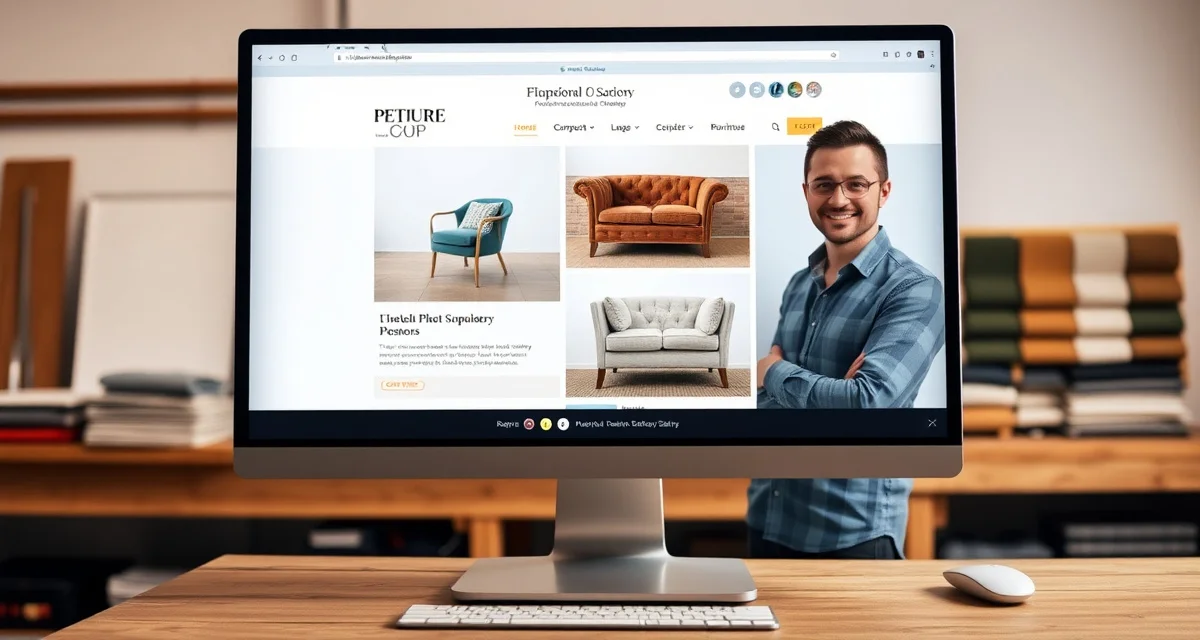
Upholstery Shop Website Guide: What Converts Visitors into Calls
Upholstery shop websites with before-after galleries convert 3 times more visitors to calls than text-only sites. The gallery is what separates a website that generates leads from one that sits unused. Most potential clients who find your website have never seen your work, the gallery is your proof.
This guide covers the 8 elements that appear on every high-converting upholstery shop website, the pages you need, and the specific words and photos that generate phone calls.
TL;DR
- This guide covers the specific techniques, measurements, and decisions that determine quality outcomes in upholstery work.
- Planning and preparation before cutting begins is the most reliable way to avoid costly errors on any upholstery job.
- Fabric selection, yardage calculation, and structural assessment are the three decisions that most affect the final result.
- Experienced upholsterers develop consistent workflows that ensure quality and efficiency across every job type they handle.
- Documenting job details, material specifications, and client approvals protects both the shop and the client.
- The right tools, materials, and techniques for each job type make a measurable difference in quality and profitability.
The 8 Elements That Drive Calls
1. Phone number in the header, on every page
Your phone number should be visible without scrolling on every page of your site. It belongs in the top right corner of your header. On mobile, it should be tappable, a phone number link that calls you directly when tapped. Most potential clients on mobile want to call, not fill out a form. Make it one tap.
2. Before-after gallery above the fold on the home page
"Above the fold" means visible without scrolling. Your home page should show before-after photos immediately, within the first screen of content. Visitors who don't see your work quickly leave. A gallery they can see immediately answers the most important question: "Can this shop do the work I need?"
3. Service list with photos
A list of services without photos is less convincing than a list with a photo for each. For each primary service (sofa reupholstery, chair reupholstery, dining chairs, etc.), include one before-after photo alongside the description.
4. Location prominently stated
Your city and service area should appear on the home page above the fold, in the about page, and in the footer. "Austin, TX | Serving Austin and surrounding areas" in the header or prominently on the home page tells visitors immediately whether you serve their area. Visitors who don't know where you're located can't become clients.
5. Trust signals
Trust signals are elements that confirm you're a legitimate, established business:
- How long you've been in business ("In business since 2012")
- Number of pieces completed ("Over 3,000 pieces completed")
- Google review count with a link to your GBP reviews
- Any notable clients, designer relationships, or publications
6. A clear call to action on every page
Every page should end with a call to action. The most effective for upholstery shops: "Get a Quote" with your phone number, or a simple form with name, phone, and a description of the piece. Multiple calls to action throughout the page (not just at the bottom) improve conversion.
7. Fast loading speed
Large uncompressed images are the most common cause of slow upholstery shop websites. Compress photos before uploading (tools like TinyPNG are free). A site that takes 5+ seconds to load on mobile loses a notable percentage of visitors before they've seen anything.
8. Mobile-optimized layout
Most local search traffic on phones. Your site needs to look and function well on a phone screen. If you're using a website builder (Squarespace, Wix, WordPress), choose a mobile-responsive template and test it on a phone before publishing.
The Pages You Need
Home page
Your most visited page. It needs: headline (what you do and where), 3-5 before-after photos, brief description of your services, your location and service area, trust signals, and a prominent call to action.
Gallery page
Your second most visited page. A before-after photo gallery organized by piece type (Sofas, Chairs, Dining Sets, etc.) lets visitors see examples of the work they're considering. This is where decisions to call are often made. Add new photos monthly, a gallery with 30+ before-after pairs is considerably more convincing than one with 10.
Services page (or individual service pages)
A services page that describes each service you offer. Individual service pages per service, "/sofa-reupholstery", "/chair-reupholstery", rank better in local search but require more setup. Individual pages are worth building if you have the time; a single services page is better than nothing.
About page
A brief description of your shop, your background, and why you do this work. Clients hire people, not businesses. A personal, genuine about page builds trust faster than a corporate description. Include a photo of yourself or your team, it makes the business human.
Contact page
Phone number, email, address (if you accept walk-in clients), and a simple contact form. Include your hours and an expectation: "We respond to all inquiries within [X hours]." Setting an expectation reduces anxiety for clients who submit a form and wonder when they'll hear back.
What to Write on Your Home Page
The headline on your home page should answer: who you are, what you do, and where you are. In 10 words or fewer.
Good examples:
- "Expert Upholstery in Austin. Any Piece, Any Fabric."
- "[Shop Name]: Austin's Upholstery Shop Since 2012"
- "Custom Furniture Reupholstery in Austin and the Hill Country"
Beneath the headline: 2-3 sentences describing what makes your shop worth calling. "We reupholster any piece in your choice of fabric, sofa to dining chairs to headboards. Our shop in [City] has been doing this work for [X] years. Most jobs are ready within 2-3 weeks."
Then: the gallery.
Photos: How Many and Which Type
The gallery is your primary conversion tool. The format that converts best:
Side-by-side before-after: The transformation shown in a single image with the before on the left and after on the right. Visitors don't have to mentally compare two separate photos.
Slideshow with labels: A photo set where visitors can click between before and after. Adds interactivity.
Individual before-after posts: Separate photos with labels ("Before" / "After"). Works fine but requires visitors to scroll between photos.
Minimum photo volume:
- 15 before-after pairs to launch. Enough to show range across piece types.
- 30+ pairs for a well-developed gallery that builds notable trust.
- Add new pairs monthly from completed jobs.
Photo quality:
Good lighting and consistent angles matter more than equipment. The before-and-after photography guide covers how to take the right shots on every job. For the specifics of the 5-shot sequence, see the before-and-after photography guide.
Website Builders for Upholstery Shops
You don't need a developer. Modern website builders let you build a professional site without technical skills.
Squarespace: Clean, modern templates. Easy to use. $16-23/month. Best for shops that prioritize aesthetics and have limited technical patience.
Wix: More flexible, slightly more complex. $17-25/month. Good if you want more control over layout.
WordPress: Most flexible, highest learning curve, most powerful for SEO. Free software, hosting costs $10-20/month. Worth using if you're committed to building a strong SEO presence.
For SEO strategy that extends your website's local visibility, the upholstery shop SEO guide covers service pages, keywords, and Google integration. For the broader marketing context, the upholstery shop marketing guide covers where your website fits in the full channel mix.
Frequently Asked Questions
What should an upholstery shop website include?
Eight elements that appear on every high-converting upholstery shop website: phone number in the header on every page, before-after gallery above the fold on the home page, a service list with photos, your city and service area prominently stated, trust signals (years in business, reviews, jobs completed), a clear call to action on every page, fast loading speed, and a mobile-optimized layout. The gallery is the single most important element, it's where visitors decide to call or leave. The pages you need: home, gallery, services (or individual service pages), about, and contact.
How do I get more calls from my upholstery website?
Three changes that improve call conversion immediately: (1) Put your phone number in the header on every page, tappable on mobile; (2) Add a before-after gallery above the fold on the home page, this is the primary reason visitors call; (3) Add a call to action on every page ("Get a quote, call [number]" or a simple form). After those three, add trust signals (years in business, review count), load your gallery with 20+ before-after pairs, and make sure your city appears prominently on the home page so visitors know you serve their area.
Do I need a website for my upholstery shop?
Yes, for several reasons. A website is your 24/7 presence that's working while you're in production. It's where potential clients land after finding you on Google, Instagram, or through a referral. A shop without a website appears less established than one with a professional site. The minimum viable upholstery shop website is a home page with photos, your services, your location, and a phone number, buildable in one day on Squarespace or Wix. The absence of a website costs you leads every month; the presence of even a basic site generates them passively.
What are the most common mistakes to avoid in this type of work?
The most common mistakes are underestimating material requirements, starting work before the frame is fully assessed and repaired, and skipping the centering and alignment checks before cutting. Each of these is far more expensive to correct after cutting has begun than to prevent at the planning stage. Taking an extra 15-30 minutes at the assessment and planning stage pays dividends throughout the job.
How do I get the best results from a professional upholsterer?
Come to the consultation with clear measurements, photos of the piece, and an idea of the room's color scheme and intended use. Be specific about how the piece will be used: high traffic, pets, children, or outdoor exposure all affect fabric recommendations. Provide fabric samples or accept guidance on appropriate options for your use case. Approve the proof carefully and ask to see the fabric on the piece before final installation if you are uncertain about a pattern or color choice.
When should I consult a professional rather than doing the work myself?
Consult a professional when the piece has structural issues beyond simple fabric replacement, when the piece has significant financial or sentimental value, or when the fabric or technique (tufting, pattern matching, hand-tacking) requires skills you have not developed. A professional assessment before you begin is free at most shops and can prevent costly mistakes on a piece worth preserving.
Sources
- National Upholstery Association
- Association of Master Upholsterers and Soft Furnishers (AMUSF)
- Upholstered Furniture Action Council (UFAC)
- Furniture Today (trade publication)
Get Started with StitchDesk
Running a successful upholstery shop means getting the details right on every job. StitchDesk gives you purpose-built tools for quoting, fabric calculation, job tracking, and client communication, all in one place designed specifically for the trade. Start a free trial and see how StitchDesk supports quality work from intake to delivery.