Case Study: Sofa Specialization Increased Margins by 40%
Sofa-specialized shops set up for each job 45% faster than generalist shops, setup efficiency drives the margin gain. For one upholstery shop in the Midwest, the decision to stop taking everything and focus exclusively on residential sofas transformed the economics of the business without adding space, staff, or marketing budget.
This is the account of how that decision was made, what changed operationally, and what the margins look like now.
TL;DR
- Real shop case studies provide specific, measurable examples of how operational improvements affect profitability.
- The most impactful improvements documented in upholstery shop case studies involve quoting accuracy, fabric tracking, and client communication.
- Shops that switch to purpose-built software typically see measurable returns within the first 90 days through reduced fabric errors and faster quoting.
- Client satisfaction improvements correlate strongly with proactive communication, particularly job status updates and completion photos.
- Operational changes that reduce admin time by 30 minutes per day translate to meaningful capacity gains over a full year.
- The specific numbers in this case study reflect one shop's experience; results vary based on shop size, volume, and starting conditions.
The Before State: Everything Shop, Thin Margins
The shop had operated as a general residential upholstery shop for 6 years. Sofas, chairs, dining chairs, ottomans, headboards, cushion repairs, they took everything. The variety was appealing from a craft perspective. Economically, it was creating invisible problems.
The owner started tracking his time per job type in year 5. The pattern that emerged was clear:
Sofas: His most profitable jobs. He knew exactly how to set up for each style. The equipment was configured for sofa work. He moved efficiently through each stage.
Dining chairs: High volume of low-value work. Each chair required setup and breakdown that didn't scale well. 10 dining chairs consumed more than their proportional share of the day.
Cushion repairs and small jobs: Frequent interruptions to production flow for jobs with $50-80 margins. The client communication, intake, and scheduling overhead was the same as a $1,500 job.
One-off specialty pieces: Interesting work, but required research time, different tool configurations, and problem-solving that added invisible cost. These jobs rarely produced margins that reflected the actual time.
The overall margin across all job types was approximately 28% after labor, fabric, and overhead. When he isolated sofas alone, the margin was 41%. His most profitable job type was effectively subsidizing all the others.
The Decision to Specialize
The owner spent two months modeling what the business would look like if he focused exclusively on sofas. The numbers were compelling:
If he removed all job types under $400: He'd lose approximately 30% of his job count but only 15% of his revenue, and he'd free up 35% of his production time.
If he reallocated that production time to additional sofa volume: He could increase sofa output by roughly 40% without working more hours or adding staff.
The compounding effect: More sofas meant more efficiency per sofa. Every technique, every tool, every setup procedure would be optimized for one piece type. Setup time would decrease. Error rate would decrease. Quality would increase.
He decided to specialize. The transition was deliberate, he didn't turn away existing clients abruptly, but he stopped taking new bookings for non-sofa work and communicated the change to his network over a 6-month period.
What Changed in Production
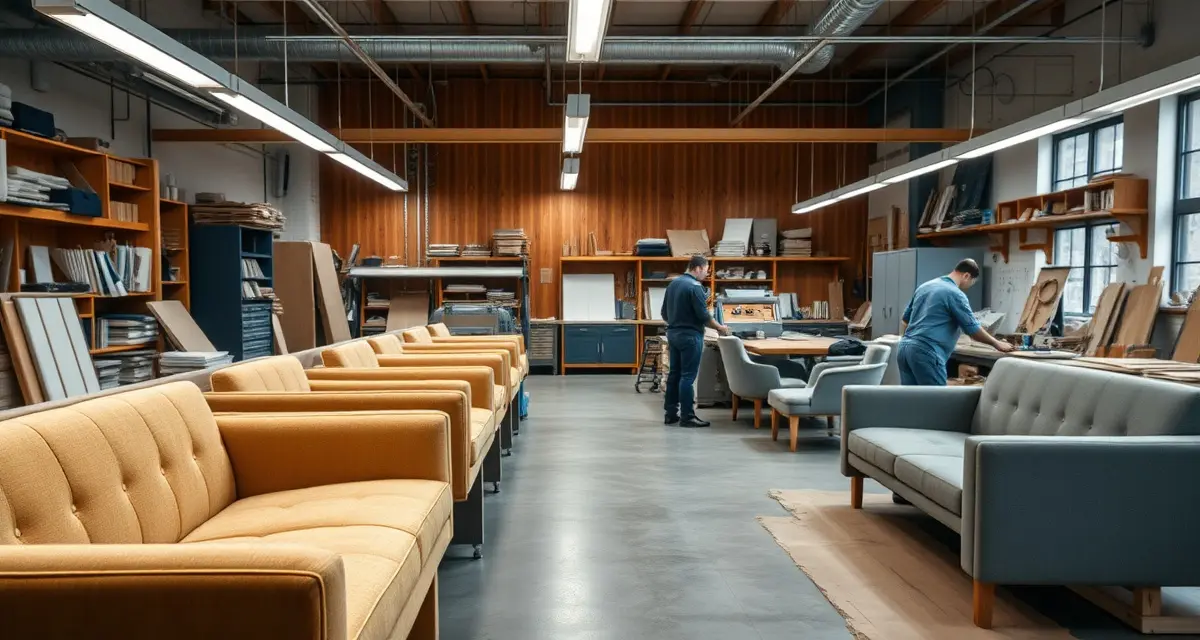
Shop layout optimized for sofas. The cutting table was repositioned for sofa dimensions. The fabric storage was organized around sofa yardage (12-18 yards per job versus the variable yardage of mixed work). Tools were arranged for sofa workflow sequence.
Standardized staging. Every sofa goes through the same physical stages in the shop. Intake at door. Frame inspection station. Stripping area. Build station. Covering station. Quality check and staging for delivery. These stages became physical locations in the shop rather than ad-hoc configurations.
Fabric inventory optimized. Without dining chair and accent piece variety, the shop could maintain a tighter fabric inventory focused on the colors and categories that move in sofa work: performance fabrics, neutrals, and a smaller selection of accent options. Inventory cost went down.
Tool maintenance simplified. Running one dominant piece type means knowing exactly which tools wear out and when. The sewing machine setup is consistent job to job. Replacement of consumables became predictable.
The Margin Numbers After 18 Months
| Metric | Before Specialization | After 18 Months |
|---|---|---|
| Average sofa margin | 41% | 57% |
| Job volume (sofas) | 18/month | 26/month |
| Revenue | $12,400/month | $19,200/month |
| Average setup time per job | 45 min | 25 min |
| Rework rate | ~8% | ~3% |
The 40% margin increase came primarily from setup efficiency and rework reduction. The 40-minute setup for a complex chair job, repositioning equipment, pulling different supplies, reconfiguring the sewing machine, disappeared from the workflow. Every setup was now sofa setup, which takes 20-25 minutes and happens efficiently because it's exactly the same every time.
What the Specialization Required
Referral network for declined jobs. The owner identified two nearby generalist shops he trusted and began referring non-sofa work to them. One of these shops started reciprocating sofa referrals from clients who needed other work done.
Website and marketing changes. The website now explicitly markets to people with sofas. "Sofa reupholstery specialists" in the H1. Portfolio full of sofa work. The messaging change attracted exactly the inquiries he wanted and pre-qualified others away.
Client communication. Regular clients who brought various piece types needed to know the shop had changed. The owner called his top 30 clients personally to explain the specialization and confirm he could still serve them on sofa work.
The sofa reupholstery guide covers the craft. The upholstery shop unique selling proposition covers how to position and market a specialized shop.
The Owner's Takeaway
"The hardest part was saying no to work. For years I said yes to everything because every job was revenue. It took me a while to understand that not all revenue is equal, and the jobs I was saying yes to were actively preventing me from doing more of the jobs that were genuinely profitable. Specializing wasn't just a financial decision. It was about what I wanted to spend my days doing."
How long does it take to see results after implementing new shop software?
Most shops see measurable changes in quoting time within the first 2-4 weeks of consistent use. Fabric error reduction typically becomes visible within the first 1-3 months as the calculator replaces manual estimates on a consistent basis. Client communication improvements show up in reduced inbound status calls within the first 4-6 weeks of using a customer portal. The full financial impact becomes clear in monthly and quarterly reviews.
What is the biggest challenge when transitioning to new shop management software?
The most common challenge is the transition period itself: running the new system alongside existing habits while the team builds confidence with the new workflow. Shops that set a hard cutover date and commit to using the new system for all new jobs from a specific date tend to adapt faster than those who use the new system optionally alongside existing processes. Designating one person as the system administrator who knows it well enough to help others also accelerates adoption significantly.
Related Articles
FAQ
Sources
- National Upholstery Association
- Association of Master Upholsterers and Soft Furnishers (AMUSF)
- Furniture Today (trade publication)
- Upholstered Furniture Action Council (UFAC)
Get Started with StitchDesk
The improvements documented in this case study are available to any shop that puts the right tools and processes in place. StitchDesk provides upholstery-specific software that addresses the exact pain points described here, from fabric calculation errors to client communication overhead. Try StitchDesk free and see what changes in your shop.