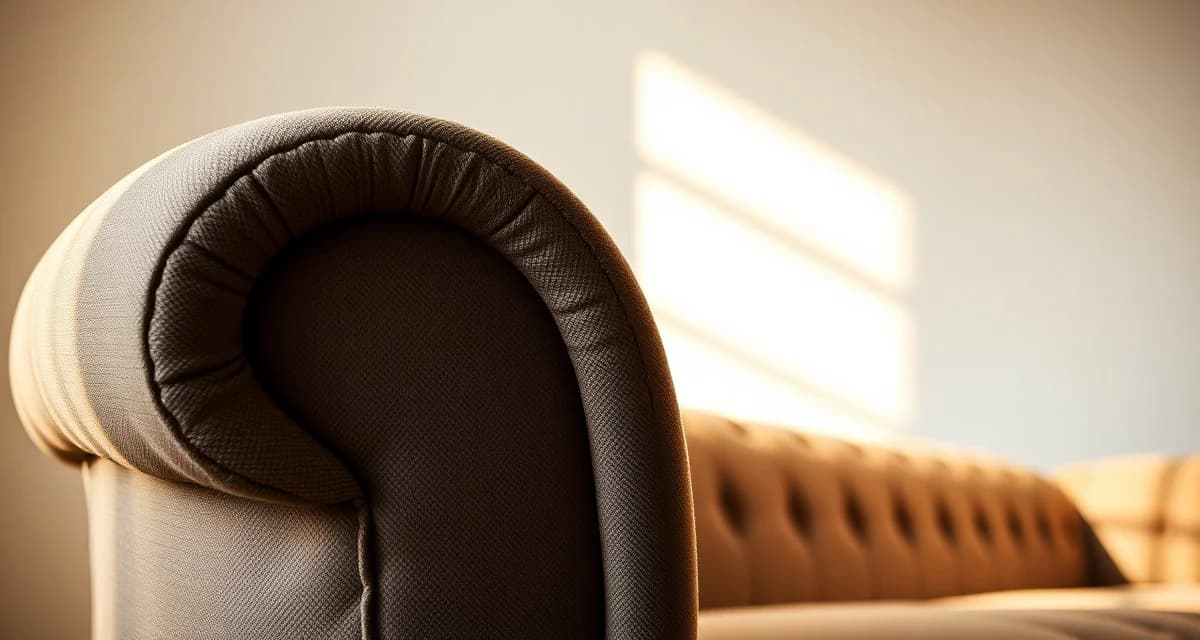
Camelback Sofa Fabric Yardage: Hump Back Calculation Guide
The camelback sofa is one of the most recognizable traditional furniture styles. It's also one of the most commonly undercalculated for fabric yardage. The reason is simple: most shops start with a standard sofa estimate and don't account for what the curved back profile does to their cutting layout.
Apply a flat-back sofa yardage number to a camelback and you'll run short. The hump changes everything about how the inside back panel is cut.
TL;DR
- Camelback Sofa yardage depends on fabric width, construction details, pattern repeat, and nap direction.
- Plain 54-inch fabric requires a baseline calculation plus 10-15% waste allowance for a standard camelback sofa job.
- Patterned fabric adds 20-35% to base yardage depending on repeat size and the number of cutting zones that must align.
- Directional fabrics add 15-25% over plain fabric because layout optimization is restricted by nap direction.
- Always verify fabric width before finalizing yardage; COM fabric often comes in non-standard widths.
- Calculating yardage at the quote stage, not mid-job, eliminates reorders and protects your profit margin.
What Makes the Camelback Different
A camelback sofa gets its name from the arched back profile, typically one or three humps that rise above the arm height. The most common version has a single central hump, though double-hump and triple-hump antique pieces show up in restoration work.
The functional upholstery challenge is the inside back panel. On a flat-back sofa, the inside back is a rectangle. You can cut it cleanly and efficiently from standard yardage. On a camelback, the inside back follows the curved silhouette of the hump. That means you're cutting a panel with a curved top edge.
Curved cuts generate waste. The fabric above the curve and below the rectangular width of your cut can't be used for any other back panel. And because the hump can rise 6 to 10 inches above the arm height, you're adding real extra height to your panel cut to accommodate the peak.
How the Hump Adds Yardage
Here's the math in plain terms.
A flat-back sofa with a 30-inch inside back height needs a panel that's roughly 34 inches tall (adding tuck-in and seam allowances). On a camelback sofa where the hump peaks 8 inches above the arm, your inside back panel needs to be 42 to 44 inches tall to reach the peak, even though most of the back is only 30 inches tall.
That extra 8 to 10 inches of panel height applies across the full width of the back. On a 78-inch sofa, that's roughly 78 × 10 inches = 780 square inches of extra fabric in the inside back panel alone. At 54-inch fabric width, that's about 0.6 extra yards in the inside back.
But you also lose the cutout fabric above the hump curve on both sides of the peak. That waste typically adds another 0.15 to 0.25 yards depending on how dramatic the hump is.
For the outside back, the same calculation applies, though the hump profile may be handled differently depending on whether the piece has a button-tufted or plain exterior back.
Total back panel waste from the camelback profile: 0.75 to 1.25 yards over a flat-back calculation. Camelback back panels require roughly 25% more fabric than flat-back panels of the same base dimensions.
Yardage Ranges for Camelback Sofas
These figures assume 54-inch solid fabric.
Single-hump camelback, 2 cushions: 13 to 16 yards
Single-hump camelback, 3 cushions: 15 to 18 yards
Triple-hump camelback (antique style): 16 to 20 yards
The triple-hump creates more complex cutting because the profile changes across the full width of the back. Each hump generates its own waste triangle above the curve, compounding the loss.
Measuring the Camelback Inside Back
Standard sofa measuring won't capture the camelback profile correctly. Here's how to measure it properly.
Step 1: Measure the base width. Width from inner edge of one arm to the other at the seat line. This is your minimum panel width.
Step 2: Measure the straight height on each side. Height from the seat deck to the top of the arm or the back at its lowest point. This is where a flat-back sofa would end.
Step 3: Measure the peak height. Height from the seat deck to the very top of the hump. For a single-hump, this is at the center. For multiple humps, measure each peak.
Step 4: Calculate your panel cut dimensions. Your inside back panel needs to be: full peak height + tuck-in allowances, by full width of back. You'll then cut the curve from this rectangular piece.
Step 5: Estimate curve waste. Draw out your hump profile on paper and estimate what percentage of the rectangular cut you'll be removing as waste. For a gentle hump, this might be 10%. For a dramatic high hump, closer to 20%.
Outside Back on a Camelback
The outside back panel on a camelback follows the same peaked silhouette. However, you have a choice about how to handle it.
Some upholsterers cut the outside back to the exact camelback profile, matching the hump precisely. This uses the same extra yardage as the inside back.
Others run the outside back fabric straight across to a flat top edge, treating the back profile as a separate padded element underneath. This uses less fabric but requires additional padding and backing work.
If you're cutting the outside back to match the profile, add the same 0.75 to 1 yard over a flat calculation. If you're treating it as a flat back with profile padding, you can estimate the outside back as you would for a standard sofa.
Pattern Considerations on a Camelback
Pattern work on a camelback inside back is one of the more demanding calculations in traditional upholstery. If the fabric has a dominant motif, you need to center it on the hump, not on the geometric center of a rectangular panel.
That centering requirement may push your pattern cut point to a location that doesn't land at a repeat boundary for other panels. If you're centering a medallion under the hump peak, the adjacent panels (inside arms, seat cushion faces) need to pick up the pattern at whatever point their position in the layout dictates.
On patterned camelback work, budget an additional 1.5 to 2 yards for pattern-related waste over the hump curve calculation.
Best Fabric for Camelback Sofas
Traditional camelback sofas typically call for traditional fabrics: damask, brocade, velvet, or fine chenille. All of these have their own yardage implications.
Damask and brocade often have large pattern repeats (12 to 18 inches). On a camelback, centering the pattern on the hump while maintaining alignment across other panels can add 2 to 3 yards.
Velvet has nap direction that runs all panels in the same orientation. Combined with the hump curve waste, velvet camelback yardage can run 15 to 20% higher than the same job in plain woven fabric.
Chenille behaves similarly to velvet for pile direction. The plushness can also make it harder to pull tight curves without distortion, so some upholsterers add extra allowance at the hump curve for adjustment.
Using the Sofa Fabric Yardage Calculator for Camelback Pieces
The standard sofa calculator provides a useful baseline, but you'll need to add your back panel waste manually for a camelback piece. Start with the base sofa calculation, then add 0.75 to 1.25 yards for the hump back panels.
For detailed guidance on how specialty sofa styles affect total yardage, the Sofa Reupholstery Yardage Guide covers style-by-style comparisons against the flat-back baseline.
How much fabric for a camelback sofa?
A camelback sofa typically needs 13 to 20 yards of 54-inch fabric depending on cushion count, hump complexity, and whether the outside back is cut to profile. Add 0.75 to 1.25 yards to your flat-back estimate to account for the hump curve waste.
Why does a camelback sofa use more fabric than a flat-back sofa?
The hump requires the inside back panel to be cut at the peak height across the full width of the back, even though most of the back is shorter than the peak. The excess fabric above the curve line on both sides of the hump becomes waste that can't be used for other panels.
What fabric is best for a camelback sofa?
Traditional camelback sofas are historically associated with damask, brocade, velvet, and silk blends. Practically speaking, any fabric with 25,000+ rubs works well for residential use. If you're working with a patterned fabric, look for designs where the repeat centers well at the hump peak and doesn't require excessive waste to position correctly.
What is the biggest factor in yardage variation for this piece?
Pattern repeat is the biggest source of yardage variation. On plain fabric, the baseline calculation plus a 10-15% waste buffer is usually sufficient. Add a 13-inch pattern repeat and you may need 15-20% more. Add a 27-inch pattern repeat and the additional yardage can be 25-35% over the plain fabric calculation. Nap direction is the second-largest factor, typically adding 15-25% over plain fabric because layout optimization is restricted.
What should I do if I run short on fabric mid-job?
Stop cutting immediately when you realize you may run short. Calculate exactly how much additional fabric you need before contacting the supplier or client. If reordering from the same dye lot is possible, do so as quickly as possible because dye lots change. If a dye lot match is not available, contact the client before proceeding; visible dye lot differences on the same piece are unacceptable and must be disclosed. Document the situation and response in writing.
FAQ
Sources
- National Upholstery Association
- Association of Master Upholsterers and Soft Furnishers (AMUSF)
- Upholstered Furniture Action Council (UFAC)
- Furniture Today (trade publication)
Get Started with StitchDesk
Getting yardage right on camelback sofa jobs is the difference between a profitable quote and an expensive reorder. StitchDesk's fabric calculator accounts for all the variables that cause errors: pattern repeat by zone, nap direction, fabric width, and cushion configuration. Start a free trial and see how accurate yardage calculation affects your bottom line.