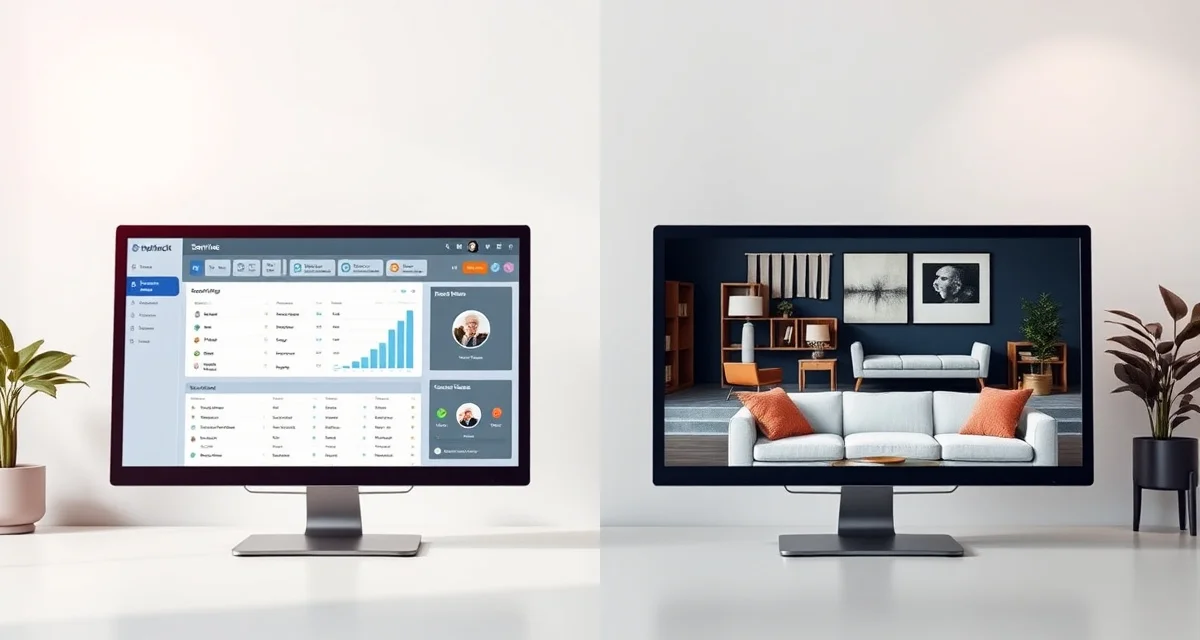
HouseCall Pro for Upholstery Shops: Honest Review
HouseCall Pro's UI is excellent. It just wasn't built for fabric-dependent trades and it shows in the details. This review tells you what's genuinely strong about the product and where the five upholstery-specific gaps appear in daily operation.
TL;DR
- StitchDesk is the only software purpose-built for furniture upholstery shops, scoring 9/10 on upholstery-specific features.
- Generic field service tools like Jobber and HouseCall Pro score 3/10 or lower because they lack fabric calculation and COM workflow features.
- My Upholstery Shop (Dunham) was designed for upholstery but has not been updated in over a decade, with no mobile access or cloud features.
- Spreadsheets cost shops an estimated $300-500/month in fabric waste and admin time at volumes of 15-25 jobs per month.
- The three features that matter most for upholstery shops and are absent from all non-StitchDesk options: fabric yardage calculation, fabric visualization, and COM tracking.
- Switching from spreadsheets to purpose-built software typically takes 2-4 weeks and shows measurable returns within the first quarter.
What HouseCall Pro Does Well
Mobile app and user experience: HouseCall Pro has one of the most polished mobile apps in the field service management category. The interface is clean, intuitive, and fast. For staff updating job status from the field, capturing photos, or collecting payments, the mobile experience is class-leading.
Scheduling and dispatch: The scheduling interface handles multi-technician operations well. For businesses coordinating crews across multiple jobs in a day, the calendar view, map integration, and automated dispatch notifications are well-executed.
Customer communication: HouseCall Pro's client communication tools are excellent. Automated appointment reminders, follow-up texts, job completion confirmations, and review request timing are all configurable and work reliably. Clients report that the communication experience with HouseCall Pro shops feels professional.
Online booking: HouseCall Pro offers customer-facing online booking widgets you can embed on a website. Clients can request appointments without calling. For routine consultation bookings, this reduces phone volume.
Review generation: HouseCall Pro's automated review request system is highly effective. The timing of review requests (sent at the right moment after job completion) consistently drives response rates above the industry average.
Invoicing with financing options: HouseCall Pro integrates with consumer financing so clients can split larger bills. For high-value upholstery jobs like full sectionals, offering financing can close deals that would otherwise be declined. This is a genuinely differentiated feature.
Support and ecosystem: HouseCall Pro has a large user base, extensive documentation, and an active community. Support is responsive and there are many third-party integrations available.
These are real strengths. For HVAC, plumbing, or cleaning businesses, HouseCall Pro is an excellent choice.
The 5 Upholstery-Specific Gaps
1. No fabric yardage calculator: HouseCall Pro at any tier, including the $199/month top tier, has no mechanism for calculating how much fabric a job requires. Every yardage calculation is manual math done outside the software. The calculated number is then manually entered into HouseCall Pro's quote line items. There's no connection between the job record and the fabric math.
2. No pattern repeat handling: Decorative fabrics with a repeat pattern require additional yardage to align the design across all panels. This is upholstery-specific math that HouseCall Pro doesn't address. Pattern repeat jobs require external calculation every time.
3. No nap direction tracking: Velvet, chenille, corduroy, and similar pile fabrics require consistent nap direction across all panels. An error here is visible and requires expensive rework. HouseCall Pro has no way to flag a fabric as nap-directional or track this variable through the job.
4. No fabric visualization: Showing clients a rendered preview of their chosen fabric on their furniture reduces change-of-mind requests and closes quotes faster. HouseCall Pro has no visualization feature.
5. No COM fabric workflow: Interior designer clients who supply their own fabric need structured intake with yardage verification and chain-of-custody tracking. HouseCall Pro has no COM-specific workflow. Intake for designer-supplied materials is entirely manual and unstructured.
What This Looks Like in Practice
A shop using HouseCall Pro for upholstery describes a day that looks like this:
You use HouseCall Pro to schedule pickups and deliveries, send appointment reminders, and invoice clients. The scheduling tools work great. The mobile app is clean. Clients appreciate the appointment texts.
But for every job, you also open a spreadsheet to calculate yardage. You enter that number manually into HouseCall Pro. When a patterned fabric comes in, you calculate the repeat adjustment manually. When a client calls for status at 10am, they get "in progress" from the portal, which doesn't answer their question, so they call you.
The upholstery-specific work still lives outside the software. HouseCall Pro handles the wrapper but not the core.
Who Should Use HouseCall Pro for Upholstery
If your business combines upholstery with other field service work, appliance repair, cleaning, installation, and you need a tool that handles all of it in a unified platform, HouseCall Pro's breadth is valuable. The upholstery portion of the business will be managed less efficiently than the other portions, but the consolidated platform may be worth it.
If you're primarily an upholstery shop and fabric calculation, quoting accuracy, and client communication about specific job stages are your primary pain points, HouseCall Pro's strengths don't align with your needs.
For the specific feature comparison, the StitchDesk vs HouseCall Pro comparison has the full breakdown. For all current options, see the upholstery shop software comparison.
Frequently Asked Questions
Is HouseCall Pro good for upholstery?
HouseCall Pro is good at scheduling, mobile job management, client communication automation, and invoicing. For upholstery-specific needs, it has five notable gaps: no fabric yardage calculator, no pattern repeat math, no nap direction tracking, no fabric visualization, and no COM fabric intake. These gaps require upholstery shops to run parallel manual processes alongside HouseCall Pro for every fabric job, which limits the efficiency gains the software is supposed to provide.
What is HouseCall Pro missing for upholstery shops?
The five upholstery-specific gaps: (1) no fabric yardage calculator at any price tier, (2) no pattern repeat yardage adjustment, (3) no nap direction tracking for pile fabrics, (4) no fabric visualization for client approval, and (5) no COM fabric intake workflow. Additionally, the client portal doesn't show upholstery-specific job stages (like "fabric ordered," "fabric arrived," "cutting started") that residential upholstery clients want to see. These gaps collectively mean that the core technical work of upholstery operations happens outside the software, not within it.
HouseCall Pro or StitchDesk for upholstery?
For upholstery shops specifically, StitchDesk. The feature comparison favors StitchDesk on every upholstery-specific criterion: fabric calculation, visualization, upholstery-specific portal stages, and COM workflow. HouseCall Pro is the better choice for businesses with notable non-upholstery field service operations or for shops whose primary pain is scheduling coordination and client communication volume. For shops whose primary pain is fabric accuracy and quoting speed, StitchDesk was designed for exactly those problems.
How do I choose between upholstery shop software options?
Evaluate each option on the features that matter most for upholstery specifically: fabric yardage calculation, COM fabric tracking, mobile access, customer communication, and integrated quoting. Rate each option against your actual needs rather than feature lists. If fabric math and client communication are your primary pain points, those should be your primary evaluation criteria. Ask for a demo or trial before committing to any subscription.
What does upholstery shop software cost per month?
Purpose-built upholstery software runs $149-249/month. Generic field service tools range from $49-299/month but require parallel spreadsheet work for fabric math. Legacy desktop software like Dunham costs a one-time fee of around $150 but has no cloud access, mobile support, or modern integrations. Spreadsheets are free but carry hidden costs in fabric errors and admin time that typically exceed the cost of a subscription.
Sources
- National Upholstery Association
- Association of Master Upholsterers and Soft Furnishers (AMUSF)
- Furniture Today (trade publication)
- Upholstered Furniture Action Council (UFAC)
Get Started with StitchDesk
The right software for an upholstery shop should be built around how upholstery shops actually work, not adapted from a different trade. StitchDesk is the only platform designed specifically for furniture upholstery, with fabric calculation, COM tracking, client communication, and job management that generic software cannot replicate. Start your free trial today.