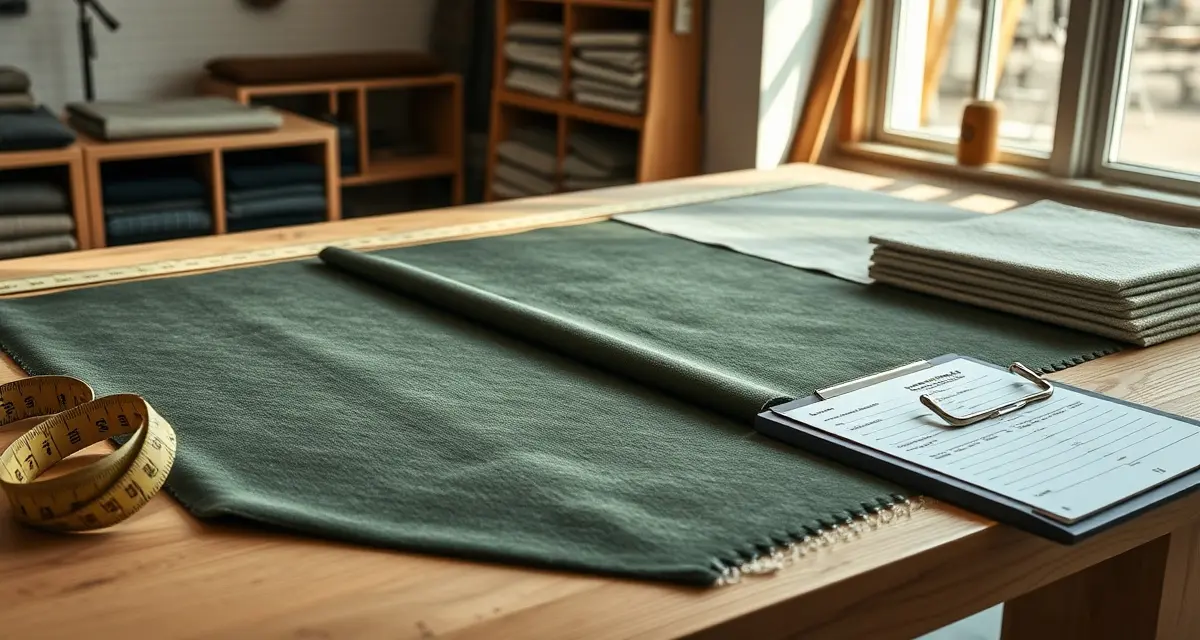
10 Common Upholstery Fabric Yardage Mistakes and How to Fix Them
Every shop makes yardage mistakes. The difference between shops that keep making them and shops that stop is documentation. When you know exactly what goes wrong and why, you can build a process that prevents it.
These 10 mistakes account for 90 percent of all fabric shortfall incidents in upholstery shops. They're ranked by frequency and dollar impact so you can prioritize fixing the most expensive ones first.
TL;DR
- Upholstery Common Mistakes yardage depends on fabric width, construction details, pattern repeat, and nap direction.
- Plain 54-inch fabric requires a baseline calculation plus 10-15% waste allowance for a standard upholstery common mistakes job.
- Patterned fabric adds 20-35% to base yardage depending on repeat size and the number of cutting zones that must align.
- Directional fabrics add 15-25% over plain fabric because layout optimization is restricted by nap direction.
- Always verify fabric width before finalizing yardage; COM fabric often comes in non-standard widths.
- Calculating yardage at the quote stage, not mid-job, eliminates reorders and protects your profit margin.
Mistake 1: Forgetting the Outside Back Panel
Frequency: Very high. Cost: $30 to 80 per incident.
The outside back panel of a sofa or sectional is the fabric that covers the rear face of the piece. Because most furniture sits against a wall, clients never see it, and shops sometimes calculate as if it doesn't exist.
It does. A standard sofa outside back uses 1 to 1.5 yards. Forgetting it causes a shortfall on almost every job where it's omitted.
Fix: Add outside back to your panel checklist. Check it off explicitly before placing every fabric order.
Mistake 2: Skipping Pattern Repeat Waste
Frequency: High on patterned jobs. Cost: $60 to 200+ per incident (expensive fabric compounds this).
When fabric has a pattern, every panel cut must start at the same point in the pattern to ensure alignment. The fabric between that alignment point and the start of the previous cut is waste. This waste adds up across all panels of a piece.
On a 12-inch repeat, 3-cushion sofa, pattern waste can add 3 to 5 yards. Many shops don't calculate this and order the bare-minimum yardage.
Fix: Calculate pattern waste for every patterned job. Divide panel height by repeat size, round up to whole repeats, then calculate yardage from rounded-up dimensions.
Mistake 3: Using the Same Template for All Sofa Sizes
Frequency: High. Cost: $20 to 80 per incident.
A 72-inch sofa and a 108-inch sofa are not the same job. Generic "sofa" templates that use one yardage estimate for all sizes consistently underserve larger pieces and occasionally overserve smaller ones.
Fix: Use measurements-based calculation or choose from multiple size presets (small, medium, large) rather than a single sofa estimate.
Mistake 4: Not Accounting for Nap Direction on Velvet and Directional Fabrics
Frequency: Moderate, but high-cost when it happens. Cost: $50 to 150 per incident.
Velvet and suede-finish microfiber have a pile direction. Every panel must run nap in the same direction. This constraint limits cutting layout flexibility and adds 10 to 20 percent to required yardage over a non-directional fabric.
Fix: When a directional fabric is specified, apply the pile direction buffer before ordering. Never use a solid-fabric yardage estimate for velvet without adding the directional allowance.
Mistake 5: Forgetting Welt Yardage
Frequency: Moderate. Cost: $15 to 40 per incident.
Self-fabric welt (piping) is cut on the bias from the main fabric. On a fully-welted sofa, welt yardage can add 0.75 to 1.5 yards to the order. This is sometimes not calculated separately and sometimes not calculated at all.
Fix: Calculate welt as a separate line item. Measure total linear inches of welted seams and calculate bias-cut strip requirements.
Mistake 6: Miscalculating Tufting Pull Waste
Frequency: Moderate. Cost: $40 to 120 per incident on expensive fabric.
Tufting gathers fabric at each button, creating pull waste in all directions. A diamond-tufted headboard or sofa back needs 10 to 20 percent more fabric than the flat dimensions suggest. Shops that calculate from flat measurements consistently run short.
Fix: Apply a 10 to 20 percent tufting allowance to the tufted panel dimensions before calculating yardage. Higher button density = higher allowance.
Mistake 7: Wrong Arm Style Adjustment
Frequency: Moderate. Cost: $20 to 60 per incident.
Arm styles vary considerably in how much fabric they require. A standard English arm uses about 2 to 2.5 yards per arm. A knife arm uses 1 to 1.5 yards. A flared "waterfall" arm can use 3+ yards. Using the wrong arm style in your calculation creates systematic over or under ordering depending on which direction the error goes.
Fix: Confirm arm style before calculating. When in doubt about arm style, get a photo.
Mistake 8: Skirt Yardage Not Added
Frequency: Moderate on skirted pieces. Cost: $40 to 120 per incident.
Sofa and chair skirts require fabric multiplied by the pleat type (2x for box pleat, 2.5 to 3x for gathered). Many shops calculate the main sofa and forget the skirt is a separate calculation. A gathered skirt adds 3.75 to 5 yards to a standard sofa order.
Fix: Treat skirt yardage as a completely separate calculation, always added to the base sofa calculation.
Mistake 9: Ordering from Inadequate Phone Quote Measurements
Frequency: High. Cost: $20 to 80 per incident.
Phone quotes based on client-provided measurements are estimates. Many clients measure incorrectly (from the wrong points, or not including arm height). When fabric is ordered from a phone-quote estimate without confirmation of actual dimensions, shortfalls from measurement errors are common.
Fix: Flag all orders where fabric is being ordered from estimated rather than verified measurements. Add a 10 percent buffer on estimated-measurement jobs. Confirm dimensions when the piece comes in before cutting.
Mistake 10: Seat and Back Cushion Count Errors
Frequency: High on complex sofas. Cost: $20 to 60 per incident.
Miscounting cushions, particularly when a sofa has unusual cushion configurations, or when a client describes cushion count incorrectly, leads to systematic under or over ordering. A pillow-back sofa has both seat and back cushions; a tight-back does not. A sofa described as "5 cushions" might mean 3 seat + 2 back or 5 seat.
Fix: Confirm cushion count and type (seat vs. back, box vs. knife-edge) explicitly, and document it in the job record before calculating.
The Combined Impact
These 10 mistakes together account for 90 percent of all fabric shortfall incidents. If you're experiencing 3 to 4 shortfalls per month at an average cost of $60 per incident, that's $180 to $240 per month in direct fabric costs. Systematic prevention of these top 10 errors can reduce that to near zero.
Start with mistakes 1 and 2, outside back and pattern repeat, because they're the most frequent and most directly preventable with a simple panel checklist. Then work down the list.
See the fabric shortfall prevention guide and the pattern repeat calculation guide for detailed instructions on addressing the top two mistakes.
Frequently Asked Questions
What are the most common yardage mistakes in upholstery?
The top three by frequency: forgetting the outside back panel, skipping pattern repeat waste calculation on patterned fabric, and using a single sofa template estimate regardless of sofa size. These three alone account for over 50 percent of all shortfall incidents.
How do I avoid underordering fabric for upholstery?
Build and use a panel checklist for each furniture type. Calculate pattern repeat waste every time a patterned fabric is used. Add a 5 to 15 percent buffer based on fabric type and job complexity. Verify supplier stock before cutting. These four practices together prevent the vast majority of shortfalls.
What is the most expensive yardage error in upholstery?
On a per-incident basis, skipping pattern repeat waste calculation on expensive patterned fabric. A 5-yard shortfall on a $60/yard velvet damask is a $300 problem, both in fabric cost and in rush reorder premium. The cost compounds when the fabric needs to be reshipped and the client job is delayed.
What is the biggest factor in yardage variation for this piece?
Pattern repeat is the biggest source of yardage variation. On plain fabric, the baseline calculation plus a 10-15% waste buffer is usually sufficient. Add a 13-inch pattern repeat and you may need 15-20% more. Add a 27-inch pattern repeat and the additional yardage can be 25-35% over the plain fabric calculation. Nap direction is the second-largest factor, typically adding 15-25% over plain fabric because layout optimization is restricted.
What should I do if I run short on fabric mid-job?
Stop cutting immediately when you realize you may run short. Calculate exactly how much additional fabric you need before contacting the supplier or client. If reordering from the same dye lot is possible, do so as quickly as possible because dye lots change. If a dye lot match is not available, contact the client before proceeding; visible dye lot differences on the same piece are unacceptable and must be disclosed. Document the situation and response in writing.
Related Articles
Sources
- National Upholstery Association
- Association of Master Upholsterers and Soft Furnishers (AMUSF)
- Upholstered Furniture Action Council (UFAC)
- Furniture Today (trade publication)
Get Started with StitchDesk
Getting yardage right on upholstery common mistakes jobs is the difference between a profitable quote and an expensive reorder. StitchDesk's fabric calculator accounts for all the variables that cause errors: pattern repeat by zone, nap direction, fabric width, and cushion configuration. Start a free trial and see how accurate yardage calculation affects your bottom line.