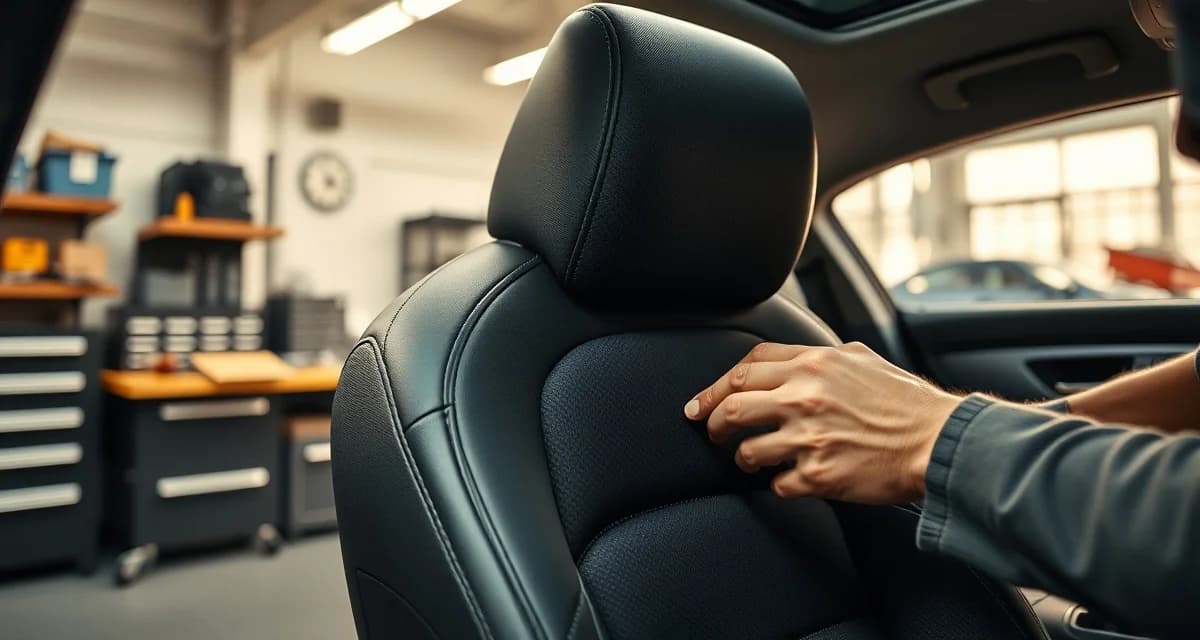
Automotive Upholstery Guide: Seats Headliners and Door Panels
Automotive upholstery averages $600 to $1,200 per full interior, among the highest-revenue jobs for smaller shops. A furniture upholstery shop doing 20 jobs per month at an average of $350 generates $7,000 per month. Adding 3 automotive interior jobs per month at an average of $800 adds $2,400 in revenue with work that takes roughly the same skill level as complex residential upholstery.
This guide covers what automotive upholstery involves and how a furniture upholstery shop can evaluate whether adding automotive makes business sense.
TL;DR
- Automotive upholstery fabric must meet FMVSS 302 flammability standards that standard furniture fabric does not need to meet.
- Automotive vinyl, automotive leather, and woven fabric each have distinct durability and pricing profiles suited to different applications.
- Genuine automotive leather interiors run $800-2,500 in material costs alone for a typical vehicle, before labor.
- Automotive leather is tanned for temperature cycling and UV exposure; furniture leather will crack and fade in a vehicle interior.
- Full interior recovering starts at $1,500 and can exceed $10,000 on premium vehicles with custom work.
- Fabric selection for heated seats must account for heat transfer, as thick materials reduce heating effectiveness.
The Case for Adding Automotive
Automotive and furniture upholstery use overlapping skills:
- Both require cutting and fitting fabric around non-flat forms
- Both require sewing seams that will be under tension
- Both require pattern matching on patterned materials
- Both require the same basic tools (sewing machine, scissors, staple equivalent)
The main differences are in materials (automotive vinyl, leather, and foam behave differently from furniture versions), techniques (automotive has more panel-specific fitting challenges), and tooling (industrial sewing machines for heavy vinyl; heat-seal tools for some applications).
The skill overlap means the learning curve is shorter than starting from scratch. A proficient furniture upholsterer can produce competent automotive work after 20-30 automotive-specific jobs.
Automotive Job Types
Seat reupholstery: The primary automotive upholstery job. Front and rear seat replacement in vinyl, leather, or cloth. Prices range from $400-600 for a basic front-seat pair to $800-1,200+ for a full front-and-rear set in premium leather.
Headliner replacement: The fabric ceiling of the car. Headliners are bonded to a fiberglass or foam substrate. Failed headliners (sagging, stained, or burned) are one of the most-requested automotive upholstery repairs. A headliner replacement typically takes 3-5 hours and prices from $200-500.
Door panel reupholstery: Door panels have fabric or vinyl insert sections that can be removed and recovered. The insert section is typically pull-off or screw-off and can be reupholstered on the bench. Prices from $150-300 per panel.
Custom interior: Full custom interiors for classic cars, hot rods, and custom vehicles. These are high-revenue projects ($2,000-8,000+) that require more experience and creativity, but they're a logical growth path for shops with solid automotive skills.
Evaluating Whether to Add Automotive
Ask four questions before investing in automotive capability:
1. Is there demand in your market? Google automotive upholstery in your area. How many shops come up? Are they local shops or dealership services? If there are few local options and the dealerships don't do custom work, there's likely demand.
2. Do you have the equipment? Auto upholstery requires a walking-foot sewing machine capable of sewing through multiple layers of automotive vinyl (standard for furniture shops) and ideally a flat-bed machine as well. A heat gun helps with vinyl forming on complex seat shapes. Spray adhesive for headliners. These tools are manageable additions.
3. Can you source automotive materials? Automotive vinyl and automotive-grade foam are available from commercial upholstery suppliers, but you need to establish relationships with suppliers who carry automotive-specific materials.
4. Are you willing to invest in training? The first 10-20 automotive jobs are a learning curve. Accept that the initial labor rate won't be as good as your furniture rate and build up speed over time.
Car Seat Reupholstery: The Basic Process
Assessment: Before agreeing to a job, examine the seat frame and foam condition. Seat frames are typically metal, and worn seat foam needs replacement. Seat foam and seat frames are separately available for most common vehicles.
Tear-down: Remove the seat from the vehicle (usually 4 bolts per seat). Remove the headrest and headrest guides. Remove the seat back cover: unzip or unclip the cover at the bottom, then work the cover up and off the seat back frame. Remove the seat bottom cover similarly.
Foam assessment: Check seat foam compression. If the foam has compressed to less than half its original height under sitting weight, it needs replacement. Seat foam is available by vehicle year, make, and model from specialty automotive upholstery suppliers.
Cutting and pattern matching: Many automotive fabrics use OEM-matched patterns for the center insert (the visible panel on the seat face). Pattern matching the insert requires positioning the fabric carefully before cutting.
Sewing: Automotive seats have sewn covers, not stapled. All seams are sewn with automotive thread (UV-stabilized polyester or nylon) on a walking-foot machine. Seam allowance is typically 3/8 to 1/2 inch.
Installation: Fit the sewn cover over the seat foam and frame, pulling seams into position. Hog-ring the bottom of the cover to the seat spring frame (hog-ring pliers and rings are automotive-specific tools not used in furniture work).
Headliner Replacement
Headliner replacement is a good entry point for automotive work. The process is more bonding and less sewing than seat work.
Materials: Headliner fabric (usually a woven fabric with foam backing, available by the yard from automotive suppliers) and headliner spray adhesive.
Process:
- Remove the old headliner substrate from the car (it unclips from the pillars and slides out)
- Remove all the old material from the substrate
- Clean the substrate surface
- Cut new headliner material to the substrate shape (the old material is your template)
- Apply headliner adhesive to both surfaces
- Wait for the adhesive to tack (not dry), then bond the new material to the substrate
- Trim excess at edges and cut openings for dome lights, sun visor mounts, and seatbelt openings
- Reinstall the substrate
The main skill is managing the adhesive timing and getting the material to bond without wrinkles or bubbles.
For automotive fabric selection and yardage, see the automotive upholstery fabric guide. The auto upholstery yardage calculator covers zone-by-zone seat yardage calculation.
Frequently Asked Questions
How do I start doing automotive upholstery?
Start with entry-level jobs, headliners and single seat front covers rather than full interiors. Source automotive-specific materials (automotive vinyl, seat foam, hog rings) from a commercial upholstery supplier before taking your first jobs. Practice on a junked seat before working on a customer's vehicle. Add automotive to your service menu once you've completed 10-15 practice jobs with acceptable results. Price your first customer jobs slightly below full rate as you refine your speed and technique.
What equipment do I need for car seat reupholstery?
The core tools: a walking-foot sewing machine (which furniture upholsterers typically already have), hog-ring pliers and hog rings (automotive-specific), trim removal tools, heat gun for vinyl forming, and a spray adhesive gun. If you don't have an industrial sewing machine that handles heavy vinyl, this is the main equipment investment. Auto upholstery vinyl is thicker and stiffer than furniture vinyl, requiring a more powerful machine. Budget $500-1,500 for machine upgrade if needed.
How long does it take to reupholster a car seat?
A single front seat takes an experienced automotive upholsterer 3-5 hours. A complete front pair takes 5-8 hours. A full set (front and rear) takes 8-14 hours depending on vehicle and material complexity. Leather and pattern-matched materials add time. New automotive upholsterers should expect to take 1.5-2 times these estimates while learning the specific fitting challenges of automotive shapes.
What is the difference between automotive leather and furniture leather?
Automotive leather is tanned and finished specifically for temperature cycling, UV exposure, and the repeated flexing that vehicle interiors experience. It typically has more UV-resistant topcoats and greater flexibility than furniture leather. Furniture leather is finished for appearance rather than durability under automotive conditions and will crack, fade, and delaminate much faster in a vehicle. The two are not interchangeable for quality automotive work.
How should I price an automotive interior job?
Auto upholstery pricing depends on scope: individual panel replacement, seat recovering, headliner replacement, or full interior work. Per-panel work typically runs $150-400 depending on complexity. Full seat recovering runs $300-800 per seat. Full interior work starts at $1,500 and can exceed $10,000 on premium vehicles with custom specifications. Material costs for automotive leather and vinyl are higher than standard furniture fabric and must be factored into every quote.
Sources
- Automotive Trim, Restyling and Accessory Connection (ATRAX)
- Specialty Equipment Market Association (SEMA)
- National Upholstery Association
- Upholstered Furniture Action Council (UFAC)
Get Started with StitchDesk
Auto upholstery shops deal with diverse job types, material specifications, and pricing variables that generic shop tools were not designed for. StitchDesk's quoting and job tracking tools help auto upholstery shops document scope, track materials, and deliver professional quotes. Try StitchDesk free and see how it handles your specific workflow.