Boucle Upholstery Guide: The Trending Fabric That Needs Care
Boucle frays 40% more at seams than flat weaves. Using standard seam allowance on boucle causes seam failure within 2 years because there's simply not enough fabric at the seam edge to hold the loop structure together under stress. This is the technical detail that separates boucle jobs that age beautifully from boucle jobs that end up back in your shop.
Boucle is the most searched upholstery fabric trend right now. Clients see it on Instagram and in design publications, and they want it on their chairs and sofas. As a professional upholsterer, understanding the specific handling requirements that make boucle work is what lets you execute these jobs confidently and charge appropriately for the extra care they require.
TL;DR
- Boucle has specific performance characteristics that make it well-suited for certain applications and less suitable for others.
- Always check the double-rub count before specifying boucle for a particular use; ratings vary widely between products.
- The cleaning code (W, S, WS, X) for boucle determines what maintenance clients can safely perform and should be communicated at delivery.
- Pattern repeat, nap direction, and fabric width all affect yardage requirements and should be verified before calculating a quote.
- COM boucle from clients should be inspected for rub count, cleaning code, and width before acceptance.
- Proper installation technique for boucle differs from standard fabric; follow manufacturer guidance for any specialty material.
What Boucle Actually Is
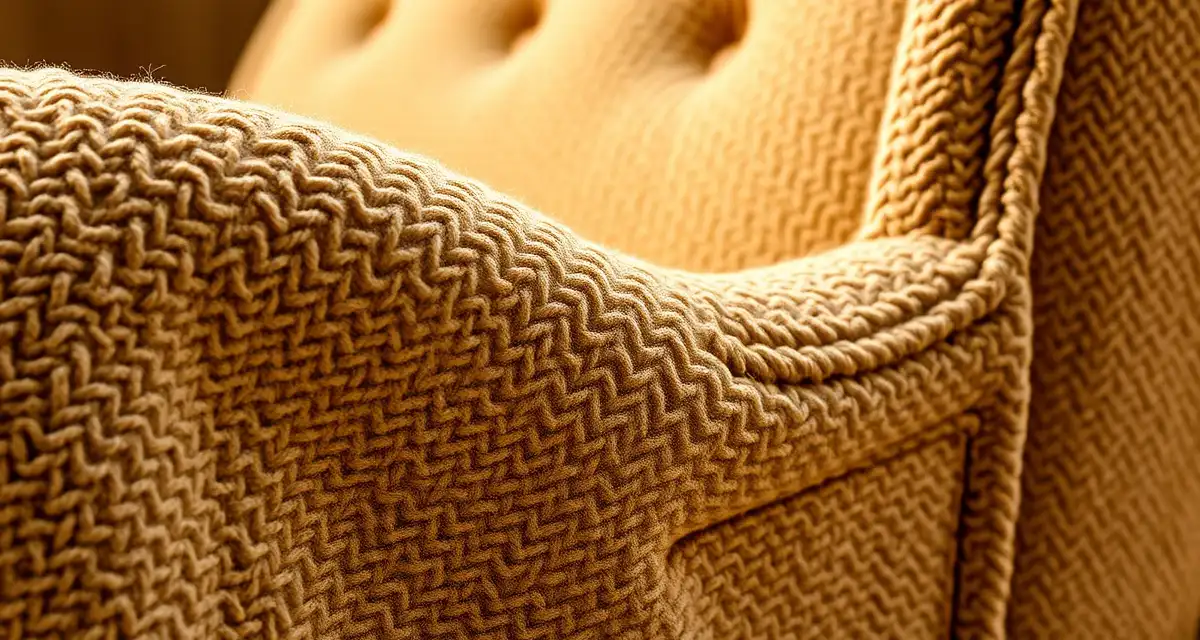
Boucle (from the French word for "buckle" or "ring") is a yarn or fabric characterized by loops that stand off the surface, creating an irregular, nubby, three-dimensional texture. The loops can be formed from a single looped yarn, or from multiple yarns twisted together with different tensions to create the loop effect.
The loop structure is what creates boucle's visual warmth and texture. It's also what makes it structurally different from flat-weave fabrics and requires different handling.
Modern upholstery boucle is typically a wool, wool-blend, or acrylic loop fabric. The specific fiber content affects the fabric's overall durability, wool boucle is more durable and naturally stain-resistant, while acrylic boucle is more affordable and often more colorfast.
Understanding the Loop Structure
Each loop in a boucle fabric is a small, lofted extension of the yarn that stands above the base weave. At a cut edge, these loops are no longer anchored at both ends, one end is free. Under stress, free loop ends pull back from the edge, taking adjacent loops with them.
This is why boucle frays differently from flat-weave fabrics. A flat weave frays when individual warp or weft threads pull loose. Boucle frays when whole loops pull free from the cut edge and take a chain of adjacent loops with them. The fray rate is faster and the damage is more visible.
Seam Allowance: The Critical Difference
Standard upholstery seam allowance is ½ inch. For boucle, use ¾ inch minimum. For heavy, loosely looped boucle, 1 inch is appropriate.
The wider allowance keeps more secured loops between the stitch line and the cut edge. Each secured loop is anchored by the weave structure on both sides of the needle hole, making it resistant to pulling free. Loops between the stitch line and the cut edge that are not caught by the stitch are susceptible to loss, but the wider allowance means there's enough depth before the seam line to absorb that loss without affecting seam integrity.
Test your specific boucle before committing to a seam allowance: hold a cut edge between your fingers and apply lateral tension. If loops pull free easily within ½ inch of the cut edge, use ¾ inch or wider seam allowance.
Cutting Boucle: The Right Approach
Use shears, not a rotary cutter. A rotary cutter's wheel action applies lateral force to the loops at the cut edge, snagging and pulling some free during the cut. Sharp shears cut cleanly through the base weave and any crossing loops with minimal distortion.
Cut precisely. Unlike flat-weave fabrics where the cut line can be eased in slightly during sewing, boucle pieces that are cut slightly off-line don't ease cleanly. The loop structure resists manipulation. Accurate cutting is more important with boucle than with most fabrics.
Mark on the reverse. Mark all cutting lines on the reverse of the boucle fabric. Marking on the face disturbs the loops.
Handle cut edges gently. Once cut, folded or crumpled boucle edges are more likely to snag and pull loops than flat-weave edges. Keep cut pieces flat until sewing.
Sewing Boucle
Needle size: Use a universal needle, size 16. A finer needle may skip stitches through the loop structure. A heavier needle creates unnecessarily large penetration holes.
Stitch length: 3-4 stitches per inch. Too short and the needle perforates the fabric more than necessary; too long and the seam has insufficient strength.
Thread: Strong polyester thread matched to the fabric's base color, not the loop color. The thread is structural, not decorative.
Presser foot pressure: Reduce slightly from standard. Boucle loops under a heavy presser foot can be compressed and held unevenly, causing seam creep. A walking foot is helpful for seams where alignment is critical.
Interface high-stress areas. For boucle at stress points (seat front corners, arm front edges), apply a strip of fusible interfacing to the reverse before cutting. This stabilizes the loop structure at high-stress locations and reduces the risk of seam failure under repeated flexing.
Pattern Matching in Boucle
Most boucle is not a defined pattern fabric. The loop texture creates an organic, irregular surface without a repeat that requires matching.
Some boucle fabrics have a visible directional quality, larger loops in one section, a directional shift in color shading, that should be handled consistently across all panels. Check the fabric from arm's length in good light before cutting to assess whether directional consistency is needed.
Durability Expectations
Boucle is typically rated 30,000-50,000 double rubs on the Wyzenbeek test, appropriate for moderate residential use but below the thresholds for high-traffic commercial applications.
Inform clients that boucle, particularly loose-loop boucle, is susceptible to snagging from jewelry, pet claws, and abrasive contact. A snag that pulls a loop significantly distorts the fabric face in the immediate area. Snags can be carefully trimmed, but prevention, keeping sharp objects away from the fabric, is the better approach.
Pricing Boucle Jobs
Boucle requires wider seam allowance (more yardage), slower cutting (more time), and more careful sewing (more time). A boucle sofa job typically requires 10-15% more time than the same job in a flat-weave fabric of similar weight.
Price accordingly. The fabric itself costs more than standard flat-weave options; your labor premium is appropriate and should be communicated to clients as part of why boucle is a premium option.
Use the boucle fabric yardage calculator to account for the wider seam allowance in your yardage estimate. See the upholstery fabric selection guide for how boucle compares to other trending fabric categories.
Related Articles
- The Complete Guide to Pattern Repeats in Upholstery Fabric
- Performance Upholstery Fabric: Complete Professional Guide
FAQ
How do I sew boucle fabric for upholstery?
Use a size 16 universal needle, strong polyester thread, and 3-4 stitches per inch. Reduce presser foot pressure slightly to prevent loop compression during sewing. Use a walking foot for long seams where alignment is critical. Interface high-stress areas on the reverse before cutting. The most important sewing consideration for boucle is the seam allowance: use ¾ inch minimum rather than the standard ½ inch. The wider allowance anchors more loops at the seam edge and prevents the chain-loop fray that causes early seam failure on boucle upholstery.
What seam allowance does boucle need?
Minimum ¾ inch. For heavy or loosely looped boucle, 1 inch is appropriate. Standard ½-inch seam allowance doesn't leave enough loop structure between the stitch line and the cut edge to resist the lateral pulling force that occurs under normal use. When the seam allowance is too narrow, loops at the edge work free, taking adjacent loops with them, and the seam weakens progressively. Test your specific boucle by applying lateral tension to a cut edge, if loops pull free within ½ inch, increase your seam allowance before cutting any job pieces.
Is boucle durable enough for sofa upholstery?
For moderate residential use, a sofa used regularly but not under extreme stress from children, pets, or abrasive contact, boucle is durable enough. Typical upholstery boucle tests at 30,000-50,000 double rubs, which is appropriate for adult residential use patterns. Boucle is not the right choice for high-traffic seating with children and pets, commercial applications, or any environment where the furniture sees heavy abrasive contact. In appropriate applications, handled correctly with wider seam allowance and careful cutting, boucle produces a finish that ages well and retains its visual character for many years.
How do I care for upholstery covered in this fabric?
Follow the cleaning code on the fabric label: W (water-based cleaners safe), S (solvent-based cleaners only), WS (either), or X (vacuum only). For spot cleaning, always test in an inconspicuous area first. Blot spills immediately rather than rubbing, which spreads the stain and can damage the fabric structure. Provide clients with a written care card at delivery specifying the cleaning code and any special maintenance recommendations.
What is the yardage impact of using this fabric with a pattern?
Pattern repeats add yardage proportional to the repeat size and the number of cutting zones on the piece. A 13-inch repeat adds roughly 10-20% over plain fabric on most pieces. A 27-inch repeat can add 25-35% or more depending on the piece type and number of cushions. Calculate yardage zone by zone for any patterned fabric rather than applying a generic percentage buffer.
Sources
- National Upholstery Association
- Association of Master Upholsterers and Soft Furnishers (AMUSF)
- Upholstered Furniture Action Council (UFAC)
- Furniture Today (trade publication)
Get Started with StitchDesk
Helping clients choose the right fabric is a core part of the job, and having accurate yardage calculations and fabric records at hand makes those conversations faster and more confident. StitchDesk keeps fabric data, yardage calculations, and client records in one place so you spend less time on paperwork and more time on the work itself. Try StitchDesk free.