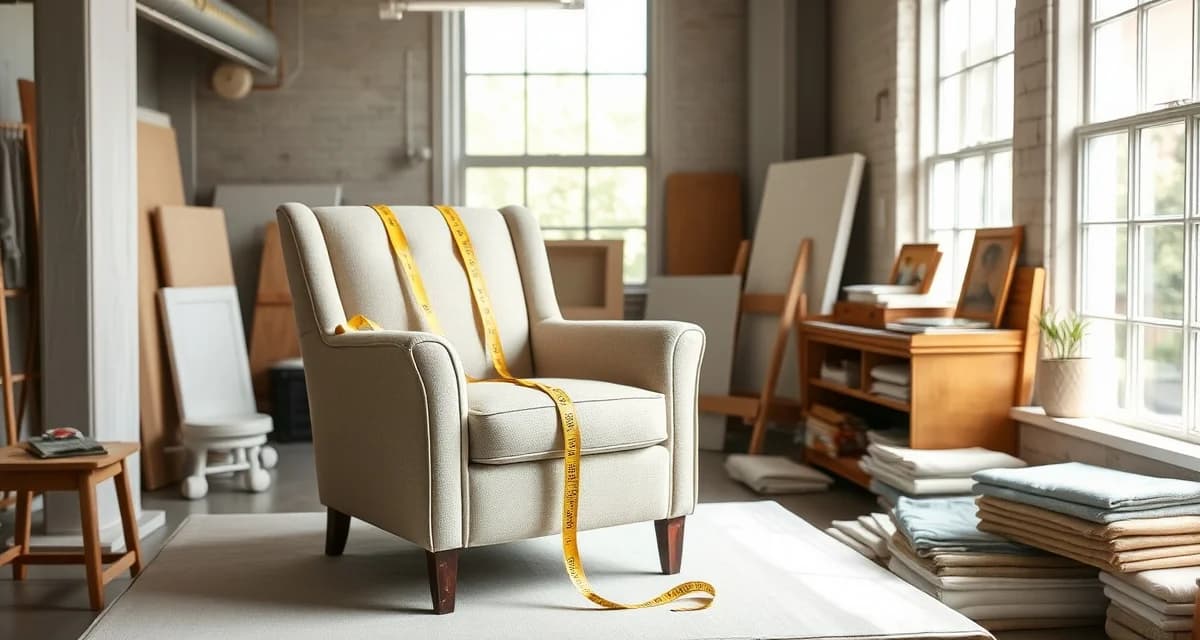
Accent Chair Fabric Yardage Calculator: All Accent Styles
"Accent chair" covers an enormous range of furniture. A slipper chair and a papasan chair have almost nothing in common from a yardage calculation standpoint: different construction, different panel shapes, different amounts of fabric going in completely different directions. Treating them as one category in your calculator gives you wrong numbers on half the jobs that come through your shop.
Accent chair fabric yardage for every style starts with identifying what you're actually working with, then calculating accordingly.
TL;DR
- Accent Chair yardage depends on fabric width, construction details, pattern repeat, and nap direction.
- Plain 54-inch fabric requires a baseline calculation plus 10-15% waste allowance for a standard accent chair job.
- Patterned fabric adds 20-35% to base yardage depending on repeat size and the number of cutting zones that must align.
- Directional fabrics add 15-25% over plain fabric because layout optimization is restricted by nap direction.
- Always verify fabric width before finalizing yardage; COM fabric often comes in non-standard widths.
- Calculating yardage at the quote stage, not mid-job, eliminates reorders and protects your profit margin.
Why Accent Chair Yardage Varies So Much
Standard arm chairs have a predictable structure: seat, back, two arms, outside back. The panels are rectangles or near-rectangles. You can calculate a wing chair, a club chair, or a barrel chair with reasonable confidence once you've measured.
Accent chairs break that pattern. Some have no arms (slipper, accent side chairs). Some have a curved, bowl-like seat that eliminates the arm-seat-back distinction entirely (papasan, egg chair). Some are so slim and small that the whole chair uses less fabric than just the seat cushions on a standard sofa. And some antique occasional chairs have elaborate shaped backs that require pattern cutting, not just panel cutting.
Accent Chair Styles and Their Yardage
All figures assume 54-inch solid fabric.
Slipper Chair
The slipper chair is an armless upholstered chair with a low, angled back. It's trimmer than an arm chair and uses less fabric because there are no arm panels.
Yardage: 2.5 to 4 yards
Main panels: inside back, outside back, seat, front border, and base. No inside arm, outside arm, or arm front. The yardage savings over an arm chair of the same width is typically 1 to 2 yards.
Occasional Arm Chair
These are the small, traditional arm chairs that show up as accent pieces in living rooms and formal sitting areas, sometimes called parlor chairs or Victorian accent chairs. They have arms, but the proportions are smaller than a modern lounge chair.
Yardage: 3.5 to 5.5 yards
The arm construction on occasional chairs is often a small scroll arm or a low, exposed-wood arm. If the arm has notable exposure (show wood), you're only covering the inside arm surface and part of the arm cap, reducing yardage over a fully upholstered arm.
Barrel Chair
The barrel chair's curved, continuous back-to-seat wraparound construction requires careful cutting. The continuous curve means you can't use simple rectangular panels.
Yardage: 4 to 6 yards
The barrel chair's inside back panel connects to the outside back in a continuous curve. Cutting this accurately from yardage without wasting the curved transition areas is the main challenge. See the Tub Chair section below for more on continuous curve cutting.
Papasan Chair
A papasan chair is a bowl-shaped wicker or metal frame with a thick cushion that fills the bowl. The cushion is the upholstery component. Its circular shape means circular fabric cutting, with real corner waste from cutting a circle from rectangular fabric.
Yardage: 4 to 7 yards
A typical papasan cushion is 45 to 55 inches in diameter. At 54-inch fabric, you need a square of fabric at least 50 to 58 inches, often wider than your usable fabric. That means the papasan cushion almost always requires seaming, and the circular cut from a square of fabric generates considerable waste.
The cushion is also typically very thick (8 to 12 inches), meaning the side boxing is deep and adds substantial yardage beyond the circular face panels.
Egg Chair / Pod Chair
Similar in concept to a papasan but often smaller and with a more enclosed shell shape. The upholstery is typically a cushion set that fits inside a fixed shell.
Yardage: 3 to 5 yards for cushion set
Calculate the seat cushion, back cushion, and any side/arm cushions separately. These are typically fitted cushions in an organic shape, requiring a pattern template from the existing cushion or the chair frame.
Accent Side Chair (No Upholstered Back)
Many accent side chairs have a padded seat only, with a decorative unupholstered back in wood, metal, or cane.
Yardage: 0.5 to 1.5 yards per chair
One seat panel, often with a simple drop-in seat construction. This is the simplest accent chair calculation.
Wingback Chair (Accent Scale)
Smaller wingback chairs used as bedroom accent pieces or formal sitting room chairs. Not the full-size reading chair, but a proportionally smaller version.
Yardage: 5 to 7 yards
Full upholstery coverage including wings, inside back, outside back, seat, arms, and outside arm. The wing panels add approximately 0.75 to 1.25 yards over an arm chair without wings.
Panel-by-Panel Approach for Accent Chairs
When you're working with an unfamiliar accent chair style, break it down to surfaces:
- List every upholstered surface. Walk around the chair and identify every surface that will receive fabric. Don't miss the inside wings, arm caps, or any unusual panels unique to the style.
- Measure each surface. Add 2 to 3 inches seam allowance and tuck-in allowance as appropriate. For surfaces with curves, measure the longest dimension of the curved surface, not the chord of the curve.
- Check for unique cut challenges. Circular panels (papasan), continuous curves (barrel/tub), shaped backs (antique occasional chairs) all require pattern templates and generate more waste than simple rectangular cuts.
- Sum panel yardage and add 15%. Accent chairs with complex shapes warrant a slightly higher waste buffer than standard rectangular pieces.
Pattern Fabric on Accent Chairs
Accent chairs are often in more distinctive fabric than the larger pieces they accompany. If you're using a bold pattern, two things to watch:
Pattern centering. The inside back and seat are the most visible panels on an accent chair. Both should have the pattern centered. On a small chair, this centering requirement is more visible to the eye because there's less fabric area to absorb any misalignment.
Scale compatibility. A very large repeat on a small accent chair can look awkward if only one half of the motif is visible. For chairs under 24 inches wide, patterns with repeats under 6 inches are usually more appropriate than large 12 to 18-inch statement patterns.
Using the Chair Fabric Yardage Calculator
The chair calculator includes accent chair style options including slipper, papasan, barrel, and occasional arm chair types. Each style applies the appropriate panel set and cutting allowances. For a general chair reupholstery guide, the Chair Reupholstery Guide covers measuring technique and style-by-style construction notes.
How much fabric for a slipper chair?
A slipper chair typically needs 2.5 to 4 yards of 54-inch fabric. The armless construction reduces yardage compared to a standard arm chair: you save the inside arm, outside arm, and arm front panels that an arm chair requires. The main panels are inside back, outside back, seat, and front border.
How many yards for a papasan chair?
A papasan cushion typically needs 4 to 7 yards depending on cushion diameter and thickness. The circular cut generates substantial corner waste from rectangular fabric, and the deep boxing strip for a thick cushion adds considerably to the total. Most papasan cushions require a seam in the face panel because the diameter exceeds standard fabric widths.
What fabric works best for accent chairs?
For living room and bedroom accent chairs that get occasional use, almost any upholstery-weight fabric with 25,000+ rubs works well. For high-traffic chairs or homes with pets and children, performance fabrics at 50,000+ rubs hold up better. Decorative fabrics like silk dupioni or delicate embroideries are appropriate for low-traffic formal rooms but will show wear quickly in everyday-use environments.
What is the biggest factor in yardage variation for this piece?
Pattern repeat is the biggest source of yardage variation. On plain fabric, the baseline calculation plus a 10-15% waste buffer is usually sufficient. Add a 13-inch pattern repeat and you may need 15-20% more. Add a 27-inch pattern repeat and the additional yardage can be 25-35% over the plain fabric calculation. Nap direction is the second-largest factor, typically adding 15-25% over plain fabric because layout optimization is restricted.
FAQ
Sources
- National Upholstery Association
- Association of Master Upholsterers and Soft Furnishers (AMUSF)
- Upholstered Furniture Action Council (UFAC)
- Furniture Today (trade publication)
Get Started with StitchDesk
Getting yardage right on yardage accent chair jobs is the difference between a profitable quote and an expensive reorder. StitchDesk's fabric calculator accounts for all the variables that cause errors: pattern repeat by zone, nap direction, fabric width, and cushion configuration. Start a free trial and see how accurate yardage calculation affects your bottom line.