Bergere Chair Fabric Yardage: French Exposed Frame Calculation
The bergere chair is a French classic, and working on one requires a different mindset than working on fully upholstered furniture. The exposed wood frame means you're covering some surfaces with fabric and leaving others deliberately bare. Apply a standard chair calculation and you'll overbuy by 30% or more.
Bergere chairs use 30% less fabric than a fully upholstered chair the same size. But you can only achieve that savings if you calculate precisely which surfaces are fabric and which are frame. Guessing the wrong surfaces costs you accuracy either way.
TL;DR
- Bergere Chair yardage depends on fabric width, construction details, pattern repeat, and nap direction.
- Plain 54-inch fabric requires a baseline calculation plus 10-15% waste allowance for a standard bergere chair job.
- Patterned fabric adds 20-35% to base yardage depending on repeat size and the number of cutting zones that must align.
- Directional fabrics add 15-25% over plain fabric because layout optimization is restricted by nap direction.
- Always verify fabric width before finalizing yardage; COM fabric often comes in non-standard widths.
- Calculating yardage at the quote stage, not mid-job, eliminates reorders and protects your profit margin.
What Is a Bergere Chair?
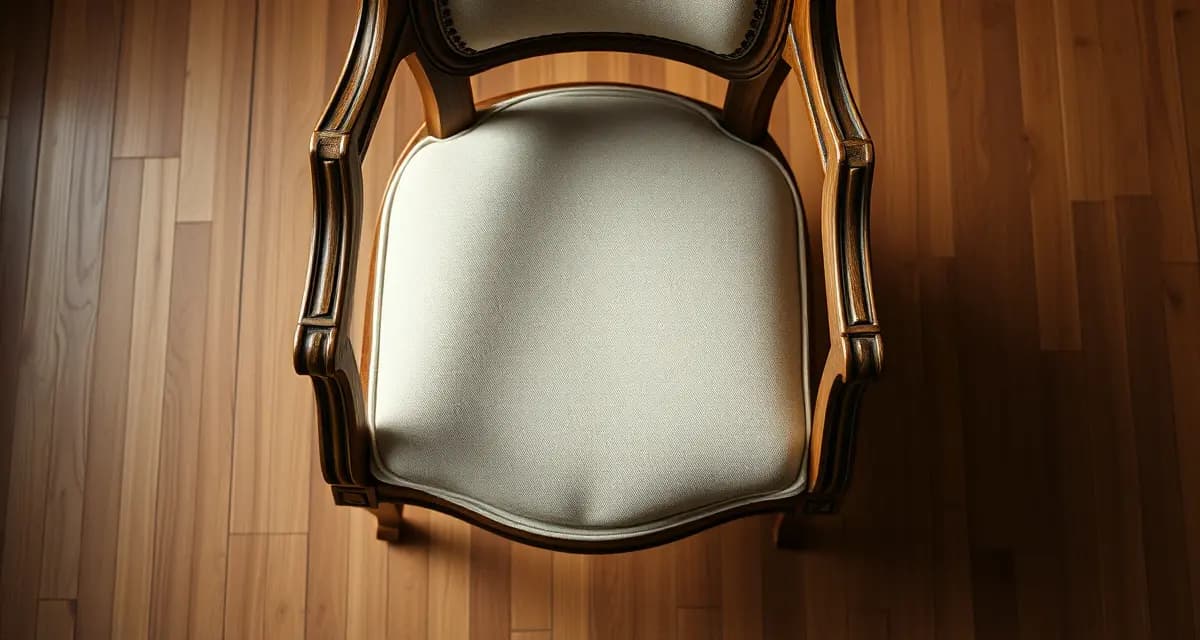
The bergere (French for "shepherdess") is a traditional French armchair with an exposed, carved wooden frame. The distinctive features are:
- Upholstered seat cushion (usually loose)
- Upholstered inside back
- Upholstered inside arms
- Exposed wooden frame on outside back, outside arms, and the arm rail
- Carved wooden front legs and arm posts (not upholstered)
The outside back, outside arms, and visible frame elements are wood, typically carved, gilded, or painted. The fabric lives only on the interior surfaces that the sitter contacts directly and the seat cushion.
This is the fundamental difference from a standard chair: you're only covering interior surfaces plus the seat cushion. Every outside panel that would require fabric on a standard chair is handled by the wooden frame on a bergere.
Bergere Chair Panels: What's Fabric and What's Wood
Fabric panels:
- Inside back (the padded back panel between the arms)
- Inside arms (x2), the padded inner arm surfaces
- Seat cushion: top face, bottom face, boxing strip, zipper panel
- Cushion top (sometimes the seat deck is also padded separately)
Wood panels (not fabric):
- Outside back, exposed carved wood frame
- Outside arms, exposed carved or painted wood
- Arm fronts/arm posts, carved wood
- Legs, wood (always on bergere chairs)
- Any visible frame rail, wood
Bergere Chair Yardage
Solid 54-inch fabric, standard bergere with loose seat cushion: 3 to 5 yards
Compare this to a fully upholstered arm chair of similar overall dimensions: 6 to 9 yards. The bergere's exposed frame creates a genuine 30% to 45% fabric reduction.
That reduction is almost entirely from eliminating the outside back, outside arm (x2), and arm front (x2) panels that a standard chair requires. Those 5 panels together often represent 2 to 3 yards on a standard arm chair.
Bergere Without Loose Cushion (Fixed Seat)
Some bergere restorations have a fixed upholstered seat rather than a loose cushion. In this case:
- Eliminate the cushion boxing strip and zipper panel
- The seat is padded and covered directly, with fabric stapled to the seat rail
- This reduces yardage by 0.5 to 0.75 yards vs the loose cushion version
Fixed seat bergere: 2.5 to 4 yards
Measuring a Bergere Chair
Because the bergere has a wood border around most of its upholstered panels, your measurements must stop at the wood-to-fabric transition line, not at the outer edge of the chair.
Inside back: Measure within the visible frame rebate (the recessed channel or lip that holds the padding). Width and height stop at the inner edge of the wood frame, not the outer edge of the chair.
Inside arms: Same principle. Measure the padded surface within the wooden arm rail. The arm rail itself is wood; your fabric stops where the wood begins.
Seat deck: If there's a seat rail surrounding a fixed seat, measure within the rail rebate.
Loose cushion: Measure the actual cushion dimensions, not the opening dimensions. These should be close but not identical, the cushion is slightly smaller than the seat opening by about 0.25 to 0.5 inches per side to allow for easy insertion and removal.
Antique vs Reproduction Bergere Chairs
Antique bergere chairs, particularly 18th and 19th century French pieces, often have irregular dimensions. The carved frame may have a curved or shaped inside back frame, making the inside back panel a trapezoid or even a curved shape rather than a simple rectangle.
For antique bergere restoration:
- Always create a paper template of the inside back and inside arm shapes before cutting fabric
- Add 0.5 to 0.75 yards to your estimate for template waste and non-rectangular cuts
- Consider grain direction carefully, the inside back grain typically runs vertical on a bergere
Reproduction bergere chairs are more standardized and calculate more predictably than antiques.
Pattern Fabric on a Bergere Chair
Pattern fabric on a bergere looks striking because the inside back and seat cushion are the primary display surfaces. The contained area of the inside back (often 18 to 22 inches wide × 22 to 28 inches tall) is an ideal frame for a centered medallion or a featured element of a repeating pattern.
For patterned fabric:
- Center the pattern on the inside back first
- Position the seat cushion top to coordinate with the back pattern
- The small inside arm panels should pick up the pattern at a position that relates well to the back
Pattern waste on a bergere is proportionally smaller than on larger pieces because the panels are contained. Budget 0.5 to 1 yard for pattern alignment waste on a 9 to 12-inch repeat.
Trimmings and Gimp on Bergere Chairs
Traditional bergere restoration includes gimp or braid trimmings at the junction between the fabric panels and the exposed wood frame. This covers the staple or tack line and creates a finished edge where fabric meets wood.
Gimp is typically ordered in linear yards separately from the fabric order. Measure the total perimeter of all fabric-to-wood junctions and add 10% for corners and overlap.
For a standard bergere, gimp total is typically 10 to 16 feet, 3.5 to 6 yards of gimp trim.
Bergere vs Louis Chair: The Key Difference
The Louis chair (or Louis XVI chair) is often confused with the bergere. The key difference in upholstery terms:
Bergere: Closed arms, the inside arm is fully padded and the arm is entirely enclosed
Louis chair: Open arms, the arm rail is wood and there's no inside arm padding; the padded seat and back are similar but the arm area is purely decorative carved wood
A Louis chair uses even less fabric than a bergere because the inside arms are also exposed wood. For a Louis chair, budget 2 to 3.5 yards (just seat cushion and inside back).
Using the Chair Fabric Yardage Calculator
The chair calculator includes an exposed-frame toggle for bergere and similar showwood pieces. When you select exposed frame, the outside back and outside arm panels are removed from the calculation, and only interior-surface panels are included. For antique furniture context, the Antique Furniture Reupholstery Guide covers working with period pieces including frame protection and original material considerations.
How much fabric for a bergere chair?
A bergere chair with a loose seat cushion needs 3 to 5 yards of 54-inch solid fabric. The exposed wood frame means outside arm, outside back, and leg panels are wood, not fabric, which reduces total yardage by 30% to 45% compared to a fully upholstered chair the same size.
What is a bergere chair?
A bergere is a traditional French armchair with an exposed carved wooden frame. The upholstered surfaces are the inside back, inside arms, and seat (typically a loose cushion). The outside back, outside arms, and all structural frame elements are carved wood, often gilded or painted in period-appropriate finishes.
How do I calculate yardage for a chair with exposed wood frame?
Identify every upholstered surface and measure those surfaces only. Do not measure the outside panels or any surface that is handled by the wood frame. Add seam allowances, calculate each panel's yardage separately, and sum. For a bergere specifically, the surfaces are inside back, inside arms, and seat cushion panels.
What is the biggest factor in yardage variation for this piece?
Pattern repeat is the biggest source of yardage variation. On plain fabric, the baseline calculation plus a 10-15% waste buffer is usually sufficient. Add a 13-inch pattern repeat and you may need 15-20% more. Add a 27-inch pattern repeat and the additional yardage can be 25-35% over the plain fabric calculation. Nap direction is the second-largest factor, typically adding 15-25% over plain fabric because layout optimization is restricted.
FAQ
Sources
- National Upholstery Association
- Association of Master Upholsterers and Soft Furnishers (AMUSF)
- Upholstered Furniture Action Council (UFAC)
- Furniture Today (trade publication)
Get Started with StitchDesk
Getting yardage right on yardage bergere chair jobs is the difference between a profitable quote and an expensive reorder. StitchDesk's fabric calculator accounts for all the variables that cause errors: pattern repeat by zone, nap direction, fabric width, and cushion configuration. Start a free trial and see how accurate yardage calculation affects your bottom line.