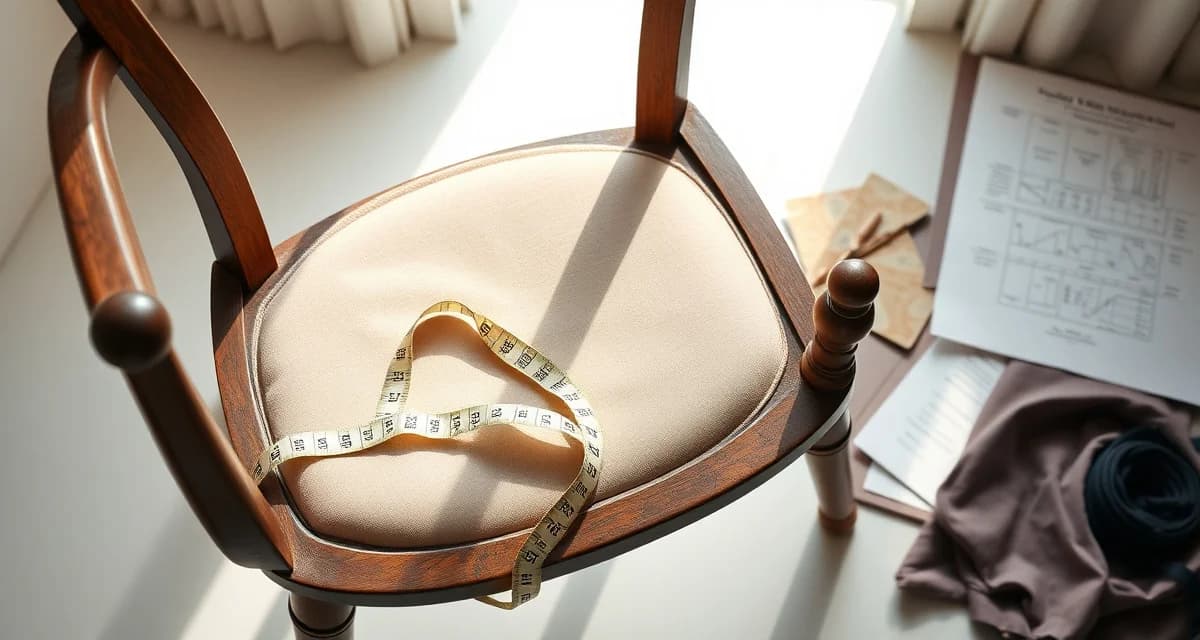
Fabric Yardage Calculator for Antique Chairs: Old Frames New Measurements
Antique chairs are 20-30% narrower than modern equivalents. Generic yardage charts consistently overestimate for antique pieces because they're built around modern furniture dimensions that simply don't apply to 18th and 19th century pieces.
The fabric yardage calculator for antique chairs handles non-standard dimensions through custom dimension input that bypasses preset templates. Because an 1840s parlor chair is not the same as a contemporary accent chair, even if they look similar in style.
TL;DR
- Accurate yardage calculation for antique chair jobs prevents costly fabric shortfalls and over-ordering that erode margin.
- Pattern repeats are the most common source of yardage errors; always calculate each cutting zone separately, not as a flat percentage.
- Nap-direction fabrics (velvet, chenille, mohair) require 15-25% more yardage than the same job in plain fabric.
- Fabric width significantly affects yardage: the difference between 54-inch and 60-inch fabric can be 1-2 yards on the same piece.
- Always add a 10-15% buffer on plain fabric and 15-20% on patterned fabric to account for cutting waste.
- Entering measurements accurately at the quoting stage eliminates the need to reorder mid-job.
Why Antique Chairs Don't Fit Standard Templates
Modern upholstered chairs have gradually gotten larger over the past 100 years. Seat depths have increased from 16-18 inches to 20-24 inches. Seat widths have grown from 22-24 inches to 26-30 inches. Back heights have stayed somewhat similar, but the overall scale of modern chairs is substantially larger than period antiques.
This matters for yardage calculation in two ways:
Overestimation: If you use a "small accent chair" template calibrated for a 26-inch-wide modern chair on an 1840s parlor chair that's 20 inches wide, you'll order 20-30% more fabric than you need. On a $50/yard fabric, that's money on the shelf.
Wrong piece ratios: Antique chair arms, backs, and seats have different proportional relationships than modern chairs. An antique with a high, narrow back and shallow seat has a completely different panel distribution than a modern low-back wide-seat chair of similar visual scale.
The only reliable approach is custom dimension input, measured from the actual piece.
Measuring Antique Chairs: What to Record
When measuring an antique chair for yardage calculation, measure every dimension directly from the piece:
Back
- Inside back height (top of seat to top of frame, at center)
- Inside back width (at widest point of the inside back)
- Outside back height (same measurement on exterior)
- Outside back width (typically slightly wider than inside at frame level)
Note: antique chair backs often taper, wider at top, narrower at seat, or vice versa. Measure at the widest point and note the taper.
Seat
- Seat depth (front rail to back platform)
- Seat width (inside arm to inside arm, or frame width for armless)
Antique seats are typically 16-18 inches deep, not 20-24 inches.
Arms (if present)
- Inside arm height (seat level to top of arm)
- Inside arm width/depth (front to back)
- Outside arm (same dimensions from exterior)
- Arm front (width × height of the front face)
Period arms are often narrow, 4-5 inches wide vs 6-8 inches on modern chairs. This considerably changes the arm panel yardage.
Yardage Comparison: Antique vs Modern
| Chair Style | Modern Equivalent | Antique Equivalent |
|---|---|---|
| Parlor/side chair (no arms) | 4.5-6 yards (modern) | 3-4 yards (antique) |
| Occasional/accent chair | 5-7 yards (modern) | 4-5 yards (antique) |
| Armchair (period proportions) | 6-8 yards (modern) | 5-6.5 yards (antique) |
| Balloon-back chair | N/A | 3-4.5 yards |
| Slipper chair (period) | N/A | 4-5.5 yards |
The overestimate from using modern templates on antique pieces is typically 1-2 yards, meaningful on expensive period-appropriate fabrics.
What Fabric Is Appropriate for Antique Chair Reupholstery?
The antique furniture reupholstery guide covers this in detail, but the key considerations for fabric selection on antiques:
Weight: Period chairs have lighter frames than modern furniture. Heavy fabrics can stress the frame joints. Medium-weight fabrics (6-10 oz) are better than heavy upholstery weights (12-14 oz) on antique frames.
Style appropriateness: Antique chairs look best in period-appropriate fabrics, silk, brocade, tapestry, wool, damask, or quality modern interpretations of these. Contemporary microfiber or performance fabric can work on period pieces depending on the use case, but it changes the character of the piece.
Shrinkage risk: Older frames may have some movement as wood expands and contracts. Linen and natural fabrics that shrink can accelerate joint stress on antique frames. Consider pre-shrinking or using linen blends.
The fabric yardage calculator chair with custom dimension input covers antique chairs when standard templates don't apply.
FAQ
How do I calculate yardage for an antique chair?
Measure every panel directly from the piece, don't use a modern chair template. Antique chairs are typically 20-30% smaller than their modern equivalents in seat width and depth. Record inside and outside back, seat, arms, and any decorative elements (wings, carved back panels requiring fabric coverage). Input these custom dimensions into a yardage calculator rather than selecting a preset chair type. The actual yardage will typically be 1-2 yards less than a modern chair of similar visual style.
Do antique chairs need more or less fabric than modern chairs?
Less, typically. Antique chairs are smaller than modern equivalents, narrower seats (16-22 inches vs 24-28 inches modern), shallower depths (15-17 inches vs 20-24 inches), and narrower arms (3-5 inches vs 5-8 inches). Using modern chair yardage templates for antique pieces consistently overestimates by 20-30%. Always measure the actual piece and use those dimensions rather than a preset template.
What fabric is appropriate for antique chair reupholstery?
Period-appropriate fabrics, silk, brocade, tapestry, damask, wool velvet, and quality linen, are the traditional choice and best match the weight and proportion of antique frames. Modern fabric interpretations of these (performance velvet, quality linen blends) can work well. Avoid heavy modern upholstery weights (12-14 oz canvas, thick chenille) on antique frames that weren't built to support that weight. If the chair is in active daily use rather than display, a period-look performance fabric may be more practical than a fragile historical textile.
Should I add a buffer to calculated yardage?
Yes. A 10-15% buffer is standard on plain fabric to account for cutting waste and minor errors. On patterned fabric, use 15-20% above the pattern-adjusted calculation. For COM fabric that cannot be reordered if you run short, some upholsterers increase the buffer to 20-25%. The cost of a modest buffer is far lower than the cost of sourcing additional fabric after cutting has begun.
Sources
- National Upholstery Association
- Association of Master Upholsterers and Soft Furnishers (AMUSF)
- Upholstered Furniture Action Council (UFAC)
- Furniture Today (trade publication)
Get Started with StitchDesk
Getting yardage right on antique chair jobs is the difference between a profitable quote and an expensive reorder. StitchDesk's fabric calculator accounts for all the variables that cause errors: pattern repeat by zone, nap direction, fabric width, and cushion configuration. Start a free trial and see how accurate yardage calculation affects your bottom line.