How Many Yards of Fabric to Reupholster a Recliner?
A standard recliner needs 6-9 yards total. The base pieces cover 4.5-6 yards. The three panels most shops forget, the two side panels and the back flap, add 1.5-2 yards. One in four recliner jobs runs short because shops don't calculate all three of these panels.
TL;DR
- Recliner yardage depends on fabric width, construction details, pattern repeat, and nap direction.
- Plain 54-inch fabric requires a baseline calculation plus 10-15% waste allowance for a standard recliner job.
- Patterned fabric adds 20-35% to base yardage depending on repeat size and the number of cutting zones that must align.
- Directional fabrics add 15-25% over plain fabric because layout optimization is restricted by nap direction.
- Always verify fabric width before finalizing yardage; COM fabric often comes in non-standard widths.
- Calculating yardage at the quote stage, not mid-job, eliminates reorders and protects your profit margin.
Full Yardage Breakdown for a Recliner
| Component | Approximate yardage |
|---|---|
| Seat cushion (front and back) | 1.25-1.5 yards |
| Back (interior) | 1-1.25 yards |
| Inside arms (both) | 0.75-1 yard |
| Outside arms (both) | 0.5-0.75 yards |
| Front border and arm fronts | 0.5-0.75 yards |
| Outside back | 0.75-1 yard |
| Left side panel | 0.5-0.75 yards |
| Right side panel | 0.5-0.75 yards |
| Back flap (recliner mechanism cover) | 0.5-0.75 yards |
| Total | 6.25-8.5 yards |
With waste and cutting loss, order 7-9 yards for a standard recliner.
The Three Forgotten Panels
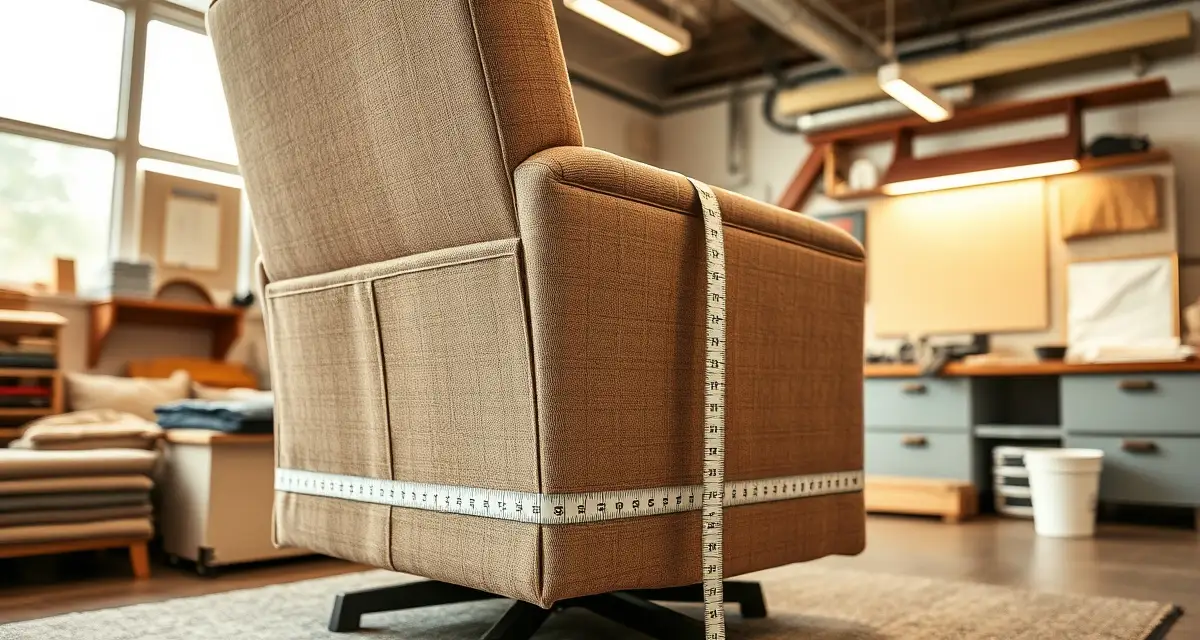
Side panels: These are the fabric-covered panels visible on each side of the recliner between the arm and the floor. They extend from the arm bottom to the floor on both sides. Each panel is roughly 12-18 inches wide × 24-30 inches tall. They're easy to forget in a quick estimate because they're not prominent from the front view.
Back flap: The piece of fabric that covers the recliner mechanism on the back exterior lower section. When the chair is in the reclined position, this panel is exposed. Some recliners have a more complex mechanism cover that requires careful fitting. 0.5-0.75 yards accounts for most configurations.
Missing these three panels on a 54-inch fabric job means ordering 1.5-2 yards too little. On a premium fabric at $40/yard, that's $60-80 in an unexpected rush reorder.
Recliner Type Variations
| Recliner Style | Approximate Total Yardage |
|---|---|
| Standard manual recliner | 6.5-8.5 yards |
| Power recliner | 7-9 yards (slightly more panel complexity) |
| Rocker-recliner | 7-9 yards (rocker base may need cover) |
| Chaise recliner / extended seat | 9-12 yards |
| Oversized/XL recliner | 8-11 yards |
| Recliner with attached headrest | Add 0.5-1 yard |
Patterned Fabric on Recliners
A recliner with a large pattern repeat presents challenges. The interior back and seat are the most visible panels and should show the pattern well-centered. With a 12-inch repeat, add 1.5-2 yards above the solid-fabric calculation.
For Professional Shops
Recliners are reliable revenue generators, but they're undersquoted more often than any other chair type because of the side panel and back flap oversight. Building these into your standard recliner template rather than calculating them separately each time ensures they're never missed.
The recliner yardage guide has more detail on specific recliner configurations. The fabric yardage calculator for recliners calculates all panels including mechanism covers automatically.
Frequently Asked Questions
How much fabric for a recliner?
A standard recliner needs 6.5-9 yards of fabric in total, accounting for all panels including the two side panels and back flap that are frequently omitted from quick estimates. The base seat, back, and arm panels account for 4.5-6 yards. The three additional panels (both sides + back flap) add 1.5-2 yards. Order from the upper end of the range (8-9 yards for a standard manual recliner) to ensure you have enough for all panels without a mid-job reorder.
What panels do people forget when ordering recliner fabric?
The two side panels and the back flap are the three most commonly overlooked recliner panels. The side panels run from the arm bottom to the floor on each side of the chair and are clearly visible when the chair is in place. The back flap covers the recliner mechanism on the exterior back lower section and becomes visible when the chair is reclined. Missing all three of these adds up to 1.5-2 yards of unaccounted-for fabric, which causes shortfalls on about 1 in 4 recliner jobs that weren't fully calculated.
Does recliner style affect yardage?
Yes. A chaise recliner with an extended seat and leg rest needs 9-12 yards versus 6.5-8.5 for a standard configuration. Oversized recliners need 8-11 yards due to larger panel dimensions. Power recliners have slightly more mechanism panel complexity than manual ones. An attached adjustable headrest adds 0.5-1 yard. The most important style distinction for yardage is the extended chaise seat versus a standard recliner seat, that difference alone adds 2-3 yards.
What is the biggest factor in yardage variation for this piece?
Pattern repeat is the biggest source of yardage variation. On plain fabric, the baseline calculation plus a 10-15% waste buffer is usually sufficient. Add a 13-inch pattern repeat and you may need 15-20% more. Add a 27-inch pattern repeat and the additional yardage can be 25-35% over the plain fabric calculation. Nap direction is the second-largest factor, typically adding 15-25% over plain fabric because layout optimization is restricted.
Sources
- National Upholstery Association
- Association of Master Upholsterers and Soft Furnishers (AMUSF)
- Upholstered Furniture Action Council (UFAC)
- Furniture Today (trade publication)
Get Started with StitchDesk
Getting yardage right on recliner jobs is the difference between a profitable quote and an expensive reorder. StitchDesk's fabric calculator accounts for all the variables that cause errors: pattern repeat by zone, nap direction, fabric width, and cushion configuration. Start a free trial and see how accurate yardage calculation affects your bottom line.