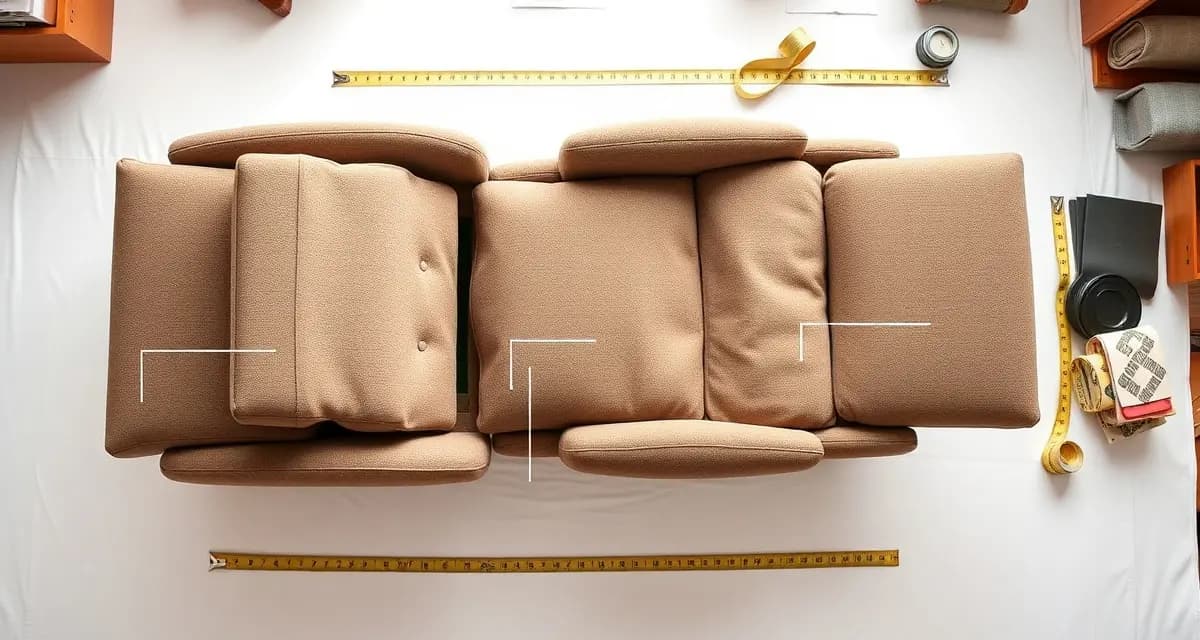
Recliner Reupholstery Yardage: Every Panel Counted
1 in 4 recliner jobs runs short on fabric. The reason is almost always the same: shops forget the back flap and side mechanism panels. These aren't decorative, they're functional pieces of fabric that the recliner mechanism requires to operate correctly. And they add up.
This guide is the complete recliner fabric yardage reference: every panel, every flap, every gusset counted. No surprises mid-job.
TL;DR
- Recliner yardage depends on fabric width, construction details, pattern repeat, and nap direction.
- Plain 54-inch fabric requires a baseline calculation plus 10-15% waste allowance for a standard recliner job.
- Patterned fabric adds 20-35% to base yardage depending on repeat size and the number of cutting zones that must align.
- Directional fabrics add 15-25% over plain fabric because layout optimization is restricted by nap direction.
- Always verify fabric width before finalizing yardage; COM fabric often comes in non-standard widths.
- Calculating yardage at the quote stage, not mid-job, eliminates reorders and protects your profit margin.
Why Recliners Are Different From Standard Chairs
A standard chair has maybe 6-8 fabric pieces. A recliner has 12-16. The mechanism, springs, cables, and linkage that make reclining work, creates additional fabric requirements that standard chair calculations completely miss.
Legacy upholstery software ignores recliner mechanism-specific panel requirements. The software was designed for static furniture. If you're using a generic "chair" template for recliners, you're systematically short-ordering fabric on every recliner job.
The Complete Panel Map: All 12-16 Pieces
Here's what a full recliner actually needs in fabric:
Primary surfaces (same as a standard chair):
- Inside back
- Outside back
- Inside arms (2 pieces)
- Outside arms (2 pieces)
- Seat front (the visible front panel below the seat cushion)
Seat cushion (if removable):
- Cushion top
- Cushion bottom
- Front boxing
- Side boxing (2 pieces)
- Zipper panel / back boxing
Mechanism-specific panels (what shops miss):
- Back flap: The fabric panel that covers the back of the mechanism housing at the base of the chair. When the chair reclines, this flap folds out. It must be flexible and properly sized to cover the mechanism at all recliner positions.
- Side mechanism panels (2 pieces): Panels that cover the mechanism linkage visible on the sides of the chair. On manual recliners, these are often fixed. On power recliners, they may need to flex.
- Footrest top: The fabric that covers the footrest when it extends
- Footrest front: The visible face of the footrest
- Footrest sides (2 pieces): Side gussets on the footrest
- Access panel: Some recliners have a removable access panel on the back or side for mechanism service. This is fabric-covered and often forgotten.
Yardage Calculation for a Standard Recliner
For a standard single-seat recliner in solid 54-inch fabric:
- Primary surfaces (inside back, outside back, seat front): 3-4 yards
- Arms (inside + outside × 2): 2-2.5 yards
- Seat cushion (if removable): 1.5-2 yards
- Back flap: 0.5-0.75 yards
- Side mechanism panels: 0.75-1 yard
- Footrest (top, front, sides): 1-1.5 yards
- Access panel: 0.25-0.5 yards
- Welt allowance: 0.5-0.75 yards
Total: 9.5-13 yards
Compare this to what a generic chair template would give you, typically 5-7 yards for a "chair." That 3-6 yard gap is where recliner jobs run short.
Power Recliners vs Manual Recliners
Power recliners have the same panel requirements as manual recliners, with one addition: the power cable routing area on the side or back may require a small additional panel or fabric flap to cover the cable entry point neatly.
Power recliners also tend to be heavier and more structurally complex, which can mean the mechanism access panel is more accessible (and therefore more visible). Budget an extra 0.25-0.5 yards for power recliner access coverage.
Recliner Yardage Table
| Recliner Type | Yardage (54" solid fabric) |
|---|---|
| Standard single-seat recliner | 9.5-12 yards |
| Power recliner | 10-13 yards |
| Oversized recliner (XL) | 12-15 yards |
| Recliner-sofa section | 11-14 yards |
| Wall-hugger recliner (smaller footprint) | 9-11 yards |
The fabric yardage calculator recliner should include the mechanism panels in its calculation, not use a standard chair template.
Fabric Recommendations for Recliners
Recliners see more movement and stress than any other upholstered furniture type. The mechanism panels flex with every use. The footrest fabric gets grabbed and pushed repeatedly. The back flap folds and unfolds constantly.
This means durability matters even more for recliners than for standard furniture. The recliner reupholstery guide recommends:
- Double-rub count above 40,000 for all panels
- Avoid velvet or chenille on mechanism panels and footrests, pile damage from flexing shows quickly
- Performance synthetics (polyester, solution-dyed) outperform naturals for recliner longevity
FAQ
How many yards of fabric for a recliner?
A standard single-seat recliner needs 9.5-12 yards of 54-inch fabric. An oversized or power recliner needs 10-13 yards. These figures include all mechanism-specific panels, back flap, side panels, footrest, and access panel, that generic chair estimates miss. Don't use a standard chair yardage for a recliner; the panel count is nearly double.
What panels do people forget when estimating recliner yardage?
The most commonly forgotten panels are: the back flap (0.5-0.75 yards), the side mechanism panels (0.75-1 yard combined), and the footrest assembly (1-1.5 yards). These three groups of panels add 2.25-3.25 yards to a recliner estimate that a generic chair template would miss entirely. Together, they account for 1 in 4 recliner shortfall situations.
What fabric is best for a high-use recliner?
For daily-use recliners, prioritize durability above all. Performance polyester or polypropylene fabrics with double-rub counts above 40,000 are the most practical choice. Microfiber in a tight-woven or suede finish holds up well and cleans easily. Avoid velvet, chenille, or loose-weave naturals, the constant movement of recliner mechanisms causes rapid pile wear on these fabrics. For leather recliners, use full-grain or top-grain leather rated for active use.
What is the biggest factor in yardage variation for this piece?
Pattern repeat is the biggest source of yardage variation. On plain fabric, the baseline calculation plus a 10-15% waste buffer is usually sufficient. Add a 13-inch pattern repeat and you may need 15-20% more. Add a 27-inch pattern repeat and the additional yardage can be 25-35% over the plain fabric calculation. Nap direction is the second-largest factor, typically adding 15-25% over plain fabric because layout optimization is restricted.
Sources
- National Upholstery Association
- Association of Master Upholsterers and Soft Furnishers (AMUSF)
- Upholstered Furniture Action Council (UFAC)
- Furniture Today (trade publication)
Get Started with StitchDesk
Getting yardage right on recliner jobs is the difference between a profitable quote and an expensive reorder. StitchDesk's fabric calculator accounts for all the variables that cause errors: pattern repeat by zone, nap direction, fabric width, and cushion configuration. Start a free trial and see how accurate yardage calculation affects your bottom line.