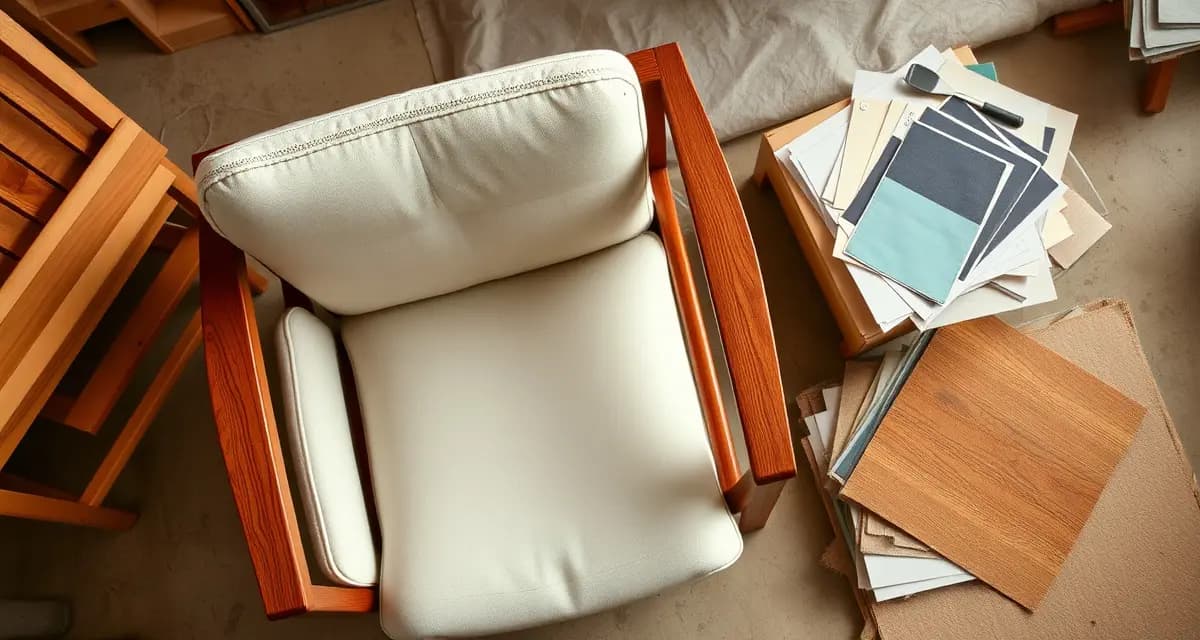
Mid-Century Modern Furniture Reupholstery: Style Authenticity Guide
Mid-century pieces with tight upholstery show every foam inconsistency. Foam grade selection is critical on these styles because the clean, minimal silhouette of a 1950s lounge chair doesn't hide an uneven foam surface the way a tufted Victorian chair does. The fabric tension on tight-back and tight-seat mid-century pieces makes every bump and inconsistency visible from across the room.
This guide covers the authentic materials, foam selection, and techniques specific to mid-century modern furniture reupholstery.
TL;DR
- Successful reupholstery starts with a thorough frame and spring assessment before any fabric is ordered.
- Professional technique follows a consistent panel sequence: strip, repair frame, replace foam, then install fabric panels in the correct order.
- Pattern fabric requires centering and repeat alignment decisions made before cutting; errors discovered after cutting are expensive to correct.
- Professional labor time ranges from 12-20 hours depending on furniture style and fabric complexity.
- Foam selection matters as much as fabric selection; the right density and ILD creates the correct seating profile and longevity.
- Consistent tension on all panels and quality welt cording are the marks of professional finishing.
What Defines Mid-Century Modern Construction
Mid-century modern furniture (roughly 1945-1975) has several characteristics that distinguish it from both traditional furniture and contemporary furniture:
Exposed frames: Most mid-century pieces have exposed wood frames, legs, arm rails, and sometimes back rails that are visible and part of the design. The upholstery sits within the frame rather than covering it. This means fabric edges must be clean and precise at the frame interfaces.
Tight upholstery: Most seats and backs are tight-upholstered (no loose cushions) or use fitted cushions that sit cleanly within the frame. There's no decorative skirt, no deep tufting, and no excess fabric drape. Every panel is pulled taut and flat.
Minimal visual detail: Mid-century design relies on form rather than decoration. Welt cord is often absent or minimal. Seams are hidden in frame recesses. The visual interest comes from shape and material, not from applied decoration.
Danish Modern vs American Mid-Century: Danish Modern pieces (Wegner, Mogensen, Finn Juhl) often use natural materials more prominently, teak frames, wool or leather upholstery. American mid-century (Eames, Saarinen, Knoll) uses more industrial materials, fiberglass shells, chrome frames, and a wider range of synthetic fabrics.
Foam Selection: The Critical Factor
The biggest technical challenge in mid-century reupholstery is foam selection. Tight-upholstered mid-century pieces have almost no tolerance for foam that's uneven, too soft, or inconsistent.
Density and ILD for mid-century seats:
- 2.5-3.0 density foam is the appropriate range for quality mid-century seat work
- 40-45 ILD for seat cushions (firmer than typical residential sofa seating)
- 35-38 ILD for back cushions and back panels
Why firmness matters: Mid-century chairs have relatively shallow seat depths (18-22 inches) and the tight upholstery means the client is sitting on a firm profile. Soft foam in a tight-back chair creates a "hammock" effect where the seat sags visibly. The original furniture from the 1950s-70s used rubberized foam or latex that had very consistent density throughout, modern high-resilience foam approximates this best.
Foam consistency: Don't use pieces of foam glued together to reach the right thickness. Mid-century tight seats need to be cut from a single piece of foam at the right thickness. Any glue joint in the foam creates a visible line in the finished upholstery.
No Dacron wrap on tight-back mid-century: Dacron polyester wrap adds softness and rounds the edges, appropriate for traditional or contemporary sofas but wrong for mid-century tight backs. Skip the Dacron and use a single firm foam layer.
Period-Appropriate Fabric Choices
Authentic fabric for mid-century pieces:
Wool: The most authentic choice for Danish Modern pieces. Nubby wool tweeds, solid wool, and wool-blend fabrics were the standard for high-end mid-century seating. Genuine wool upholstery fabric is still available from specialty suppliers and from some contemporary fabric lines that produce period-inspired materials.
Leather: Used extensively in mid-century work, particularly for Eames lounge chairs, Barcelona chairs, and Danish Modern recliners. Leather in cognac, black, ivory, and caramel are historically accurate.
Vinyl (original): Many original mid-century pieces used vinyl as the practical, modernist alternative to fabric. A period-appropriate vinyl reupholstery should use a thin, smooth vinyl (not heavily textured) in an appropriate color range.
Contemporary performance alternatives: Clients who want the mid-century look with modern practicality often choose performance fabrics in solid colors or subtle geometric patterns. A charcoal performance fabric on a Danish chair looks period-appropriate while offering superior durability and cleanability.
What to avoid on mid-century: Floral patterns, heavy damasks, brocades, and any fabric with overtly traditional decorative elements. These read as anachronistic on clean mid-century forms. Also avoid very loosely woven fabrics that show tension variation under the tight upholstery.
Working with Exposed Frames
The exposed frame is where mid-century reupholstery differs most from traditional furniture technique.
Clean edges at frame interfaces: The fabric must terminate cleanly at every frame interface, where the upholstered panel meets the wood rail. There are typically two methods:
Recessed channel method: The original construction often had a fabric channel routed into the frame rail. The fabric edge folds into the channel and is held in place. For reupholstery, clean out the channel before inserting the new fabric edge.
Blind tack at frame edge: Where there's no channel, use a metal or cardboard tacking strip at the frame edge. The fabric folds over the strip and tucks against the frame for a clean terminated edge.
No visible staples at frame edges: On mid-century work, staples visible near the exposed frame are as inappropriate as they are on antique work. Staples should be 1/4 inch or more back from the frame edge, hidden under the fabric fold.
The Authentication Value Question
Mid-century modern furniture has notable collector value. Iconic pieces (Eames lounge chairs, Barcelona chairs, Knoll pieces) can be worth $2,000-15,000 in original or restored condition.
For valuable iconic pieces, discuss with the client whether to use original period fabrics (often available through authorized fabric suppliers) or period-appropriate alternatives. Herman Miller and Knoll both supply fabric for their iconic models that can be used in restoration work.
For less iconic but well-made mid-century pieces, the same period-appropriate approach applies. Good mid-century furniture is worth preserving correctly.
The antique furniture reupholstery guide covers the broader value assessment framework. For yardage on mid-century chair styles, use the mid-century furniture yardage calculator.
Frequently Asked Questions
How do I reupholster mid-century modern furniture?
Select firm, consistent foam (2.5-3.0 density, 40-45 ILD for seats), skip the Dacron wrap, and cut foam from a single piece for tight-back and tight-seat panels. Use period-appropriate fabric (wool, solid leather, or solid performance fabric in a period color). Work carefully at exposed frame interfaces, using recessed channels or blind tacking rather than visible staples near the frame edge. Pull fabric taut and flat, mid-century tight upholstery shows every inconsistency.
What fabric is authentic for mid-century modern?
Wool fabrics (solid, nubby tweeds, and solid weaves) are the most historically accurate choice for Danish Modern pieces. Leather (cognac, black, ivory) is authentic for high-end mid-century work. Thin smooth vinyl is appropriate for American mid-century pieces that were originally vinyl. For clients who want modern practicality, solid-color performance fabrics in appropriate mid-century colors (charcoal, olive, mustard, camel) are visually period-appropriate.
Should I replace the foam in a mid-century chair?
In most cases, yes. Original mid-century foam and latex from the 1960s-70s is typically 50+ years old and has lost most of its resilience. It's also often hardened, crumbled, or chemically degraded in ways that affect both comfort and health (old foam can off-gas as it degrades). Replace with modern high-resilience foam at 2.5-3.0 density to match the firm, flat profile that defines mid-century aesthetics. Don't use pieces of foam glued together, one solid piece cut to thickness gives the consistent surface that tight mid-century upholstery requires.
What tools are required for professional reupholstery?
Professional reupholstery requires a heavy-duty staple gun (pneumatic or electric), a staple remover and tack puller, quality scissors and a rotary cutter, a sewing machine capable of sewing upholstery-weight fabric, foam cutting tools, and regulator pins for manipulating stuffing. For tufted work, a curved needle and tufting twine are also required. The quality of your tools directly affects the quality of the finished work, particularly at seams and edges.
How do I handle pattern matching across multiple panels?
Establish the dominant panel first (usually the inside back) and center the pattern motif there. Then cut each subsequent panel so the pattern aligns with the adjacent panel at the seam. Mark the pattern alignment point on each piece before cutting. For complex pieces, some upholsterers make a cutting plan on paper showing where each panel falls in the pattern before cutting any fabric. This investment in planning prevents the most common and costly pattern-matching errors.
Sources
- National Upholstery Association
- Association of Master Upholsterers and Soft Furnishers (AMUSF)
- Upholstered Furniture Action Council (UFAC)
- Furniture Today (trade publication)
Get Started with StitchDesk
Accurate reupholstery quotes require knowing your labor time, material costs, and overhead for each job type. StitchDesk helps upholstery shops build detailed, professional quotes that account for all cost factors, so every job is priced to cover costs and generate profit. Try StitchDesk free and bring accuracy to every estimate you send.