Outdoor Furniture Reupholstery: Fabric Foam and Water Drainage
Outdoor cushions without drainage holes or open-cell foam mold within one season, the most common outdoor failure. The mold doesn't start at the surface. It starts inside the foam, where water that soaked through the fabric sits against the closed-cell foam interior with no path to escape. The outside looks fine until the mold gets notable enough to show through the fabric or produce odor. By then, the cushion is a replacement, not a repair.
This guide covers the correct construction approach for outdoor upholstery that actually lasts.
TL;DR
- Successful reupholstery starts with a thorough frame and spring assessment before any fabric is ordered.
- Professional technique follows a consistent panel sequence: strip, repair frame, replace foam, then install fabric panels in the correct order.
- Pattern fabric requires centering and repeat alignment decisions made before cutting; errors discovered after cutting are expensive to correct.
- Professional labor time ranges from 12-20 hours depending on furniture style and fabric complexity.
- Foam selection matters as much as fabric selection; the right density and ILD creates the correct seating profile and longevity.
- Consistent tension on all panels and quality welt cording are the marks of professional finishing.
The Outdoor Failure Chain
Understanding why outdoor cushions fail helps you build them correctly.
Standard outdoor cushion failure pattern:
- Client buys or has made a cushion without drainage consideration
- Rain soaks through the water-resistant fabric (all fabric eventually allows some water through)
- Water enters the foam core
- Closed-cell foam has no exit for the water
- Water sits against the foam for days or weeks between rain events
- Mold grows in the trapped moisture
- Client sees mold on the surface, reports "the fabric failed"
The fabric isn't the primary failure point. The construction is.
The Correct Outdoor Foam
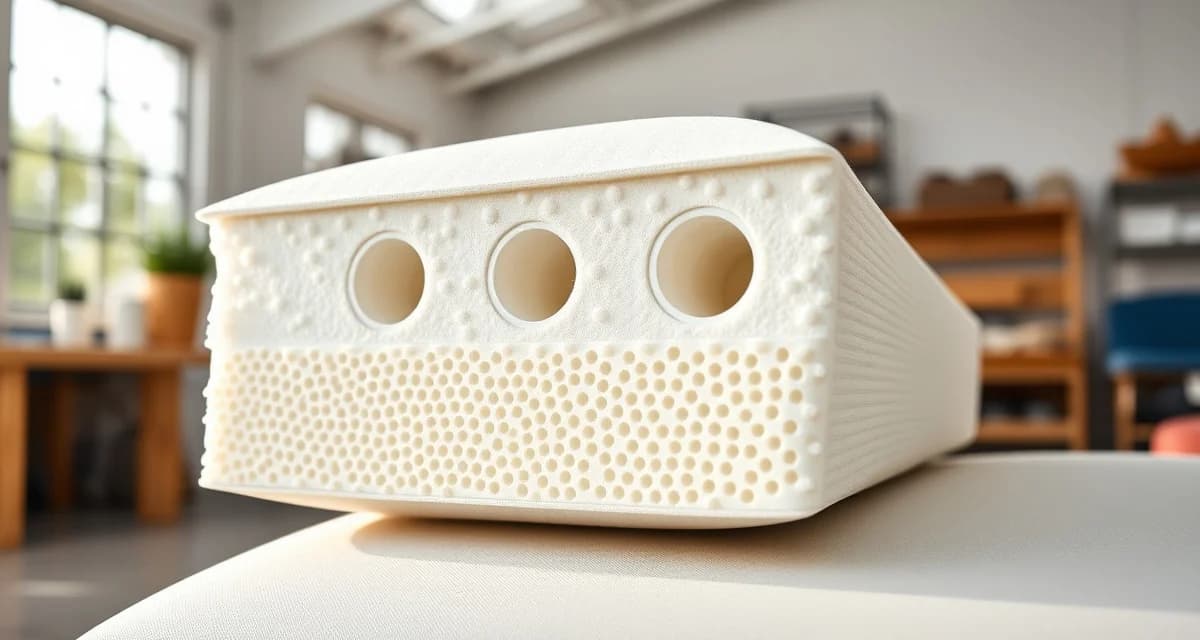
Outdoor-rated reticulated foam: Reticulated foam has a fully open-cell structure with interconnected voids throughout. Water can flow through reticulated foam the same way it flows through a sponge that has been squeezed. When rain enters a cushion made with reticulated foam, the water moves through the foam and exits through drainage holes.
For outdoor cushions, use reticulated foam at 1.8-2.0 density, 35-40 ILD for seat applications. This density handles outdoor use without notable compression over time.
Standard open-cell foam: Standard furniture foam is open-cell and breathes well. It's better than closed-cell for outdoor use, but not as fast-draining as reticulated foam. If reticulated foam isn't available, standard foam with well-placed drainage holes is a workable alternative for partially covered outdoor furniture.
Avoid closed-cell foam outdoors: Memory foam, closed-cell polyurethane, and foam products marketed as "waterproof foam" for outdoor use trap water rather than allowing it to drain. The surface may repel water initially, but any water that gets inside is trapped.
Drainage Hole Placement
Drainage holes are the exits that allow water to leave the foam interior. They're essential for any outdoor cushion that will see rain exposure.
Placement: Drill or punch drainage holes in the bottom of the cushion cover at the lowest points. For a rectangular cushion, 4-6 holes along the bottom face of the boxing strip, spaced evenly, is standard.
Size: 1/2 inch diameter is the standard. Larger is better for drainage rate, but too large creates weak points in the fabric.
Method: Grommet the holes if possible. Grommets protect the fabric edge of the hole from fraying and increase longevity. For vinyl or reinforced outdoor fabric, grommets are easy to apply. For woven fabric, a grommet-reinforced hole is essential for durability.
Zipper vents: An alternative to drilled holes for some cushion styles. A short zipper vent on the bottom face allows water to drain and air to circulate. This approach gives the client the option to close the vent for storage.
Outdoor Fabric Selection
Use fabrics specifically rated for outdoor UV exposure. The outdoor cushion fabric guide covers this in detail, but the summary:
Solution-dyed acrylic (Sunbrella, Outdura, etc.): The gold standard for full-sun exposure. UV resistant for 1,500+ hours. Breathable and fast-drying. Use for seat tops and backs on uncovered outdoor furniture.
Marine vinyl: Best for furniture that may need to be wiped clean frequently. UV-rated marine vinyl handles full sun without cracking. Use for seating in entertaining areas where wine and food spills are common.
Rated outdoor performance polyester: Good to very good UV performance at a lower price than solution-dyed acrylic. Appropriate for covered porch or shade applications.
What to avoid: Any fabric that doesn't carry specific outdoor UV ratings, any natural fiber fabric (cotton, linen, jute), and any fabric with a closed backing that traps moisture against the foam.
UV-Stable Thread
This is often overlooked. Standard polyester thread degrades in UV exposure at approximately the same rate as non-UV-rated fabric. Even if you use UV-rated fabric, standard thread can fail before the fabric does.
Use UV-stabilized polyester thread or PTFE (Teflon) thread for all outdoor upholstery. These threads maintain their strength in UV exposure considerably longer than standard polyester. PTFE thread is essentially immune to UV degradation.
Thread specification for outdoor upholstery: V-92 or V-138 weight UV-stabilized polyester for main seams. PTFE thread in matching weight for any seam that will see direct sun.
Hardware for Outdoor Cushions
Zippers: Marine-grade YKK plastic zippers or stainless coil zippers. Standard metal zippers corrode and seize within a season in an outdoor environment.
D-rings and attachment straps: 316 stainless hardware or UV-rated molded plastic. Zinc-plated or nickel-plated hardware corrodes visibly.
Velcro for attachment: Outdoor-grade Velcro with UV-stabilized backing adheres well to outdoor fabric. Standard Velcro backing can delaminate in repeated wet-dry cycles.
Construction Sequence for Outdoor Cushions
- Cut cover from outdoor-rated fabric
- Cut reticulated foam inserts to finished dimensions
- Sew cover using UV-stabilized thread
- Leave bottom face partially unstitched for foam insertion or install zipper closure
- Insert foam
- Close bottom face (sew or zip)
- Mark and punch drainage hole locations at bottom boxing strip low points
- Apply grommets to drainage holes
- Add attachment hardware (D-rings, Velcro) if design includes attachment points
Frequency of Replacement
Even correctly constructed outdoor cushions have a finite lifespan:
- Solution-dyed acrylic fabric: 7-10 years with regular cleaning and off-season storage
- Rated outdoor polyester: 5-7 years
- Reticulated foam: 8-12 years (foam often outlasts fabric)
For fabric yardage on outdoor cushion jobs, use the outdoor furniture fabric yardage calculator. The outdoor cushion fabric guide covers fabric selection by use case.
Frequently Asked Questions
What foam do I use for outdoor furniture?
Use reticulated foam (also called open-cell or drainage foam) for outdoor cushions. Reticulated foam has a fully interconnected open-cell structure that allows water to flow through and exit through drainage holes, preventing the mold growth that occurs when water is trapped inside closed-cell foam. Standard 1.8-2.0 density reticulated foam at 35-40 ILD provides appropriate support for outdoor seating. Never use memory foam or closed-cell foam outdoors, these trap water.
How do I add drainage to outdoor cushions?
Punch or drill 1/2-inch diameter holes in the bottom face of the cushion boxing strip at the lowest points. Space 4-6 holes evenly across the bottom face. Apply grommets to reinforce the holes and prevent fraying. For woven fabric, grommets are essential, ungrommeted holes in woven fabric fray quickly and enlarge. The drainage holes work with reticulated foam to allow water to flow through the foam and exit, preventing mold buildup inside the cushion.
How long does outdoor upholstery last?
Correctly constructed outdoor upholstery with UV-rated fabric, reticulated foam, and proper drainage lasts 7-10 years for high-quality solution-dyed acrylic and 5-7 years for rated outdoor polyester, with regular cleaning and off-season storage. Poorly constructed outdoor cushions (wrong foam, no drainage, unrated fabric) may fail within a single season from mold, UV degradation, or fabric failure at the thread lines. Construction quality matters more than fabric brand in determining outdoor upholstery longevity.
What tools are required for professional reupholstery?
Professional reupholstery requires a heavy-duty staple gun (pneumatic or electric), a staple remover and tack puller, quality scissors and a rotary cutter, a sewing machine capable of sewing upholstery-weight fabric, foam cutting tools, and regulator pins for manipulating stuffing. For tufted work, a curved needle and tufting twine are also required. The quality of your tools directly affects the quality of the finished work, particularly at seams and edges.
In what order should upholstery panels be installed?
The correct panel sequence varies by furniture type, but the general principle is inside panels before outside panels, starting from the bottom up. For a sofa: deck first, then inside arms, inside back, seat cushions, back cushions, outside arms, outside back, front arm panels, then dust cover. For a chair: seat platform, inside back, inside arms, outside arms, outside back, then dust cover. Deviating from the correct sequence can make later panels impossible to install cleanly.
Sources
- National Upholstery Association
- Association of Master Upholsterers and Soft Furnishers (AMUSF)
- Upholstered Furniture Action Council (UFAC)
- Furniture Today (trade publication)
Get Started with StitchDesk
Accurate reupholstery quotes require knowing your labor time, material costs, and overhead for each job type. StitchDesk helps upholstery shops build detailed, professional quotes that account for all cost factors, so every job is priced to cover costs and generate profit. Try StitchDesk free and bring accuracy to every estimate you send.