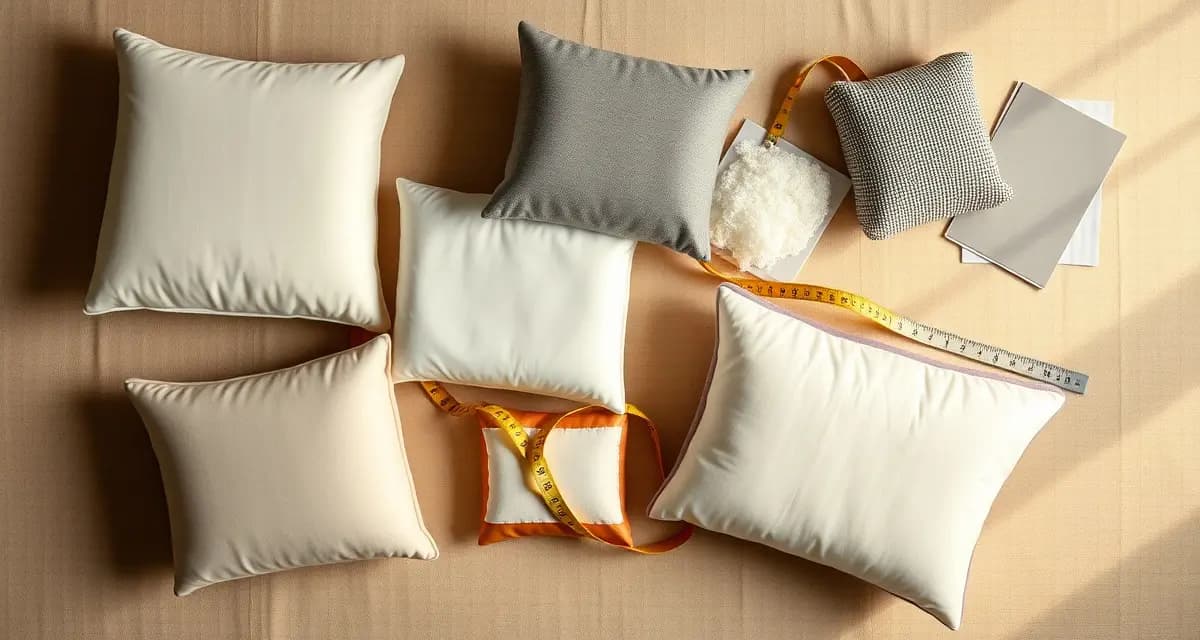
Cushion Insert Guide for Upholstery: Down Foam and Poly Sizing
Cushion inserts and fabric yardage are connected in a way that most calculations don't account for. The type of insert you're using, high-density foam, down wrap, polyester fiberfill, changes how much fabric you need to cut for the cover.
This isn't a small difference. High-density foam requires a fabric cut that's 1 to 2 inches smaller per dimension than down wrap fill of the same stated cushion size. Get this wrong and you're either making a cover that's too loose (sloppy looking) or too tight (won't zip closed or causes premature seam stress).
Here's how insert type changes your fabric calculation.
TL;DR
- Cushion Inserts yardage depends on fabric width, construction details, pattern repeat, and nap direction.
- Plain 54-inch fabric requires a baseline calculation plus 10-15% waste allowance for a standard cushion inserts job.
- Patterned fabric adds 20-35% to base yardage depending on repeat size and the number of cutting zones that must align.
- Directional fabrics add 15-25% over plain fabric because layout optimization is restricted by nap direction.
- Always verify fabric width before finalizing yardage; COM fabric often comes in non-standard widths.
- Calculating yardage at the quote stage, not mid-job, eliminates reorders and protects your profit margin.
Why Insert Type Affects Fabric Cut Size
When you're making a cushion cover, you're making it to fit the insert, not to the finished dimension you want the cushion to appear. Different insert types have different compression properties, which changes what "finished size" means.
High-density foam: Firm and minimally compressible. The foam insert is typically cut 0.5 to 1 inch larger than the finished cover measurement to ensure a full, taut appearance. Because the insert is firm, the cover needs to be slightly smaller than the insert, the insert pushes the fabric out to the finished size. So you're cutting the fabric panels slightly smaller than the stated cushion size.
Down or down-alternative wrap: Compressible and soft. Down-wrapped inserts are typically cut 2 to 4 inches larger than the finished cover measurement because the down compresses considerably when zipped in. The fabric cut is made to the finished cushion size, and the oversized insert fills it out when compressed. This uses more insert material but normal fabric yardage.
Polyester fiberfill: Moderate compression. The insert is usually cut close to the finished size, and the fabric cut is at finished dimensions with standard seam allowance. This is the most straightforward calculation.
Practical Yardage Implications by Insert Type
The yardage difference between insert types is most visible when you're making a lot of cushions, like a full dining set or a sofa with 6 cushions. Let's put some numbers on it.
For a 24 x 24 x 5-inch box cushion:
High-density foam insert: Fabric cut dimensions for the top and bottom panels are approximately 24 x 24 inches (with seam allowance added, your actual fabric piece might be 25 x 25 inches). This is the most fabric-efficient calculation.
Down wrap insert: The insert is 27 x 27 x 6 inches but compresses to 24 x 24 x 5 when zipped into the cover. Your fabric cut for the top and bottom is still 24 x 24 inches, the cushion appearance is the same, but you're ordering a larger insert. Fabric yardage is unchanged.
The key difference: If you specify down fill but accidentally calculate fabric cut size as if you were accommodating the uncompressed down dimensions, you'll over-cut. That's wasted fabric.
How Cushion Depth Affects Boxing Strip Yardage
Regardless of insert type, cushion thickness (depth) directly affects boxing strip yardage, and this is where the insert type conversation really matters for your quote.
A 5-inch foam insert and a 5-inch stated cushion with down wrap use different amounts of boxing strip:
Foam, 5-inch boxing: Boxing strip cut at 5.5 inches (5-inch finished + seam allowance). Clean calculation.
Down wrap, stated 5 inches: The actual insert may be 7 to 8 inches before compression. If a new upholsterer measures the insert instead of the finished cushion, they cut an 8-inch boxing strip. That's 3 extra inches of boxing width per cushion. On 6 cushions, that's a meaningful fabric waste.
Always measure the finished cushion size (or the intended finished size if you're replacing inserts), not the uncompressed insert size.
Down vs. Foam: Which Is Better?
Neither is universally better, it depends on the client's priorities:
High-density foam: Holds its shape better, doesn't need fluffing, retains structure over years of use. Better for clients who want low-maintenance furniture that always looks tidy. Slightly firmer seat feel.
Down or down wrap: Much softer and more luxurious feel. Clients who love that "sink in" feeling want down. Requires regular fluffing to maintain appearance. More expensive insert cost. Some clients have allergies, down alternative is available.
Polyester fiberfill: Budget option. Less durable over time, tends to mat and lose loft faster than foam or down. Appropriate for decorative throw pillows but not ideal for heavy-use seat cushions.
When clients are replacing cushion covers and keeping their existing inserts, confirm insert type and measure the finished cushion dimensions, not just the insert, before calculating fabric cuts.
Frequently Asked Questions
How does cushion fill affect fabric yardage?
Insert type primarily affects the fabric cut dimensions for cushion panels, not total yardage. High-density foam requires the fabric cut to be slightly smaller than the stated finished cushion size (because the firm foam fills the cover). Down fill requires the fabric cut at finished dimensions with an oversized insert compressed inside. If you measure and cut incorrectly, using uncompressed insert dimensions instead of finished cushion dimensions, you can waste 0.1 to 0.25 yards per cushion.
What is the difference between foam and down fill for upholstery?
High-density foam holds its shape reliably with minimal maintenance, better for clients who want consistent appearance. Down or down-alternative wrap gives a softer, more luxurious feel but requires regular fluffing and doesn't retain shape as well over time. Foam is the more common choice for sofa seat cushions; down is often used for back cushions or higher-end residential pieces where the soft feel is a selling point.
How do I size a cushion insert for reupholstery?
Measure the finished cushion size (height, width, depth as you want it to look when sitting normally on the furniture). For a foam insert, have the foam cut 0.5 to 1 inch larger in each dimension than the cover, it will compress slightly into the cover for a full, tight appearance. For a down wrap insert, have the insert made 2 to 4 inches larger overall than the cover dimensions, it compresses considerably when zipped in.
What is the biggest factor in yardage variation for this piece?
Pattern repeat is the biggest source of yardage variation. On plain fabric, the baseline calculation plus a 10-15% waste buffer is usually sufficient. Add a 13-inch pattern repeat and you may need 15-20% more. Add a 27-inch pattern repeat and the additional yardage can be 25-35% over the plain fabric calculation. Nap direction is the second-largest factor, typically adding 15-25% over plain fabric because layout optimization is restricted.
What should I do if I run short on fabric mid-job?
Stop cutting immediately when you realize you may run short. Calculate exactly how much additional fabric you need before contacting the supplier or client. If reordering from the same dye lot is possible, do so as quickly as possible because dye lots change. If a dye lot match is not available, contact the client before proceeding; visible dye lot differences on the same piece are unacceptable and must be disclosed. Document the situation and response in writing.
Related Articles
- Fabric Yardage Calculator Guide for Upholstery
- Microfiber Fabric Yardage Calculator for Upholstery: Pile and Width Guide
Sources
- National Upholstery Association
- Association of Master Upholsterers and Soft Furnishers (AMUSF)
- Upholstered Furniture Action Council (UFAC)
- Furniture Today (trade publication)
Get Started with StitchDesk
Getting yardage right on yardage cushion inserts jobs is the difference between a profitable quote and an expensive reorder. StitchDesk's fabric calculator accounts for all the variables that cause errors: pattern repeat by zone, nap direction, fabric width, and cushion configuration. Start a free trial and see how accurate yardage calculation affects your bottom line.