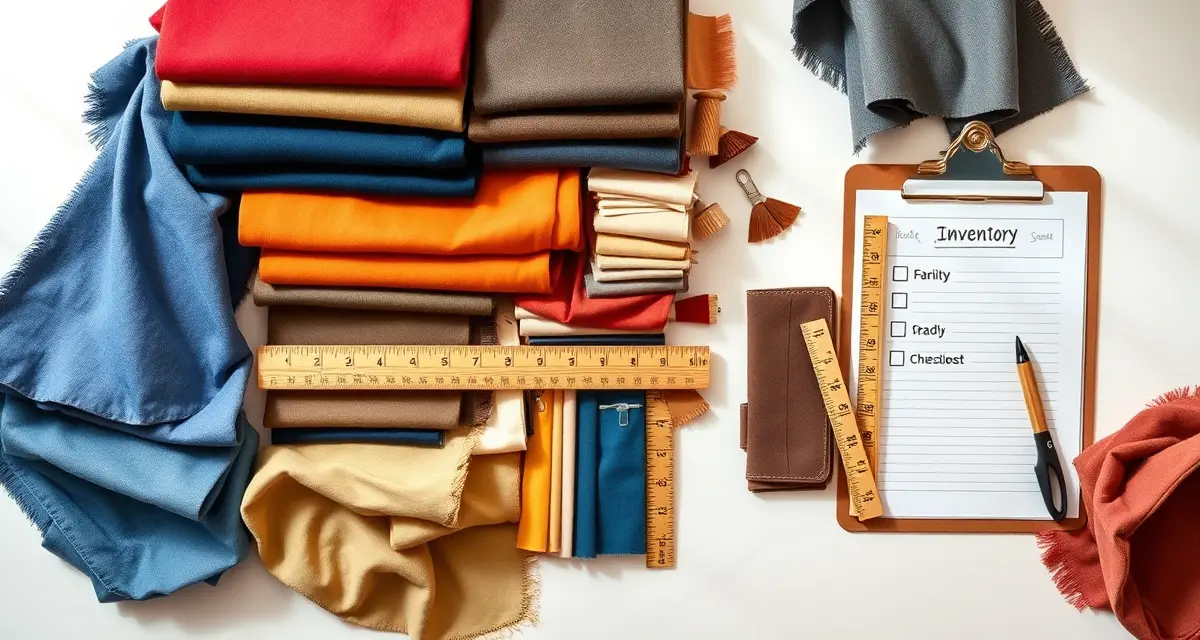
Upholstery Fabric Remnant Guide: What to Keep and What to Discard
Most upholstery shops are sitting on money they don't know they have. It's rolled up in the corner of the cutting room, shoved under a table, or jammed into a plastic bin, pieces of fabric left over from completed jobs that could cover a seat cushion, a dining chair, or a throw pillow if anyone actually tracked what was there.
Shops that actively track remnants use them on small jobs 3 to 4 times per month, saving $25 to $50 per instance. That's $300 to $600 per year in fabric cost, enough to matter, not enough to require a major system. Just a simple approach to knowing what you have.
TL;DR
- Understanding remnantupholstery properties helps you select the right material for each client's specific use case and budget.
- Durability ratings (double-rub count) are the standard measure of upholstery fabric longevity: 15,000+ for light use, 30,000+ for heavy residential, 100,000+ for commercial.
- Fabric cleaning codes (W, S, WS, X) determine what cleaning methods are safe and should be communicated to every client at handoff.
- Pattern repeat, nap direction, and fabric width are the three variables that most affect yardage requirements on any piece.
- COM fabric should always be verified for rub count and cleaning code before acceptance.
- Fabric performance in real use depends on the application: a fabric rated for light residential use will fail quickly in high-traffic settings.
Why Most Remnant Systems Fail
The typical upholstery shop approach to remnants: throw the leftover fabric on the stack, eventually forget what job it came from, and eventually throw it away when it gets too dusty or wrinkled to use. Some shops keep a mental inventory that evaporates the moment someone else needs to find a piece for a rush job.
The failure isn't having remnants, every shop does. The failure is the lack of a catalog system that makes remnants findable and usable. A remnant you can't quickly identify and locate is nearly as useless as a remnant you threw away.
Minimum Useful Remnant Sizes
Not everything that's left over is worth keeping. Some pieces are too small for practical use. Here's the guide:
Keep anything this size or larger:
| Application | Minimum Useful Size |
|---|---|
| Dining chair seat (18x18 avg) | 0.5 yard (18" × 36" minimum) |
| Seat cushion refill (sofa) | 0.75 yard |
| Ottoman top | 0.75 to 1 yard |
| Throw pillow covers (18x18) | 0.5 yard (pair) |
| Accent chair seat | 0.5 yard |
| Arm caps (pair) | 0.25 yard |
| Welt cording stock | 0.25 yard (for short runs) |
Discard anything smaller than 0.25 yard (9 linear inches at 54-inch width). These pieces don't have practical upholstery applications and just clutter your storage.
Special cases:
- Leather scraps smaller than 0.25 yard: keep if they're 6+ square inches (useful for patch repairs)
- Performance fabric scraps: keep down to 0.15 yard (useful for small cushion covers or cord covering)
- Patterned fabric scraps: keep any piece larger than the largest single repeat (you may need it to match a future repair)
What Makes a Remnant Valuable
Yardage. The more you have, the more applications it can cover. A 1.5 yard remnant is far more valuable than a 0.5 yard piece.
Fabric type. Common upholstery fabrics in neutral colors have broader application. Specialty fabrics (bright patterns, unusual textures) may sit on the shelf longer.
Dye lot tracking. A remnant is most valuable when you can match it to the original job. If a client needs a repair or additional cushions, you need to know which remnant came from their sofa. This requires noting the dye lot, job number, and original supplier at minimum.
Condition. A remnant stored folded and clean is usable. A remnant that's been sat on, used as a drop cloth, or stored loose is often not worth the space it takes up. Handle remnants like the material they are.
How to Catalog Your Remnants
A simple system works better than no system. Here's the minimum viable remnant catalog:
Option 1: Paper tag on each roll or fold
Attach a cardstock tag to each remnant piece with:
- Job number or client name
- Date of original job
- Fabric name/colorway/supplier
- Approximate remaining yardage
- Width
Takes 2 minutes per piece. Makes any remnant findable in 30 seconds.
Option 2: Simple spreadsheet
Keep a running spreadsheet with columns for:
- Fabric description and color
- Supplier and dye lot
- Yards remaining
- Width
- Date acquired
- Job origin
- Location in shop (bin, shelf, roll)
Update it when you add a remnant and when you use one. Took some shops a year to build this habit; the ones that did report finding and using remnants 3x more often than before.
Option 3: Tag + bin organization
Physically organize remnants by size: one bin for under 0.5 yard, one for 0.5 to 1 yard, one for over 1 yard. Tags on each piece identify the fabric. This system makes it easy to go to the "chair seat" bin and find something the right size quickly.
How to Use Remnants on Small Jobs
The main obstacle to using remnants on small jobs is the customer's assumption that they need to provide or approve new fabric. Here's how to make the conversation work:
Be specific. "I have 1.5 yards of a high-performance charcoal weave from a recent sofa job, it's rated for 100,000 rubs. That's more than enough for your dining chair seats, and it would typically run $22 per yard new. I can use the remnant at a reduced material cost."
Show the fabric. Bring the remnant to the consultation. Customers respond to seeing actual fabric rather than hearing a description of it.
Be honest about the trade-off. "The one limitation is I have exactly this much, so if a panel is cut wrong, there's no backup. I'm confident in the measurement, but I want you to know." This honesty builds trust.
Apply remnant pricing. Remnant fabric should be priced below your standard material markup. If you normally charge $20/yard for comparable material, offer the remnant at $10 to $14/yard. You still make a margin on material, and the customer gets a better price.
Remnant Matching: How to Verify a Remnant Works for a Job
Before you commit a remnant to a job:
- Verify yardage. Remeasure. The tag says 1.2 yards but you cut from it twice already? Verify the actual remaining amount.
- Check grain. Confirm the grain direction is correct for the intended use. A remnant that's cut on the bias won't work for straight panel cuts.
- Check for defects. Inspect the full piece. Fold lines, stains, or fabric damage may have accumulated since the original job.
- Confirm dye lot is not an issue. If the client will see the fabric alongside other pieces from a different dye lot, confirm the color match under the same lighting conditions.
- Calculate accurately. Just because you have a remnant doesn't mean you skip the yardage calculation. If the remnant isn't enough, you need to know before you start, not after you run short.
Storing Remnants Properly
Fabric deteriorates with improper storage. UV exposure fades color. Moisture causes mildew. Compression from heavy stacking distorts the weave. Dust accumulation makes fabric appear soiled.
Best practices:
- Store remnants away from direct light (any UV exposure fades fabric over months)
- Roll rather than fold when possible, folding creates permanent creases in structured fabrics
- Store horizontally, not vertically (reduces tension on the fabric)
- Keep in a dry area with stable temperature
- Cover stored remnants with a cloth or breathable bag to prevent dust accumulation
For leather remnants, keep them flat (not rolled) and condition periodically if they'll be stored more than 6 months.
When to Discard Remnants
Clear out remnants that:
- Are smaller than your minimum useful size
- Have visible damage (stains, tears, mildew smell)
- Have been in storage longer than 2 to 3 years without being used
- Are from a fabric line that's been discontinued (no matching fabric available if more is needed)
- You genuinely can't identify (no tag, no memory of the job)
Holding onto unusable remnants wastes storage space and makes your useful remnants harder to find. A quarterly remnant audit, 30 minutes to pull out anything that doesn't meet your minimum standards, keeps the system functional.
Using the Fabric Inventory System
For shops with high job volume, a formal fabric inventory system tracks both stock fabric and remnants in one place. The fabric inventory guide covers how to set up a tracking system that scales with your shop without requiring dedicated software.
What upholstery remnants are worth keeping?
Keep any remnant larger than 0.5 yard for standard fabric, or 0.25 yard for leather, performance fabric, or patterned fabric where repairs may be needed. Remnants at 0.5 to 1 yard are useful for dining chair seats, ottomans, and throw pillow covers. Remnants over 1 yard can cover accent chair seats, headboard sections, or small bench tops.
How do I store fabric remnants in my shop?
Roll remnants when possible to prevent fold-line creases. Store away from direct light to prevent fading. Keep in a dry area with stable temperature. Cover rolls with breathable cloth to prevent dust accumulation. Label every piece with fabric name, yardage, and original job reference so you can find and identify any piece quickly.
How do I use remnant fabric on small upholstery jobs?
Verify the remaining yardage actually covers the job before committing. Check the fabric for defects and confirm the grain direction is appropriate. Price remnant fabric at a discount from standard material markup, typically 50% of your regular fabric price, and be transparent with the customer about the fact that you're using remnant material and that there's no backup if a cut goes wrong.
How do I explain fabric choices to a client?
Start with use case: how the piece will be used, who will use it, and whether pets or children are factors. Then narrow by durability requirement (rub count) and cleaning preference (cleaning code). Once practical requirements are set, move to aesthetics: color, texture, pattern. Clients who understand why certain fabrics are recommended are more confident in their choices and less likely to question cost differences between options.
How do I verify fabric quality before accepting a COM order?
Check the fabric label or request a spec sheet from the supplier. Verify: double-rub count (for durability), cleaning code (for maintenance), width (for yardage calculation), and whether the fabric is dry-clean only or has any special handling requirements. For velvet or nap fabrics, confirm the nap direction and whether the fabric is prone to crushing. Document your findings in the job record before beginning work.
FAQ
Sources
- National Upholstery Association
- Association of Master Upholsterers and Soft Furnishers (AMUSF)
- Upholstered Furniture Action Council (UFAC)
- Furniture Today (trade publication)
Get Started with StitchDesk
Helping clients choose the right fabric is a core part of the job, and having accurate yardage calculations and fabric records at hand makes those conversations faster and more confident. StitchDesk keeps fabric data, yardage calculations, and client records in one place so you spend less time on paperwork and more time on the work itself. Try StitchDesk free.