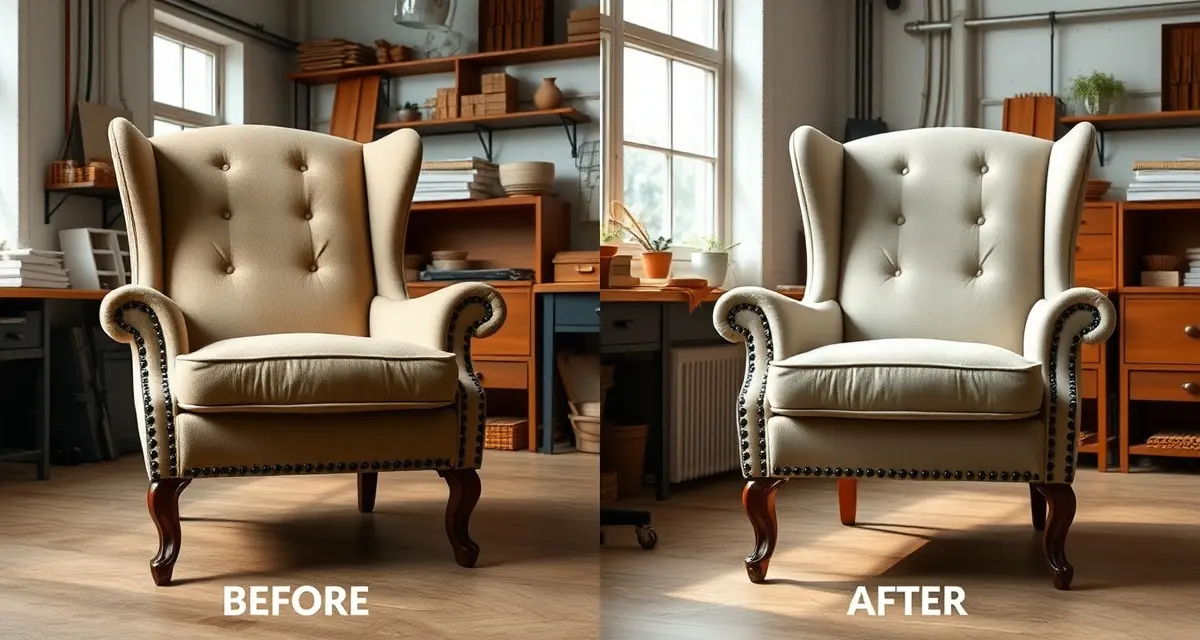
Reupholstery vs New Furniture: When Does Reupholstery Win?
Shops that give honest reupholstery value assessments close 28 percent more jobs because clients trust the recommendation. The shops that always say "yes, reupholster it" lose clients who later discover they spent $800 on a $400 sofa. The shops that give a clear, honest framework, and sometimes recommend against reupholstery, become trusted advisors who get called first for the next purchase decision.
Here's the framework for making an honest recommendation.
TL;DR
- Accurate pricing requires knowing your actual labor rate (overhead + target wage + profit margin), not a rough estimate.
- Most shops undercharge by failing to account for pattern repeat waste, frame repair time, and non-billable admin overhead.
- A documented pricing structure with itemized line items builds client trust and reduces negotiation friction.
- Fabric markup of 20-40% over cost is standard practice in residential upholstery shops.
- Premium work (leather, tufting, custom trim) warrants a premium labor rate, which should be explicit in your quote structure.
- Consistent pricing with clear line items also makes it easier to analyze profitability by job type over time.
When Reupholstery Wins
The frame is genuinely better than what new furniture offers at the same price.
This is the most important factor. Frame quality in new furniture at most price points has declined considerably over the past 20 years. Furniture made with kiln-dried hardwood, mortise-and-tenon joints, and eight-way hand-tied springs is rare in new sofas under $3,000.
The sofa you bought in 1992 for $1,200 was probably built better than a new sofa at that price in 2025. That sofa's frame might have 30 more years of useful life with new fabric and foam. The new sofa at the same inflation-adjusted price might last 8-12 years.
Specific frames worth reupholstering:
- Solid hardwood (oak, maple, walnut, mahogany) with joinery at all connections
- Eight-way hand-tied coil spring decks
- American or European furniture from before 2000 at mid-to-high price points
- Any furniture with documentation of quality construction
- Antique and vintage furniture with historic or sentimental value
The sentimental value is real.
A family sofa that has passed through generations has value that can't be replicated by buying new. When clients tell you "this was my grandmother's," reupholstery is almost always the right answer regardless of the economics, because the alternative is losing the piece entirely.
The math favors it.
If reupholstery costs 30-40% of what comparable quality new furniture would cost, and the existing frame is sound, reupholstery wins economically. A sofa that would cost $4,000 to replace with equivalent quality, reupholstered for $1,400, is a clear economic case for reupholstery.
When Reupholstery Doesn't Win
The frame is failing or poorly made.
Frames with any of the following are typically not worth reupholstering:
- Particleboard or MDF construction (especially if swelled, cracked, or delaminated)
- Notable structural failure (broken rails, collapsed corner blocks, failed joints)
- Sinuous (no-sag) springs that have fully flattened and can't be replaced practically
- Furniture originally priced in the budget category (under $500 for a sofa in its time)
The reupholstery cost approaches or exceeds the replacement cost.
If a sofa costs $900 to reupholster and a better quality new sofa is available for $1,100, the math doesn't support reupholstery on economic grounds. The client is paying 82% of new-furniture cost for the existing frame.
The piece has fundamental comfort or design problems.
Reupholstery changes the fabric and foam, not the architecture. A sofa that's uncomfortable because its back height is wrong, its seat depth is too short, or its arms are too low will still have those problems after reupholstery. If the client's complaint is comfort and the issue is structural, no amount of fabric change will fix it.
The existing fabric has damage that goes deeper than the fabric.
Notable smoke damage, deep urine contamination in the foam, pet odor embedded throughout, these situations sometimes require replacing more than just the fabric. Get a smell test and compression test before quoting any piece with a history of these issues.
The Decision Matrix
Walk through these four questions:
1. Frame quality (solid wood and quality construction): Yes = continue. No = don't reupholster.
2. Structural integrity (no notable damage or failure): Yes = continue. No = assess repair cost. If repair + reupholstery > 60% of new replacement cost, don't reupholster.
3. Reupholstery cost vs new replacement cost: Reupholstery < 40% of comparable quality new? = reupholster. Reupholstery > 60% of comparable quality new? = buy new. Between 40-60% = personal decision, factor in sentimental value and client preference.
4. Sentimental or historic value: Yes = reupholster. No = apply matrix above.
Having the Honest Conversation
When a client brings in a piece you don't think is worth reupholstering, say so. Explain what you're seeing in the frame. Give them the numbers: "Reupholstering this will cost $750. A comparable quality new version is $900. But the frame on this piece is particleboard, and the new piece would have a solid wood frame. I'd buy new."
This conversation takes 5 minutes and builds trust that pays for itself in referrals, repeat business, and the client who comes back to you with their actually-good furniture.
For additional cost context, see the how much does reupholstery cost guide. The is it worth reupholstering guide covers the consumer-facing version of this decision framework.
Frequently Asked Questions
When is reupholstery cheaper than buying new?
Reupholstery is typically cheaper than buying new furniture of equivalent quality. The key word is equivalent, a $700 reupholstery on a solid hardwood sofa should be compared to a new solid hardwood sofa, which typically costs $2,500-5,000, not to a $800 particleboard sofa. If the comparison is to a new piece of similar quality, reupholstery wins financially in most cases for chairs, sofas, and sectionals with good original frames.
What makes furniture worth reupholstering?
The primary factor is frame quality. Solid hardwood construction with quality joinery, eight-way hand-tied springs, and furniture built before the mid-2000s commodity furniture wave are all characteristics of frames worth reupholstering. Secondary factors: sentimental or historic value, unusual size or design that's hard to find new, and a reupholstery cost that's less than 40-50% of comparable quality new.
How do I advise clients whether to reupholster?
Give clients an honest assessment of four factors: frame quality, structural integrity, cost comparison to new, and sentimental value. If the frame is solid, structural issues are minor or absent, the reupholstery cost is less than 50% of equivalent new, and the client has attachment to the piece, recommend reupholstery. If the frame is particleboard, there's notable structural damage, or the math doesn't favor it, be honest about that. Clients who trust your assessment come back with real jobs and send referrals.
How do I set an hourly labor rate for my upholstery shop?
Start with your actual cost per hour: divide total monthly overhead (rent, utilities, insurance, supplies, equipment) by your billable hours per month, then add your target wage per hour. Apply a profit margin of 20-35% on top of that base. Most residential upholstery shops in 2025 bill $65-120/hour depending on location and specialization. Urban markets and shops specializing in antiques or premium leather command the higher end of that range.
How do I handle clients who want to negotiate the price?
The most effective response to price negotiation is to explain what the price covers, not to simply lower it. Walk the client through the labor time, fabric cost, and any structural work required. If the client needs a lower price, offer to adjust the scope (simpler fabric, no welt cording, tight seat instead of loose cushion) rather than discounting the same work. Discounting without scope changes devalues your labor and creates an expectation of discounting on future jobs.
Sources
- National Upholstery Association
- Association of Master Upholsterers and Soft Furnishers (AMUSF)
- Upholstered Furniture Action Council (UFAC)
- Furniture Today (trade publication)
Get Started with StitchDesk
Pricing confidence comes from knowing your actual costs and communicating them clearly in every quote. StitchDesk helps upholstery shops build detailed quotes, track job costs against estimates, and develop pricing that protects margins across every job type. Try StitchDesk free and bring precision to your pricing.