What Is the Selvage of Fabric? Upholstery Application Guide
Cutting parallel to the selvage guarantees on-grain cutting, the most reliable technique for consistent results. The selvage is the finished lengthwise edge of a fabric bolt, and it runs exactly parallel to the warp threads. Use it as your reference line and you'll always know your grain direction without measuring.
Here's what the selvage is, how to identify it, and how it affects your cutting layout.
TL;DR
- Understanding selvage properties helps you select the right material for each client's specific use case and budget.
- Durability ratings (double-rub count) are the standard measure of upholstery fabric longevity: 15,000+ for light use, 30,000+ for heavy residential, 100,000+ for commercial.
- Fabric cleaning codes (W, S, WS, X) determine what cleaning methods are safe and should be communicated to every client at handoff.
- Pattern repeat, nap direction, and fabric width are the three variables that most affect yardage requirements on any piece.
- COM fabric should always be verified for rub count and cleaning code before acceptance.
- Fabric performance in real use depends on the application: a fabric rated for light residential use will fail quickly in high-traffic settings.
What the Selvage Is
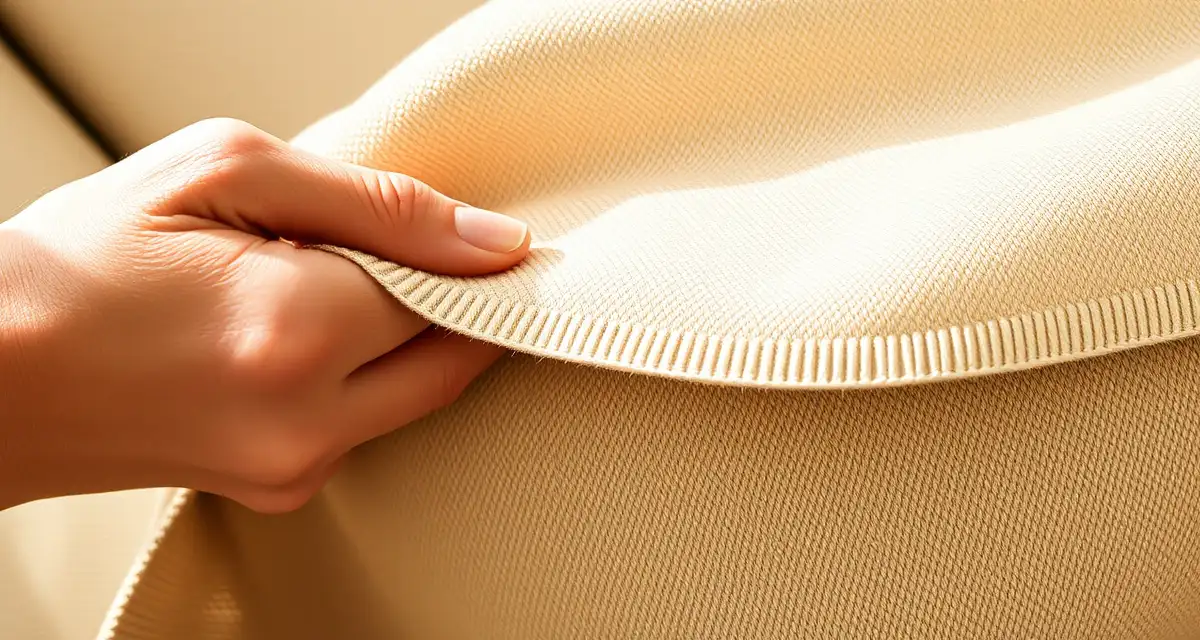
The selvage (also spelled selvedge) is the self-finished edge that runs along both long edges of a fabric bolt. It's created during weaving when the weft threads loop back at the edge rather than being cut, creating a dense, finished edge that doesn't ravel.
The selvage serves two practical functions:
1. It prevents raveling. The woven or finished edge holds together without fraying, which is why it exists. On many fabrics, the selvage is noticeably denser or differently textured than the fabric face.
2. It marks the warp direction. Because the selvage runs the length of the bolt, it runs exactly parallel to the warp threads. Any line you draw parallel to the selvage is warp direction.
How to Identify the Selvage
On decorator and upholstery fabric: The selvage is typically 1/2 to 1 inch wide on each long edge. It often has a different appearance than the fabric face, tighter weave, different texture, sometimes printed with the fabric name, colorway, or designer. Some selvages include small dots or triangles in each color used in the fabric (useful for color matching).
On velvet and pile fabrics: The selvage is at the long edges and may be less distinct than on flat weaves. The pile usually stops at the selvage and the edge is clearly woven.
On synthetic fabrics and vinyl: These may have heat-sealed edges rather than a traditional selvage. The functional equivalent is the straight, finished long edge.
How to Use the Selvage in Cutting
As a grain reference: Before cutting any panel, orient the fabric so you can see both selvage edges. All warp-direction cuts run parallel to these edges. All weft-direction cuts run perpendicular to them.
As a squaring baseline: When you lay fabric on a cutting table, align one selvage with the table edge or a straight line on your cutting mat. This squares the fabric to your cutting surface and ensures all your cuts are accurate to grain.
For pattern layout: The selvage tells you which direction a directional pattern runs. Stripes or patterns running parallel to the selvage are warp-direction patterns. Patterns running perpendicular are weft-direction (less common in upholstery fabric). This matters for deciding how to orient pattern elements on each panel.
The Selvage and Usable Width
The selvage itself is not used in the finished upholstery piece. You cut inside the selvage edge, typically leaving the selvage entirely on the cutting waste. This means the usable width of a 54-inch fabric is slightly less than 54 inches, typically 52-53 inches of usable face fabric after accounting for the selvage on each side.
On wide-format (118") fabric, the same principle applies. Your usable cutting width is the total width minus both selvage edges.
This matters when calculating yardage for panels that need to be cut at maximum width.
Related Articles
- Custom and COM Fabric for Upholstery: Customer's Own Material Guide
- Upholstery Fabric Pilling: Causes Prevention and What to Tell Clients
FAQ
What is the selvage of fabric?
The selvage is the finished lengthwise edge that runs along both long sides of a fabric bolt. It's created during weaving when weft threads loop back at the edge rather than being cut. The selvage has a denser weave than the fabric face and won't ravel. For upholstery cutting, the selvage is most valuable as a grain reference, it runs exactly parallel to the warp threads, so any line parallel to the selvage is on grain. The selvage itself is cut waste and not used in the finished piece.
How do I use the selvage to find grain direction?
The selvage runs parallel to the warp threads. Any line parallel to the selvage is on-grain in the warp direction. To cut on grain, align your cutting line parallel to the selvage edge. This works for all woven upholstery fabrics. If you're cutting from a cut piece rather than a bolt and don't have the selvage available, use the stretch test instead: pull gently in both directions; the direction with less stretch is warp (parallel to where the selvage would be).
Does the selvage matter in upholstery cutting?
Yes, because it's your most reliable grain direction reference. Cutting parallel to the selvage ensures on-grain cutting, which means the stronger warp threads are oriented correctly for each panel's load direction. Off-grain cutting, placing panels with the weaker weft threads in the stress direction, reduces fabric life and can cause distortion in the finished piece. The selvage is also important for yardage planning: the usable width of your fabric is the full width minus the selvage on each edge, typically 1-2 inches total, which matters on wide panels cut near the full fabric width.
How do I explain fabric choices to a client?
Start with use case: how the piece will be used, who will use it, and whether pets or children are factors. Then narrow by durability requirement (rub count) and cleaning preference (cleaning code). Once practical requirements are set, move to aesthetics: color, texture, pattern. Clients who understand why certain fabrics are recommended are more confident in their choices and less likely to question cost differences between options.
How do I verify fabric quality before accepting a COM order?
Check the fabric label or request a spec sheet from the supplier. Verify: double-rub count (for durability), cleaning code (for maintenance), width (for yardage calculation), and whether the fabric is dry-clean only or has any special handling requirements. For velvet or nap fabrics, confirm the nap direction and whether the fabric is prone to crushing. Document your findings in the job record before beginning work.
Sources
- National Upholstery Association
- Association of Master Upholsterers and Soft Furnishers (AMUSF)
- Upholstered Furniture Action Council (UFAC)
- Furniture Today (trade publication)
Get Started with StitchDesk
Helping clients choose the right fabric is a core part of the job, and having accurate yardage calculations and fabric records at hand makes those conversations faster and more confident. StitchDesk keeps fabric data, yardage calculations, and client records in one place so you spend less time on paperwork and more time on the work itself. Try StitchDesk free.