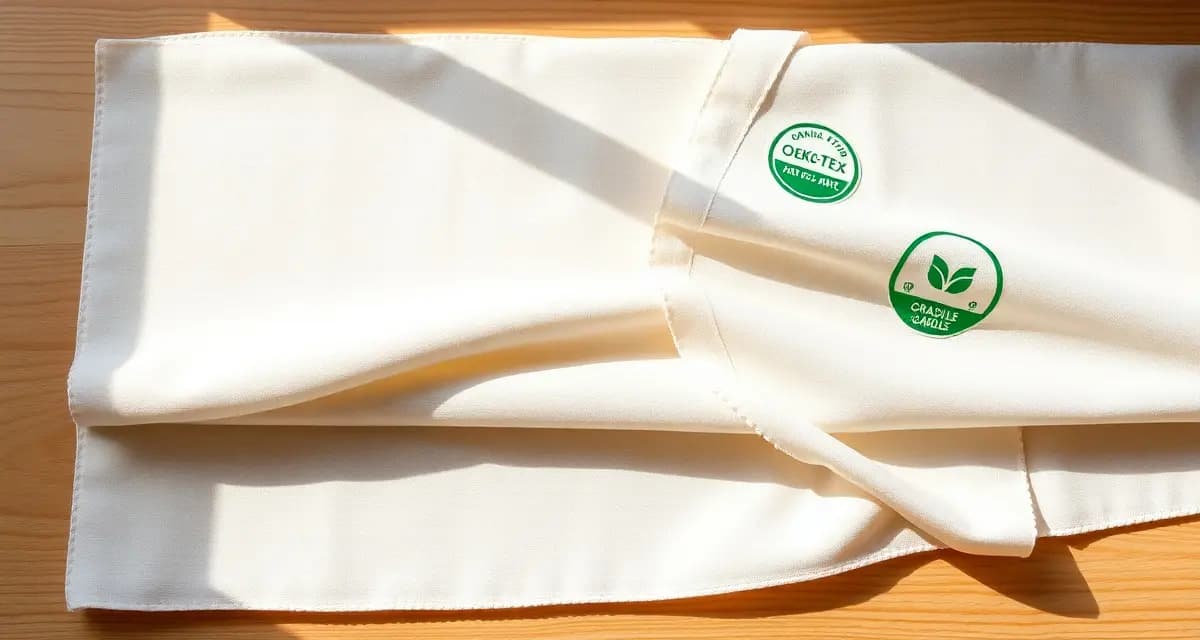
Sustainable Upholstery Fabric Certifications: OEKO-TEX GOTS Explained
35% of designer clients now request certifications for fabric, shops that can specify them win the specification. Sustainability credentials have moved from a niche request to a standard expectation in commercial and designer-specified work. Understanding what each certification actually means lets you answer the question confidently and help clients make a decision that aligns with their project goals.
This guide covers the four certifications that come up most often in upholstery work.
TL;DR
- This guide covers the specific techniques, measurements, and decisions that determine quality outcomes in upholstery work.
- Planning and preparation before cutting begins is the most reliable way to avoid costly errors on any upholstery job.
- Fabric selection, yardage calculation, and structural assessment are the three decisions that most affect the final result.
- Experienced upholsterers develop consistent workflows that ensure quality and efficiency across every job type they handle.
- Documenting job details, material specifications, and client approvals protects both the shop and the client.
- The right tools, materials, and techniques for each job type make a measurable difference in quality and profitability.
OEKO-TEX Standard 100
What it certifies: That every component of the fabric, fiber, dye, thread, finish, has been tested for harmful substances and meets safety thresholds. OEKO-TEX Standard 100 is a human ecology standard, not an environmental manufacturing standard.
What it doesn't cover: How the fabric is produced (environmental impact, water use, labor standards). A fabric can be OEKO-TEX certified and still be manufactured in ways that have significant environmental impact.
When to specify it: Healthcare applications where chemical sensitivity is a concern. Nurseries and children's furniture. Any application where the client is concerned about off-gassing or contact with harmful substances.
How to identify it: The OEKO-TEX label includes a test number and the name of the institute that conducted the testing. You can verify any claimed certification on the OEKO-TEX database at oeko-tex.com.
The designer conversation: "This fabric carries OEKO-TEX Standard 100 certification, which means every component has been independently tested and confirmed free of harmful substances at levels that matter for human health."
GOTS (Global Organic Textile Standard)
What it certifies: That the textile was made from certified organic fiber AND that the manufacturing process meets environmental and social criteria throughout the supply chain. GOTS is a broader standard than OEKO-TEX, it covers both the material and the production.
Requirements for GOTS certification:
- Minimum 70% certified organic fiber (for "made with organic" label)
- Minimum 95% certified organic fiber (for "organic" label)
- Processing stages (dyeing, finishing) must use approved substances
- Social standards including fair labor conditions throughout the supply chain
What it doesn't cover: GOTS is primarily a fiber and manufacturing standard. It doesn't evaluate the finished product's performance (rub count, durability).
When to specify it: Projects where the client has specifically requested organic fiber. Interior design projects targeting wellness or biophilic design certifications (WELL, LEED). Clients with documented chemical sensitivities who want comprehensive supply chain transparency.
The practical limitation: GOTS-certified upholstery fabric is a relatively small subset of available fabrics. You're constraining the selection significantly. Have alternatives ready if the GOTS selection doesn't meet the design brief.
Cradle to Cradle (C2C)
What it certifies: A multi-category sustainability assessment covering material health, material reutilization, renewable energy use, water stewardship, and social fairness. Products are certified at Bronze, Silver, Gold, or Platinum levels.
The key distinction from other certifications: Cradle to Cradle focuses on the end of the product's life, can the materials be safely recovered and reused? This is a circular economy framework rather than a toxicity or organic farming framework.
When to specify it: Commercial projects targeting LEED credits, particularly the Material Health and Material Reuse categories. Clients with explicit sustainability commitments where lifecycle thinking is part of the brief. High-end interior specifications where the design story includes sustainability.
The designer conversation: "This fabric is Cradle to Cradle certified at [level], which means it's been evaluated for sustainability across its full lifecycle, from material sourcing through to what happens at the end of its useful life."
Greenguard (Now UL GREENGUARD)
What it certifies: Low chemical emissions from products. Greenguard focuses on indoor air quality, products with this certification have been tested to confirm they don't off-gas VOCs (volatile organic compounds) above established thresholds.
Greenguard Gold (formerly Greenguard Children & Schools): A more stringent version specifically designed for environments with children or sensitive populations.
When to specify it: Commercial projects with LEED credits tied to indoor air quality (LEED IEQ credits). Healthcare and educational facilities. Any project where the building owner has specific indoor air quality requirements.
Important distinction: Greenguard certification is often applied to furniture and foam products as well as fabric. When specifying for a commercial project, check whether the complete assembly (fabric plus foam plus frame) meets the requirements or only the fabric component.
How to Find Certified Fabrics
Most major fabric distributors can filter their catalog by certification. When working with a designer client who has certification requirements:
- Confirm which certification(s) are required before pulling samples
- Ask your primary distributor for their certified fabric options in the relevant categories
- Verify certification claims on the certifying body's database before committing to a specification
The designer client management guide covers how to build relationships with designers who increasingly include sustainability specifications in their projects.
Related Articles
- Boucle Upholstery Guide: The Trending Fabric That Needs Care
- Choosing Upholstery Fabric: A Practical Guide
FAQ
What does OEKO-TEX certified mean for fabric?
OEKO-TEX Standard 100 means every component of the fabric, fiber, thread, buttons, dyes, finishes, has been tested by an independent institute and confirmed to meet safety thresholds for harmful substances. It's a human ecology certification focused on what you're putting next to your skin or in your home environment, not a statement about how the fabric was manufactured environmentally. It's particularly relevant for healthcare, children's furniture, and any application where chemical sensitivity or off-gassing is a concern.
Should I specify GOTS certified fabric for clients?
Specify GOTS when your client has requested organic fiber and manufacturing transparency, not as a default for all sustainability-conscious clients. GOTS is a rigorous standard covering fiber, processing, and supply chain social standards, it's the right choice when a client wants to know the story from field to finished fabric. The practical limitation is that GOTS-certified upholstery fabric is a narrower selection than the full market, so have design alternatives ready if the available GOTS options don't suit the project brief.
How do I find sustainable certified upholstery fabric?
Ask your fabric distributor to filter options by certification type, most major distributors can do this. Verify any claimed certification on the certifying body's official database (oeko-tex.com for OEKO-TEX, gots.org for GOTS, c2ccertified.org for Cradle to Cradle). For commercial projects with specific LEED credit requirements, identify the exact credit and its material health requirements first, then find fabrics that meet the criteria rather than assuming a general sustainability claim covers the specific requirement.
What are the most common mistakes to avoid in this type of work?
The most common mistakes are underestimating material requirements, starting work before the frame is fully assessed and repaired, and skipping the centering and alignment checks before cutting. Each of these is far more expensive to correct after cutting has begun than to prevent at the planning stage. Taking an extra 15-30 minutes at the assessment and planning stage pays dividends throughout the job.
How do I get the best results from a professional upholsterer?
Come to the consultation with clear measurements, photos of the piece, and an idea of the room's color scheme and intended use. Be specific about how the piece will be used: high traffic, pets, children, or outdoor exposure all affect fabric recommendations. Provide fabric samples or accept guidance on appropriate options for your use case. Approve the proof carefully and ask to see the fabric on the piece before final installation if you are uncertain about a pattern or color choice.
When should I consult a professional rather than doing the work myself?
Consult a professional when the piece has structural issues beyond simple fabric replacement, when the piece has significant financial or sentimental value, or when the fabric or technique (tufting, pattern matching, hand-tacking) requires skills you have not developed. A professional assessment before you begin is free at most shops and can prevent costly mistakes on a piece worth preserving.
Sources
- Upholstered Furniture Action Council (UFAC)
- Association of Master Upholsterers and Soft Furnishers (AMUSF)
- Sustainable Furnishings Council (SFC)
- National Upholstery Association
Get Started with StitchDesk
Running a successful upholstery shop means getting the details right on every job. StitchDesk gives you purpose-built tools for quoting, fabric calculation, job tracking, and client communication, all in one place designed specifically for the trade. Start a free trial and see how StitchDesk supports quality work from intake to delivery.