Dust Management in Upholstery Shops: Fabric and Health Guide
Cutting polyurethane foam without respiratory protection exposes workers to particles linked to respiratory disease. This isn't a liability disclaimer, it's the reason experienced upholsterers who've worked without protection for 20 years often develop breathing problems that their peers who wore respirators don't.
Upholstery shops generate significant particulate matter from three sources: foam cutting, synthetic batting handling, and old fabric removal. Each source produces a different particle type with different health implications. Managing all three requires ventilation, filtration, and personal protection that most small shops underinvest in.
TL;DR
- A well-managed upholstery shop tracks every job from intake to delivery with documented status at each stage.
- Fabric management, including ordering, receiving, storing, and allocating by job, is operationally the most complex part of running an upholstery shop.
- Client communication (status updates, completion photos, delivery scheduling) reduces inbound calls and increases repeat business.
- Shops that document their workflow can train new employees faster and maintain consistent quality during growth periods.
- Measuring key metrics (jobs per week, average ticket, fabric waste rate) is the foundation of informed business decisions.
- Professional shop management tools pay for themselves through reduced errors and faster quoting, typically within the first quarter.
The Three Dust Sources
Polyurethane Foam
When you cut polyurethane foam, whether with an electric carving knife, foam saw, or band saw, the cutting action shreds foam cells and releases both coarse foam particles and fine particulate debris. The fine particles are the health concern: they remain airborne for minutes after cutting and are small enough to penetrate deep into lung tissue.
Polyurethane foam is synthesized from isocyanate compounds. While finished foam doesn't emit isocyanates in normal use, cutting and sanding foam releases residual chemical traces along with particulates. Long-term, repeated exposure to foam dust has been associated with respiratory sensitization in upholstery workers.
Control measures:
- Respiratory protection: N95 minimum during foam cutting. P100 respirator for frequent foam cutting
- Ventilation: active air exhaust at or near the cutting point during foam operations
- Dust collection: a shop vacuum with HEPA filtration positioned near the foam cutting area captures the majority of coarse particles before they become airborne
Synthetic Batting (Dacron/Polyester Fiberfill)
Synthetic batting generates loose fibers during handling, tearing, and trimming. These fibers are longer than foam particles but still small enough to become airborne and irritating to airways and eyes.
The effect is typically immediate irritation rather than the long-term sensitivity risk of foam dust, but chronic exposure to synthetic fiber particulate is not without cumulative risk.
Control measures:
- Handle batting over a table rather than above head height (where fiber falls into your breathing zone)
- Tear batting rather than cutting where possible, cutting with shears sends a spray of cut fibers into the air
- An N95 mask during significant batting work provides adequate protection
Old Fabric and Padding Removal
Removing old upholstery is among the most variable dust exposure tasks in the shop. Old fabric may be clean. It may also contain years of accumulated dust, pet dander, mold spores, and in some cases materials (asbestos in very old batting, chemical-treated materials from past decades) that present specific risks.
For vintage furniture built before 1980, treat old batting with extra caution. Horsehair batting from this era is typically safe; some synthetic batting materials from certain decades may not be. When uncertain, wear a P100 respirator during old material removal.
Control measures:
- N95 minimum for removing old fabric and batting from vintage pieces
- Bag removed material immediately rather than letting it accumulate in the shop
- High-dust removal tasks (old material from very deteriorated pieces) should be done with active exhaust ventilation running
Ventilation Requirements
An upholstery shop needs more ventilation than a typical workroom because of the foam and fabric particulates generated. Two types of ventilation matter:
Dilution ventilation: General shop air exchange that dilutes airborne particles. For an upholstery shop, a ventilation rate of 10-15 air changes per hour is appropriate. This requires an exhaust fan sized to the shop volume.
Local exhaust ventilation: Directed exhaust near specific high-dust tasks, particularly foam cutting. A floor fan directed to push foam cutting debris toward an exhaust point provides simple, effective local ventilation.
For shops with limited ventilation options (older buildings, shared spaces), a portable air purifier with a HEPA filter running in the main work area during high-dust tasks captures fine particles that the general ventilation misses.
Personal Protective Equipment
Respiratory protection:
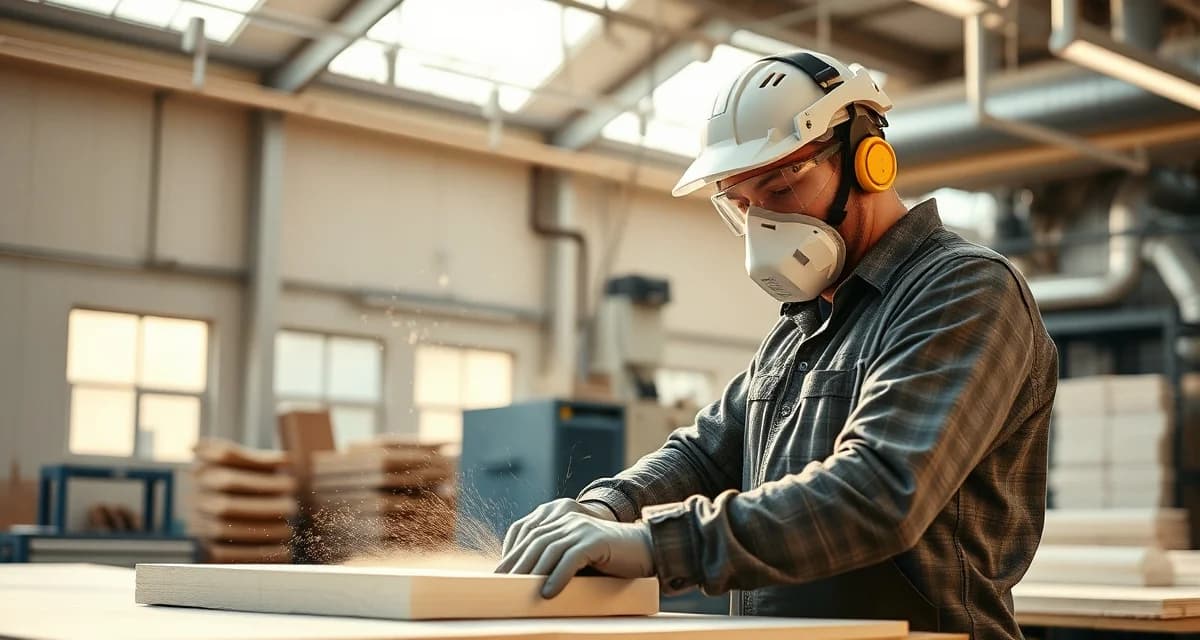
- N95 disposable respirator: appropriate for synthetic batting handling, routine fabric dust, general shop operations
- P100 half-face respirator: appropriate for foam cutting, old material removal from vintage pieces, and any high-dust activity
- Simple dust masks (not N95 rated): not sufficient for upholstery shop dust. The particle size generated by foam cutting passes through non-rated masks without meaningful filtration.
Eye protection:
Batting and fabric fibers are significant eye irritants. Safety glasses (not just sunglasses) prevent direct fiber contact during batting handling and old material removal.
Skin protection:
Foam dust and synthetic batting are skin irritants for some people. Long sleeves during foam cutting reduce direct skin contact with particles.
Shop Cleaning Practice
Foam and fabric dust that settles on surfaces re-becomes airborne when disturbed. Regular shop cleaning that removes settled dust reduces the total particulate load in the shop air.
Recommended routine:
- Vacuum floors and horizontal surfaces with a HEPA-filter shop vacuum at the end of each workday
- Clean the area around foam cutting immediately after each session
- Replace shop vacuum HEPA filters per manufacturer recommendations, a clogged HEPA filter provides reduced filtration
See the upholstery shop tools guide for HEPA shop vacuum recommendations. The upholstery workspace setup guide covers how to position the foam work area for best ventilation access.
Related Articles
FAQ
How do I protect myself from foam dust in my upholstery shop?
Wear a P100 half-face respirator during foam cutting, not a simple dust mask, which doesn't filter particles small enough to be hazardous. Position active ventilation near the foam cutting area: a fan directed toward an exhaust point during cutting captures the majority of particles before they disperse through the shop. Use a HEPA shop vacuum near the cutting point to capture larger particles. If you cut foam frequently throughout the day, the respiratory protection habit is the single most important protective measure for your long-term health.
What respiratory protection do upholsterers need?
N95 disposable respirators are appropriate for synthetic batting handling, general fabric dust, and routine shop operations. P100 half-face respirators are appropriate for foam cutting (especially with electric foam saws or band saws), old material removal from vintage or unknown-provenance pieces, and any task generating significant fine particulate. Standard dust masks rated below N95 don't provide meaningful protection against the particle sizes generated by foam cutting. The investment in proper respiratory protection is small compared to the long-term respiratory health consequence of working without it.
How do I ventilate my upholstery shop?
Install adequate general ventilation for 10-15 air changes per hour in your shop volume, this requires calculating your shop's cubic footage and sizing an exhaust fan accordingly. Add local ventilation at high-dust work areas: a fan positioned to direct air toward an exhaust point during foam cutting is effective. For shops without mechanical exhaust, a portable HEPA air purifier running during high-dust activities captures airborne particles that general circulation would otherwise distribute through the shop air. Open doors and windows during high-dust work when weather permits, even basic dilution ventilation reduces airborne particle concentration significantly.
How do I track multiple jobs at different stages simultaneously?
A job tracking system, whether paper-based or software-based, should give you a clear view of every active job's current stage at a glance. The minimum useful stages are: intake received, fabric ordered, fabric received, work in progress, quality check, ready for pickup/delivery, completed. Software that shows all active jobs on a single dashboard with current stage and due date eliminates the mental overhead of tracking multiple jobs manually.
Sources
- National Upholstery Association
- Association of Master Upholsterers and Soft Furnishers (AMUSF)
- Upholstered Furniture Action Council (UFAC)
- Furniture Today (trade publication)
Get Started with StitchDesk
A well-run upholstery shop is built on consistent processes, accurate information, and clear client communication. StitchDesk gives you the tools to manage all three from intake to delivery, without the overhead of paper systems or generic software that does not understand the trade. Start a free trial and see how StitchDesk fits your workflow.