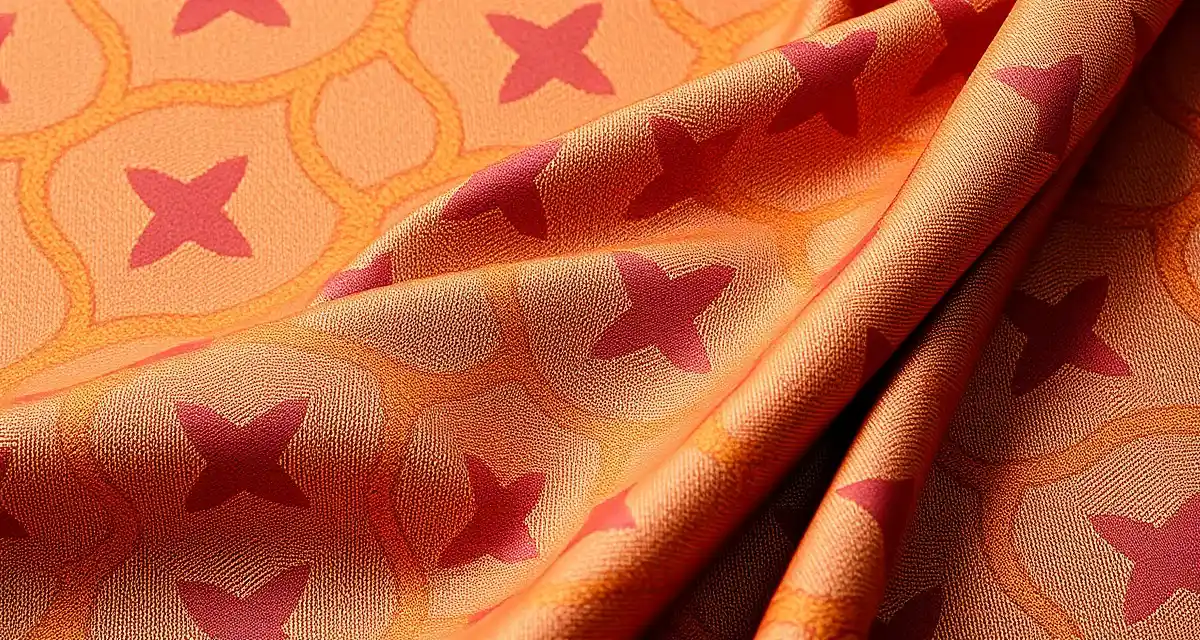
Jacquard Upholstery Guide: Pattern Alignment and Yardage Planning
Large jacquard repeat misalignment of 1 inch is visible from 6 feet. The misalignment doesn't read as "this is off by 1 inch", it reads as "something is wrong with this sofa," a vague but persistent visual discomfort that clients notice every time they look at the piece.
Jacquard fabric has the highest yardage complexity of any woven fabric, and the most technical requirement for alignment skill. When it's done right, a large-scale jacquard sofa is an exceptional piece. When the motif doesn't align across cushions, or when it's off-center on the back, the visual impact of the fabric works against you.
TL;DR
- Jacquard has specific performance characteristics that make it well-suited for certain applications and less suitable for others.
- Always check the double-rub count before specifying jacquard for a particular use; ratings vary widely between products.
- The cleaning code (W, S, WS, X) for jacquard determines what maintenance clients can safely perform and should be communicated at delivery.
- Pattern repeat, nap direction, and fabric width all affect yardage requirements and should be verified before calculating a quote.
- COM jacquard from clients should be inspected for rub count, cleaning code, and width before acceptance.
- Proper installation technique for jacquard differs from standard fabric; follow manufacturer guidance for any specialty material.
What Jacquard Means
Jacquard refers to the weaving technology, not a specific fabric. A jacquard loom controls individual warp threads independently, allowing complex interlocking patterns that would be impossible on simpler looms.
Upholstery jacquard covers a wide range:
Damask: A classic woven pattern with a self-colored, reversible design. Floral, geometric, or traditional motifs. The pattern appears as a contrast of sheen between the background and motif due to opposite weave directions, rather than color contrast.
Brocade: A multi-color jacquard where supplemental colored threads create the pattern against the ground weave. The reverse of brocade shows the "floating" supplemental threads between pattern areas.
Matelassé: A double-layer jacquard where the difference in weave tension between layers creates a puckered, quilted appearance. The dimensional texture is built into the weave structure.
Tapestry: A dense, multi-color jacquard with a picture-like design. Medieval and botanical tapestry designs are common in traditional upholstery.
Geometric jacquard: Contemporary patterns using jacquard's precision for sharp-edged geometric repeats.
Each type has similar alignment requirements but different visual complexity in the pattern matching process.
The Repeat: Understanding Your Alignment Challenge
Every jacquard has a vertical repeat (how long before the pattern repeats vertically) and a horizontal repeat (how wide before it repeats horizontally). Large-scale jacquards, typically patterns with a repeat over 12 inches in either direction, require the most extra yardage and the most careful planning.
For alignment purposes, what matters is finding the center of the repeat for each major panel and ensuring that center is placed consistently across the finished piece.
Center-Finding: The First Step
Before cutting any piece, identify the center of the motif (for single-motif jacquards) or the center of the pattern unit (for geometric or repeat-motif jacquards).
To find the center:
- Lay the fabric face up on your cutting table.
- Find a recognizable point in the pattern, the center of a flower, the intersection of a geometric, the highest point of a crest.
- Measure the full vertical repeat from that point to its next occurrence.
- The center of that vertical space is your pattern center.
- For the horizontal center, measure across the width of one horizontal repeat.
Mark this center point on the reverse of the fabric with a chalk cross.
Centering on the Sofa Back
The outside back panel is the first panel to cut, because it establishes the center for all subsequent panels.
Center the pattern horizontally on the outside back panel so the motif appears balanced from the front. Centered pattern means the sofa back has equal pattern from center to each outside arm, not that any specific element falls at the physical center, but that the visual weight is balanced.
For a large-scale floral jacquard, this typically means the center of a prominent bloom falls at the center of the panel width. For geometric jacquard, it means the center of a geometric unit falls at center.
Cut the outside back panel first. Then use this panel as the reference for all other panels.
Pattern Offset Calculation
Once the outside back is cut, every subsequent panel must be cut to maintain alignment when they're sewn together or viewed together on the finished piece.
The pattern offset is the vertical distance from the top of one panel to where the pattern must begin on an adjacent panel to maintain continuity. Calculate it by:
- Measuring the vertical distance from the top of the first panel to the first pattern point
- Finding where the next repeat of that pattern point falls
- Starting the adjacent panel at the correct offset to align
For cushion faces on a sofa with a centered back panel: each cushion face should be cut to match the visual pattern position it occupies on the back when the cushion is in place. The center cushion shows the center of the motif; the outer cushions show the sides of the motif that would appear there if the back continued across.
This is what makes jacquard yardage calculations complex. You're not just planning area coverage, you're planning the specific pattern position for every panel.
Yardage: Why Jacquard Requires More
Standard upholstery yardage calculation adds waste for cuts and seams. Jacquard adds waste for three additional reasons:
Repeat matching: Each panel must start at the correct point in the repeat. The fabric between the end of one panel and the start of the next panel that begins the correct repeat is wasted.
Centering adjustment: If the natural cut would center the pattern 2 inches off from where you need it, you shift the cut 2 inches and lose that amount from the yield.
Motif continuity across cushions: Maintaining motif continuity across multiple cushion faces requires cutting each face at a specific point in the repeat, creating significant unavoidable waste between pieces.
The extra yardage required for a large jacquard can range from 20-40% over a comparable solid fabric for the same piece.
The jacquard fabric yardage calculator accounts for these factors automatically when you input the repeat dimensions and piece measurements.
The Alignment Inspection
Before sewing any panels together, arrange all cut panels on the floor or cutting table in their installed positions. Stand back 6 feet and check alignment visually.
Any panel that's off by more than ½ inch from where the pattern should continue is a recut. Catching this before sewing saves significant labor. Discovering it after sewing, or after installation, is a full rework.
Charging for Jacquard Work
Jacquard upholstery requires more yardage (material cost premium), more planning time, more careful cutting, and more time for pattern alignment inspection. Price this appropriately.
A reasonable approach: calculate the standard job price, then add a pattern-matching premium of 20-25% for large-scale jacquard, and invoice the fabric at the actual cost used (including repeat waste), not at the minimum coverage estimate.
Related Articles
- Stripes in Upholstery: Matching Railroading and Yardage Guide
- Chenille Upholstery Guide: Pile Compression and Pile Direction
FAQ
How do I center a jacquard pattern for upholstery?
Start by identifying the center of the repeat motif, then find where that center should fall on the most visible panel, typically the outside back of a sofa. Cut the outside back panel first with the motif centered horizontally. Then calculate the pattern offset for each subsequent panel using the repeat dimension, cutting each panel to maintain visual continuity with the back when the finished piece is viewed assembled. The order of cutting matters: outside back first, then cushion faces, then secondary panels, using each previous cut as a reference.
How much extra yardage does jacquard require?
Large-scale jacquard (repeat over 12 inches in either direction) typically requires 25-40% more yardage than a comparable solid or small-pattern fabric. The extra yardage is consumed by repeat matching between panels, centering adjustments, and the motif continuity requirement across adjacent cushion faces. The larger the repeat, the more waste between matching cuts. A jacquard with a 24-inch repeat requires more additional yardage than one with a 12-inch repeat, even for the same piece. Always calculate jacquard yardage using a calculator that accounts for repeat dimensions, not a standard area estimate.
How do I align jacquard across sofa cushions?
The goal is for the pattern to appear to continue naturally across the cushion faces as if the sofa back were one unbroken fabric. Each cushion face is cut at the specific point in the repeat that corresponds to where it sits relative to the back panel. The center cushion shows the center of the motif; adjacent cushions show the pattern that would appear immediately beside the center if the fabric were unbroken. Achieve this by using the centered back panel as your reference and calculating the repeat offset for each cushion position before cutting.
How durable is this fabric for everyday residential use?
Durability depends on the specific product's double-rub count. For everyday residential use, look for a minimum of 15,000 double rubs for light use and 30,000+ for heavy residential use. Always check the manufacturer's specification rather than the fabric category alone, as durability varies significantly within any fabric type depending on construction and finishing.
How do I care for upholstery covered in this fabric?
Follow the cleaning code on the fabric label: W (water-based cleaners safe), S (solvent-based cleaners only), WS (either), or X (vacuum only). For spot cleaning, always test in an inconspicuous area first. Blot spills immediately rather than rubbing, which spreads the stain and can damage the fabric structure. Provide clients with a written care card at delivery specifying the cleaning code and any special maintenance recommendations.
Sources
- National Upholstery Association
- Association of Master Upholsterers and Soft Furnishers (AMUSF)
- Upholstered Furniture Action Council (UFAC)
- Furniture Today (trade publication)
Get Started with StitchDesk
Helping clients choose the right fabric is a core part of the job, and having accurate yardage calculations and fabric records at hand makes those conversations faster and more confident. StitchDesk keeps fabric data, yardage calculations, and client records in one place so you spend less time on paperwork and more time on the work itself. Try StitchDesk free.