Channel Tufting Upholstery Guide: Professional Technique
Channel tufting is the second most common tufting style in upholstery after diamond tufting, and it's the one most likely to go wrong at the finish line. The parallel channels that define this style are unforgiving. Any widening, tapering, or waviness at the bottom shows up clearly from across the room. Knowing how to mark and pull channels correctly at the foam stage is what separates clean results from the most common finish defect in the craft.
Channel tufting that widens at the bottom is the most common finish defect in this style, and it's almost always caused by skipping the marking step at the foam stage. If you mark your channel lines on the foam before cutting, you lock in your widths before fabric tension comes into play. That one habit prevents most of the problems that show up after the fabric is stapled down.
TL;DR
- Pattern repeat is the most common source of fabric waste and yardage underestimation in upholstery shops.
- Each cutting zone on a piece must start at the same point in the repeat, meaning waste accumulates across every panel.
- A 27-inch vertical repeat on a 3-cushion sofa can add 4-6 yards of fabric over the same sofa in plain fabric.
- Horizontal and vertical repeats must both be planned; a plaid or geometric with both adds more waste than a single-axis repeat.
- Pattern centering decisions (where the motif falls on the seat face) should be made at the quoting stage, not after cutting begins.
- Always quote pattern repeat work with a zone-by-zone calculation, not a flat percentage buffer.
What Is Channel Tufting?
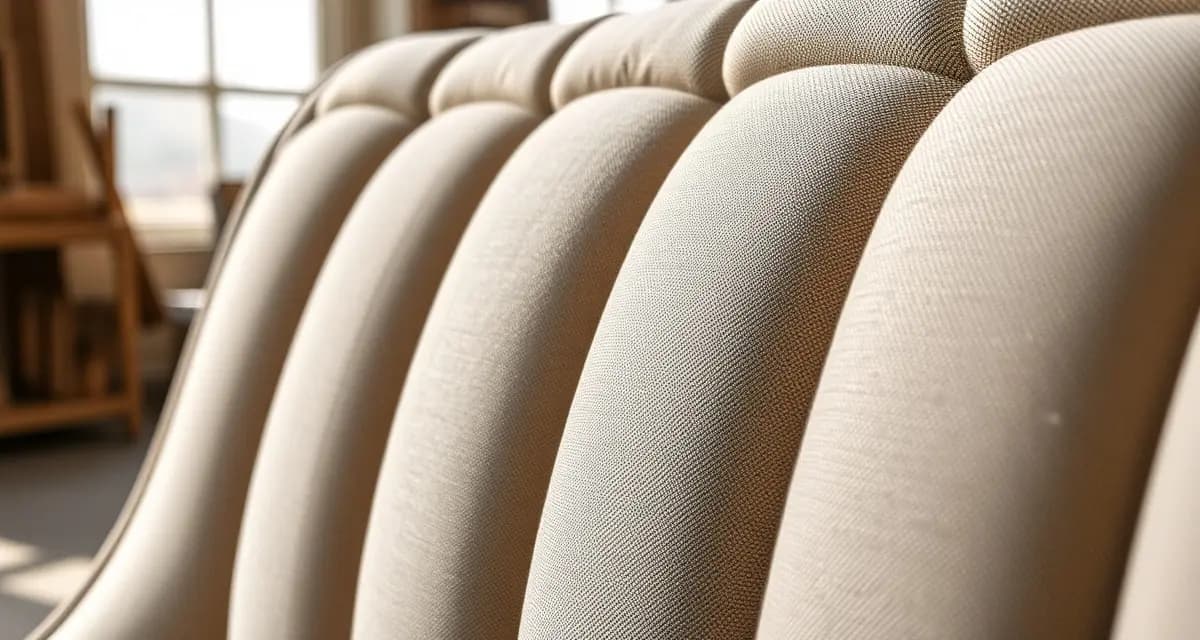
Channel tufting creates vertical (or sometimes horizontal) parallel raised ridges in upholstered fabric. Unlike diamond tufting, which uses button pull-through to create a geometric pattern, channel tufting shapes the fabric between foam ridges or sewn channels. The result is a clean, modern look used on everything from headboards and sofas to mid-century accent chairs.
There are two main methods: the foam-channel method and the sewn-channel method. The foam-channel method cuts grooves or builds up foam ridges to shape the fabric from beneath. The sewn-channel method uses machine-sewn rows of stitching to create the ridges directly in the fabric before application. Both methods require the same attention to spacing, but the foam-channel approach gives you more room to adjust widths before you commit.
Channel Width and Spacing
Before you cut a single piece of foam, decide on your channel width and mark it consistently across the entire panel. Common channel widths run between 3 and 5 inches for standard residential furniture. Narrower than 3 inches and the channels start to look crowded; wider than 5 and the panel reads as flat.
Use a long ruler and a fabric marker to draw your channel lines directly on the foam. Space every line at exactly the same interval. Don't rely on eyeballing it. The eye is remarkably good at picking up a 1/8-inch inconsistency when channels are running parallel to each other in a finished piece.
When you're using the foam-channel method, the groove you cut should be half to two-thirds the depth of your foam. A 4-inch foam with a groove cut 2 to 2.5 inches deep will hold its shape and give the channel a clean definition. Shallower grooves produce soft, indistinct channels. Cut too deep and the foam edge can roll.
Marking at the Foam Stage
Here's the step that most home upholsterers skip and most professionals do automatically: mark your channels on the foam, then transfer those marks to the fabric before you begin pulling and stapling.
Cut your fabric with enough overhang to wrap and staple. Lay it over the foam dry (no glue, no staples) and use a chalk wheel or tailor's chalk to lightly mark where each channel line falls. These marks become your guide when you start pulling fabric into the grooves.
Without these marks, you're guessing where to pull. Fabric stretches under tension, and your hands will naturally pull toward whatever feels like center. But what feels like center after three channels are pulled may not match where the fourth channel needs to land. The marks keep you honest.
Pulling and Stapling the Channels
Work from the center channel outward. Never start at one edge and move across. You'll build up tension asymmetrically and the channels will drift.
For each channel:
- Pull the fabric down into the groove with your fingers, pressing along the entire length before stapling anything.
- Check that the width looks consistent from top to bottom.
- Staple at the base of the groove, working from center toward the ends.
- Use a regulator needle to tuck any fabric edges cleanly into the groove after stapling.
The stapling should happen at the bottom of the groove, not the sides. Stapling on the groove walls is what causes channels to widen at the base. The staple pulls the fabric sideways rather than downward.
Fabric Selection for Channel Tufting
Not every fabric works well for channel tufting. The ideal fabric has enough drape to fall cleanly into grooves without puckering, but enough body to hold the ridge shape between channels.
Velvet is a traditional choice because the pile adds visual definition to the ridges. Woven fabrics with a medium weight (linen blends, cotton-polyester, performance weaves) also work well. Avoid loosely woven fabrics; the groove edges can pull the weave apart over time, especially on pieces that get daily use.
Leather and vinyl work for channel tufting but require more precision because they don't stretch to forgive small errors. Pre-score the crease lines lightly with a bone folder before pulling. This helps the material fall into the groove cleanly instead of bridging over it.
Finishing the Top and Bottom Edges
The top and bottom edges of a channel-tufted panel are where the work either looks finished or unfinished. At the top, each channel should terminate cleanly. Either wrapped over a frame edge and stapled, or finished with a welt line that caps the channels.
At the bottom, the channels typically open up as the fabric wraps under the frame. Before wrapping, make sure the fabric tension is even across all channels. Uneven tension shows up as channels that look tight at the top and flared at the bottom, which is exactly the defect this whole guide is designed to prevent.
Add a trim strip or welt at the base edge if the design calls for it. This covers the staple line and gives the bottom edge a clean termination point.
Using Fabric Yardage Calculators for Channel Work
Channel tufting adds yardage. The fabric pulled into each groove has to come from somewhere, and on a large panel with 8 to 10 channels, that pull can add half a yard or more to your total calculation. Use the tufting yardage guide to add the correct buffer to your estimate before ordering. Running short on a channel-tufted piece mid-project is a difficult problem to solve cleanly.
Frequently Asked Questions
How do I do channel tufting?
Mark your channel lines on the foam at even intervals before cutting. Transfer those marks to the fabric with chalk before pulling. Work from the center channel outward, pressing the fabric fully into each groove along its entire length before stapling. Staple at the bottom of each groove, not the walls, to prevent the channels from splaying outward. Finish with a regulator needle to clean up any fabric edges along the groove sides. That sequence, done consistently, produces clean parallel channels from top to bottom.
How do I keep channel tufting straight?
The marking step is what keeps channels straight. Mark every channel line on the foam with a ruler before you cut any grooves. This locks in your spacing before fabric tension enters the picture. When laying the fabric over the foam before pulling, transfer the channel locations to the fabric with chalk. Those chalk marks become your visual guide as you pull, letting you correct any drift before you staple. Working from the center outward also helps maintain symmetry. If you're pulling from one side to the other, tension accumulates and pulls the center channels off their marks.
What fabric is best for channel tufting?
Medium-weight woven fabrics work best for channel tufting: velvet, linen blends, cotton-polyester performance weaves, and similar materials with enough drape to fall cleanly into grooves. Velvet is the classic choice because pile direction adds definition to the ridges. Avoid loosely woven fabrics that can pull apart at the groove edges. Leather works but requires pre-scoring the crease lines before pulling. Avoid very stiff fabrics. They bridge over the grooves instead of dropping into them, producing flat, undefined channels.
How do I calculate yardage for a large pattern repeat?
Calculate each cutting zone separately. For each zone, round up to the next full repeat. Sum the adjusted zones and add a 15-20% buffer. For a 27-inch repeat, a seat cushion panel that measures 22 inches still requires a full 27-inch repeat allocation, wasting 5 inches. Multiply this across 8-12 zones on a sofa and the waste adds up to 4-6 yards over the plain-fabric calculation. Zone-by-zone calculation is the only reliable method.
Related Articles
Sources
- National Upholstery Association
- Association of Master Upholsterers and Soft Furnishers (AMUSF)
- Upholstered Furniture Action Council (UFAC)
- Furniture Today (trade publication)
Get Started with StitchDesk
Pattern repeat work is where fabric errors are most common and most costly. StitchDesk's yardage calculator handles pattern repeats zone by zone, not as a flat buffer, so your quotes for patterned fabric are accurate before the first cut. Start a free trial and eliminate the most expensive source of fabric waste in your shop.