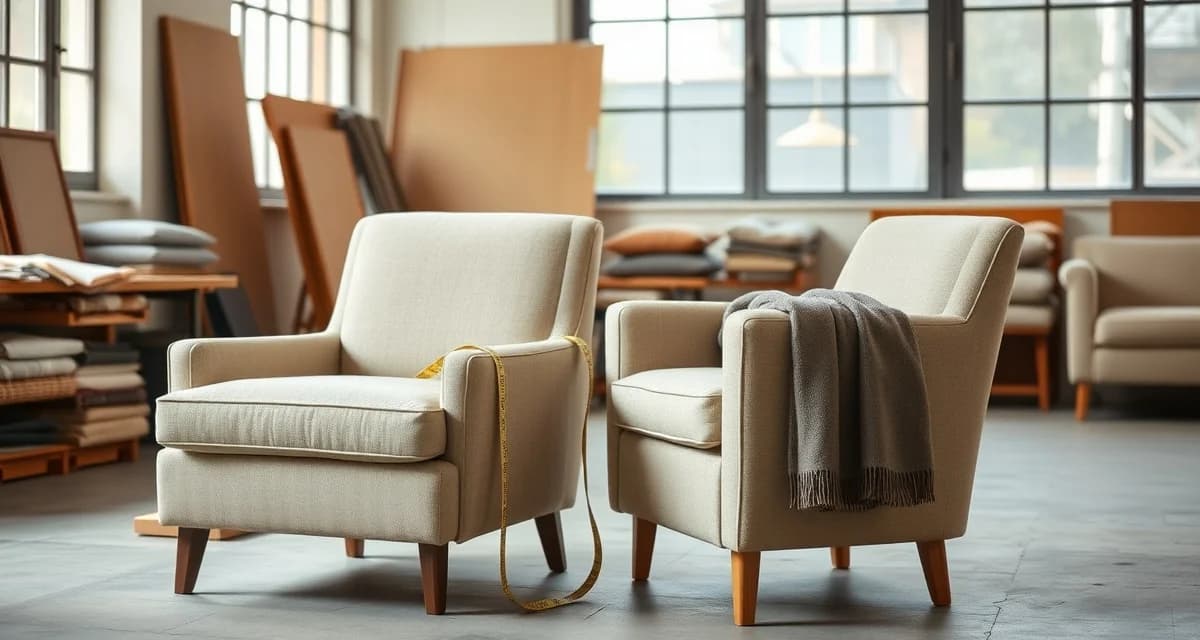
Chair and a Half Fabric Yardage Calculator
The chair-and-a-half is one of those pieces that sounds like it should be easy to calculate, it's just a big chair, right? Except that most shops run into trouble when they apply a standard arm chair preset and get a number that's obviously low. Or they apply a loveseat preset and end up with a big overage.
The chair-and-a-half sits in-between. Its seat width (typically 33 to 38 inches) is wider than a standard arm chair seat (about 24 to 28 inches) but narrower than a loveseat seat (44 to 52 inches per section). The back height and depth are standard chair proportions, not loveseat proportions. That combination requires its own calculation.
Using a standard chair template consistently underestimates by 30 percent. That's the difference between quoting 4 yards and needing 5.5.
TL;DR
- Chair And Half yardage depends on fabric width, construction details, pattern repeat, and nap direction.
- Plain 54-inch fabric requires a baseline calculation plus 10-15% waste allowance for a standard chair and half job.
- Patterned fabric adds 20-35% to base yardage depending on repeat size and the number of cutting zones that must align.
- Directional fabrics add 15-25% over plain fabric because layout optimization is restricted by nap direction.
- Always verify fabric width before finalizing yardage; COM fabric often comes in non-standard widths.
- Calculating yardage at the quote stage, not mid-job, eliminates reorders and protects your profit margin.
What Makes the Chair-and-a-Half Different
The defining characteristic is the wide seat. A chair-and-a-half is designed for one generous adult or two children, which means that seat is considerably wider than a regular arm chair without quite reaching loveseat territory.
The implications for yardage:
Inside and outside back: Wider than a chair. If the seat is 36 inches wide, the back panels are proportionally wider too.
Seat cushion: A single large seat cushion. The cushion is wider than a chair cushion but not split into two pieces like a loveseat. This actually makes the cutting cleaner, one large piece rather than two separate cushion covers.
Arms: Standard arm dimensions, not loveseat width. The arms are the same size as a regular chair arm, which is what keeps the piece in chair territory proportionally.
Overall piece height: Chair proportions, not sofa proportions. Back height and overall depth are closer to a standard arm chair than to a loveseat.
Typical Yardage for a Chair and a Half
For solid fabric in 54-inch width, standard arm style:
Pillow-back chair-and-a-half: 6 to 7.5 yards
Tight-back chair-and-a-half: 4.5 to 6 yards
For reference: a standard arm chair is 4 to 5 yards, and a standard 2-cushion loveseat is 9 to 11 yards. The chair-and-a-half lands squarely between these two, closer to the chair end.
If your chair-and-a-half has a matching ottoman (they often do, it's that style of piece), add 1.5 to 2.5 yards for the ottoman depending on its size.
Using the Chair Yardage Calculator
In the StitchDesk calculator, select "chair" as the piece type and then use the mid-size mode or manually input the actual seat width. The calculator adjusts back panel width proportionally based on your seat dimension input rather than using a fixed chair preset.
If you know the exact dimensions of the piece, seat width, seat depth, back height, arm height, the calculator can give you a precise yardage rather than a range. For a first estimate without the piece in front of you, the ranges above are reliable.
Pattern Repeat on a Wide Single Cushion
One thing that's worth flagging: because the chair-and-a-half has a single wide seat cushion rather than two standard cushions, pattern centering can be a meaningful consideration.
On a standard arm chair with a 26-inch cushion, you can often center a pattern motif and have it look good. On a 36-inch chair-and-a-half cushion, centering a motif requires more planning, and if the pattern repeat is large, it can add yardage for the centering cut.
If your client has selected a fabric with a centered medallion pattern or a large-scale floral, confirm that the repeat width works with the cushion width before ordering.
Frequently Asked Questions
How many yards for a chair and a half?
A pillow-back chair-and-a-half typically needs 6 to 7.5 yards of solid fabric in 54-inch width. Tight-back versions use 4.5 to 6 yards. If the piece comes with a matching ottoman, add 1.5 to 2.5 yards for the ottoman. For patterned fabric, add yardage for the repeat.
What is a chair and a half?
A chair-and-a-half is an oversized lounge chair with a seat width of 33 to 40 inches, wider than a standard arm chair but not wide enough to be a loveseat. The style is popular for reading rooms and master bedrooms. It usually comes with a coordinating ottoman and is designed for comfortable single-person seating with room to curl up.
Is a chair and a half closer to a chair or loveseat in yardage?
Closer to a chair. The wide seat adds yardage compared to a standard arm chair, but the back height, arm proportions, and single-cushion seat keep it well below loveseat territory. Think of it as a standard chair plus 1.5 to 2 yards, rather than a loveseat minus anything.
What is the biggest factor in yardage variation for this piece?
Pattern repeat is the biggest source of yardage variation. On plain fabric, the baseline calculation plus a 10-15% waste buffer is usually sufficient. Add a 13-inch pattern repeat and you may need 15-20% more. Add a 27-inch pattern repeat and the additional yardage can be 25-35% over the plain fabric calculation. Nap direction is the second-largest factor, typically adding 15-25% over plain fabric because layout optimization is restricted.
Related Articles
Sources
- National Upholstery Association
- Association of Master Upholsterers and Soft Furnishers (AMUSF)
- Upholstered Furniture Action Council (UFAC)
- Furniture Today (trade publication)
Get Started with StitchDesk
Getting yardage right on yardage chair and half jobs is the difference between a profitable quote and an expensive reorder. StitchDesk's fabric calculator accounts for all the variables that cause errors: pattern repeat by zone, nap direction, fabric width, and cushion configuration. Start a free trial and see how accurate yardage calculation affects your bottom line.