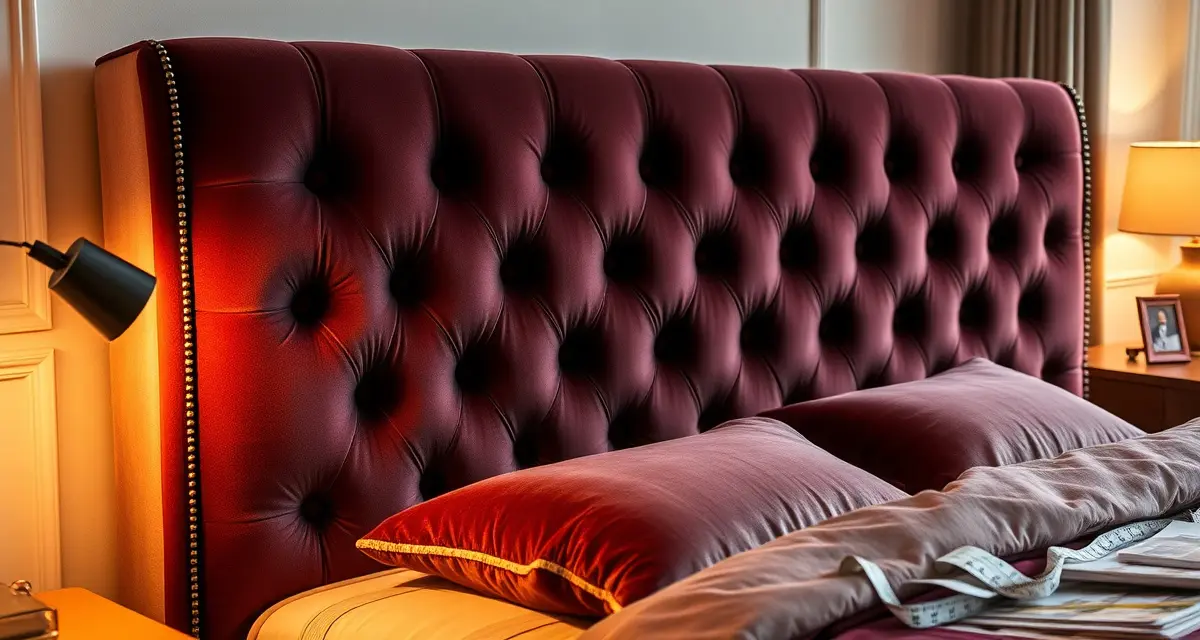
Velvet Tufted Headboard Fabric Yardage: The Hardest Calculation
If there's one calculation in upholstery where you genuinely cannot afford to get it wrong, it's a velvet tufted headboard. You're combining two constraints, nap direction and button-pull waste, on fabric that often costs $40 to 80 per yard or more. A king diamond-tufted headboard in premium velvet is one of the most expensive material mistakes an upholstery shop can make.
Get this number right before you order anything.
TL;DR
- For Tufted Headboard Velvet yardage depends on fabric width, construction details, pattern repeat, and nap direction.
- Plain 54-inch fabric requires a baseline calculation plus 10-15% waste allowance for a standard for tufted headboard velvet job.
- Patterned fabric adds 20-35% to base yardage depending on repeat size and the number of cutting zones that must align.
- Directional fabrics add 15-25% over plain fabric because layout optimization is restricted by nap direction.
- Always verify fabric width before finalizing yardage; COM fabric often comes in non-standard widths.
- Calculating yardage at the quote stage, not mid-job, eliminates reorders and protects your profit margin.
Why Velvet Tufted Headboards Are Uniquely Challenging
The difficulty comes from two factors that operate independently but stack on top of each other:
Factor 1: Nap direction. All velvet panels must run nap in the same direction. For a headboard, this typically means nap running down. This prevents the fabric from catching light differently in different zones. But it also means you can't rotate any panel to save fabric on the cutting layout.
Factor 2: Button-pull waste. When buttons are pulled through the fabric to create tufting, they gather and compress the fabric in the direction of the pull. This requires more fabric in both dimensions than the flat headboard measurements would suggest. For diamond tufting, the pull happens diagonally, gathering fabric in two directions simultaneously.
Neither of these factors alone would make the calculation dramatically harder. Together, they compound. The nap direction constraint prevents you from reclaiming the material that tufting pull steals, and the tufting pull waste removes the extra fabric that would otherwise give you flexibility in the layout.
How to Calculate Velvet Tufted Headboard Yardage
Step 1: Start with the flat headboard dimensions
For a king headboard: typically 76 to 80 inches wide, 30 to 50 inches tall depending on design.
Step 2: Apply tufting pull allowance
Diamond tufting adds 10 to 20 percent in both width and height dimensions. For a 76 x 44-inch headboard:
- Width with tufting allowance: 76 x 1.15 = 87.4 inches
- Height with tufting allowance: 44 x 1.15 = 50.6 inches
The percentage depends on button density. More buttons per square foot = more pull waste. A dense 5 x 5 button grid needs 20 percent allowance. A loose 3 x 3 grid needs 10 to 12 percent.
Step 3: Apply nap direction constraint
Because all cuts must run nap-down, you cannot rotate the headboard panel to take advantage of the fabric width. The full width of your adjusted headboard calculation must fit within the fabric width (typically 54 to 60 inches), or you must cut in pieces with a seam.
For a king headboard that's 87 inches adjusted for tufting, you cannot get this from a single 54-inch or even 60-inch width fabric without a seam. Plan for either a center seam or use wider fabric (if available).
Step 4: Calculate total yardage
Divide the adjusted height (50.6 inches) by 36 to get yards: 50.6 ÷ 36 = 1.4 yards minimum for the main panel.
Then add fabric for return sides, top and bottom wraps, back panel (if upholstered), and any contrasting element. For a king headboard with full returns:
Total velvet yardage: 4 to 6 yards depending on construction style.
Pile Size and Tufting Quality
The velvet pile height matters for tufting quality. Short pile (under 5mm) cuts the sharpest diamond tufting geometry, the folds are defined and crisp. Long pile (7mm+) creates a softer, more cushioned look at the button points, with the pile spreading softly around each button.
Short pile velvet is easier to tuft cleanly. The buttons sit crisply. Longer pile hides any slight imprecision in button placement, which can be useful, but it also means the tufting reads as softer and less architectural.
Crushed velvet is a difficult tufting fabric, the directionality of the crush fights the tufting pull and can create inconsistent light reflection around buttons. If a client wants crushed velvet tufting, be upfront that the result will look different from standard velvet tufting, and preview this with a sample if possible.
Using the Calculator for This Job
The velvet fabric yardage calculator combined with the tufting yardage calculator gives you the compound calculation. Input headboard dimensions, button density, and fabric width, and the calculator applies both the nap direction constraint and the tufting pull allowance simultaneously.
For a king diamond-tufted headboard, running the calculation before ordering is not optional, it's the only way to know what you actually need.
Frequently Asked Questions
How much velvet for a king tufted headboard?
A king diamond-tufted headboard typically requires 4 to 6 yards of velvet, depending on construction depth, button density, and whether the returns and back are also upholstered. The tufting pull allowance adds 10 to 20 percent over flat headboard dimensions, and the nap direction constraint eliminates any possibility of reclaiming that material through creative panel rotation.
Why is velvet tufted headboard yardage so hard to calculate?
Two constraints compound against each other. Nap direction requires all fabric to run in the same direction, eliminating layout flexibility. Button tufting pull requires more fabric than the flat dimensions suggest, because the fabric is gathered and compressed at each button. You can't solve the pull waste problem by rotating panels because the nap direction constraint prevents rotation. Both buffers must be calculated separately and applied to the same headboard.
What size velvet pile works best for tufting?
Short pile velvet (3 to 5mm) produces the crispest, most architectural tufting. The folds and diamond shapes read cleanly and the buttons sit with definition. Medium pile (5 to 7mm) gives a softer look that still reads clearly as tufted. Long pile or crushed velvet creates the softest effect but is more difficult to execute cleanly and can produce inconsistent results around the button faces.
What is the biggest factor in yardage variation for this piece?
Pattern repeat is the biggest source of yardage variation. On plain fabric, the baseline calculation plus a 10-15% waste buffer is usually sufficient. Add a 13-inch pattern repeat and you may need 15-20% more. Add a 27-inch pattern repeat and the additional yardage can be 25-35% over the plain fabric calculation. Nap direction is the second-largest factor, typically adding 15-25% over plain fabric because layout optimization is restricted.
What should I do if I run short on fabric mid-job?
Stop cutting immediately when you realize you may run short. Calculate exactly how much additional fabric you need before contacting the supplier or client. If reordering from the same dye lot is possible, do so as quickly as possible because dye lots change. If a dye lot match is not available, contact the client before proceeding; visible dye lot differences on the same piece are unacceptable and must be disclosed. Document the situation and response in writing.
Sources
- National Upholstery Association
- Association of Master Upholsterers and Soft Furnishers (AMUSF)
- Upholstered Furniture Action Council (UFAC)
- Furniture Today (trade publication)
Get Started with StitchDesk
Getting yardage right on yardage for tufted headboard velvet jobs is the difference between a profitable quote and an expensive reorder. StitchDesk's fabric calculator accounts for all the variables that cause errors: pattern repeat by zone, nap direction, fabric width, and cushion configuration. Start a free trial and see how accurate yardage calculation affects your bottom line.