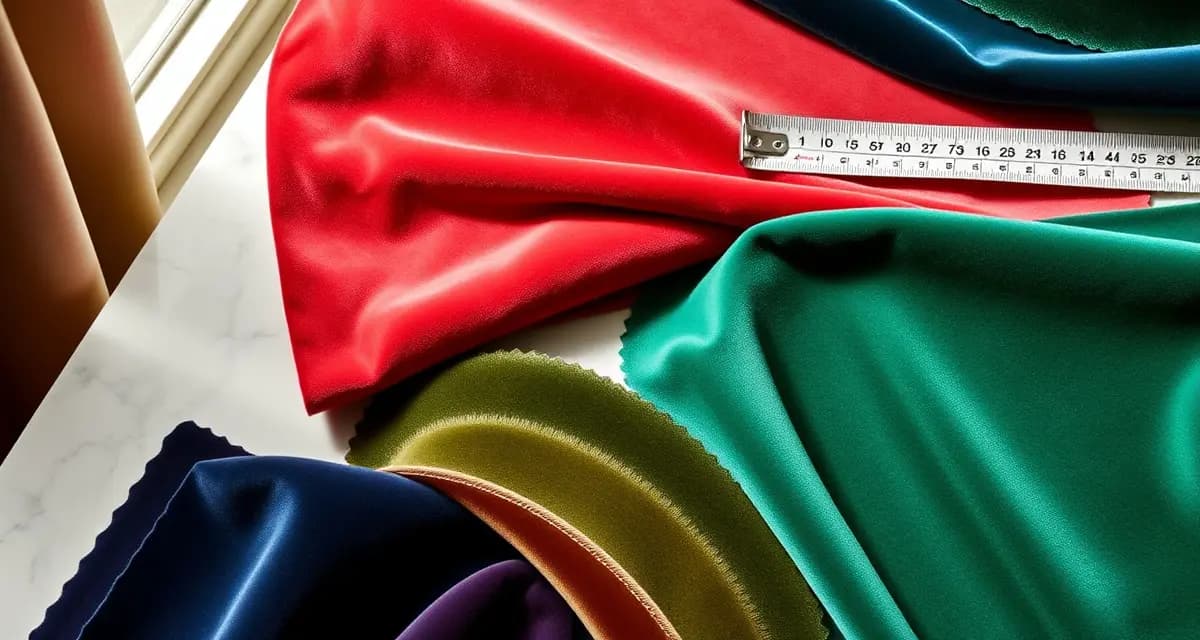
Velvet Fabric Yardage Calculator: Nap, Pattern, and Waste All Included
Velvet is the fabric most likely to cause shortfalls. Upholstery shops underorder velvet on 1 in 5 jobs. Not because the piece is hard to measure, but because velvet has rules that generic calculators completely ignore.
The velvet fabric yardage calculator you need accounts for three things simultaneously: nap direction, pile height waste, and cutting consistency. Handle all three and you'll stop getting those panicked calls to suppliers about emergency yardage.
TL;DR
- Accurate yardage calculation for velvet fabric jobs prevents costly fabric shortfalls and over-ordering that erode margin.
- Pattern repeats are the most common source of yardage errors; always calculate each cutting zone separately, not as a flat percentage.
- Nap-direction fabrics (velvet, chenille, mohair) require 15-25% more yardage than the same job in plain fabric.
- Fabric width significantly affects yardage: the difference between 54-inch and 60-inch fabric can be 1-2 yards on the same piece.
- Always add a 10-15% buffer on plain fabric and 15-20% on patterned fabric to account for cutting waste.
- Entering measurements accurately at the quoting stage eliminates the need to reorder mid-job.
What Makes Velvet Different From Every Other Fabric
Velvet is a cut-pile fabric. Every piece you cut has a direction. The nap runs one way, and if any piece runs the opposite direction, it'll reflect light differently. You can see it from across the room.
The problem isn't knowing that nap matters. Every upholsterer knows that. The problem is that spreadsheets can't enforce nap direction consistency across all cut pieces. You have to track it manually, piece by piece, and one distracted moment means a remake.
Beyond direction, velvet pile height changes your cutting waste. High-pile velvet loses more usable fabric at seam allowances than a short-pile velvet. The seam area on high-pile velvet compresses and shows, which means you need more seam allowance to hide the compression. More seam allowance means less usable width per cut piece.
Nap Direction Rules for Upholstery
For most upholstery velvet, the nap should run downward on vertical surfaces and toward the sitter on horizontal surfaces. This gives the velvet its richest, deepest color appearance.
Running nap upward creates a lighter, frosted look. Some designers specify this intentionally for effect. But it has to be consistent. Every single piece on the piece must run the same way.
Here's the practical rule: decide on nap direction before you cut anything. Mark an arrow on your cutting table and check every panel against it before the scissors touch the fabric.
High-Pile vs Low-Pile Waste Factors
| Velvet Type | Waste Factor |
|---|---|
| Low-pile (crushed, velveteen) | 12-15% |
| Mid-pile (standard upholstery velvet) | 15-18% |
| High-pile (plush, mohair) | 20-25% |
These percentages are on top of your base yardage calculation. If a sofa needs 14 yards of solid fabric, a high-pile velvet job needs 17-18 yards.
Calculating Velvet Yardage: The Right Method
Start with your base yardage calculation as if the fabric were a solid, non-directional material. Then apply the nap factor.
For a sofa with a standard medium-pile velvet:
- Calculate base yardage (e.g., 13 yards for a 3-cushion Lawson sofa)
- Add 15-18% for nap direction waste: 13 × 1.17 = 15.2 yards
- Round up to the nearest half yard: 15.5 yards minimum order
For a tufted piece, add an additional 10-15% on top of that. Tufting pulls fabric in ways that require extra ease built into every panel.
Velvet and Tufting: A Special Case
Tufted velvet is beautiful and complicated. The tufting process pulls the fabric inward at each button point, creating extra surface area that has to come from somewhere. On a flat piece, this is accounted for by cutting panels slightly larger.
But on velvet, you also have to ensure that the nap direction remains consistent after the fabric is pulled and gathered at each tuft. This requires planning the center point of each panel before cutting, not after.
Use a nap direction fabric calculator for tufted velvet jobs specifically. Standard yardage calculations will underestimate by 15-20% on a fully tufted velvet piece.
FAQ
How much extra velvet do I need for upholstery?
Add 15-25% to your base yardage calculation depending on pile height. Standard upholstery velvet (medium pile) needs about 17% extra to account for nap direction waste. High-pile velvet needs 20-25% extra. For any tufted velvet work, add another 10-15% on top of that.
Does pile height change velvet yardage?
Yes, by a real margin. High-pile velvet requires wider seam allowances to hide pile compression at seams, which reduces the usable width of each cut piece. A high-pile velvet job can need 2-3 more yards than the same piece in a low-pile velvet. Always spec pile height before calculating.
How do I handle nap direction on a tufted velvet sofa?
Plan your cutting layout with nap direction marked before cutting anything. On a tufted velvet sofa, every back panel, cushion top, and arm piece must have nap running the same direction. Cut a test strip first and check the direction in natural light. Velvet nap direction is most visible in daylight at an angle. Keep all pieces oriented and labeled before you begin any stitching.
What is the most common yardage mistake on this type of job?
The most common mistake is not accounting for pattern repeat offsets across all cutting zones. A single pattern repeat adds waste to every panel that must start at the same point in the repeat, and on a piece with 6-10 cutting zones, this adds up significantly. Using a flat percentage buffer instead of a zone-by-zone repeat calculation almost always underestimates yardage for patterned fabric.
How does fabric width affect yardage for this piece?
Fabric width has a direct impact on yardage for any upholstery piece. Standard 54-inch fabric is the baseline for most calculations. A 60-inch fabric can reduce yardage by 10-15%. A 48-inch fabric can increase yardage by 10-20%. Always confirm fabric width before finalizing yardage, especially with COM fabric, which often comes in non-standard widths that can invalidate a standard calculation.
Sources
- National Upholstery Association
- Association of Master Upholsterers and Soft Furnishers (AMUSF)
- Upholstered Furniture Action Council (UFAC)
- Furniture Today (trade publication)
Get Started with StitchDesk
Getting yardage right on velvet jobs is the difference between a profitable quote and an expensive reorder. StitchDesk's fabric calculator accounts for all the variables that cause errors: pattern repeat by zone, nap direction, fabric width, and cushion configuration. Start a free trial and see how accurate yardage calculation affects your bottom line.