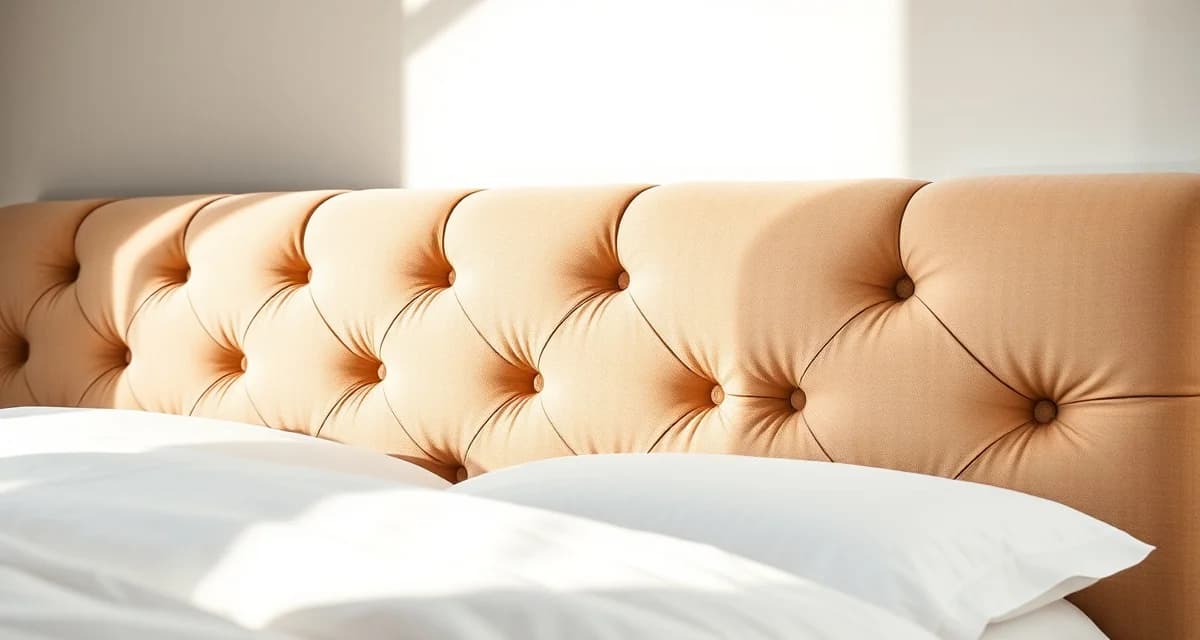
Fabric Yardage Calculator for Headboards: Tufted and Flat Styles
Tufted headboards waste 15–25% more fabric than flat styles due to button pull. Most shops underestimate this. The result is a job quoted at 3 yards, started on 3 yards, and finished by calling the fabric rep to rush-order one more yard mid-job, at retail, not wholesale.
Headboards look simple on the surface: it's one big panel, maybe some buttons. But the geometry changes significantly between flat, tufted, channel-tufted, and nailhead border styles. The calculator handles each of these with a different logic, not the same flat multiplier applied to different style names.
TL;DR
- Accurate yardage calculation for headboard jobs prevents costly fabric shortfalls and over-ordering that erode margin.
- Pattern repeats are the most common source of yardage errors; always calculate each cutting zone separately, not as a flat percentage.
- Nap-direction fabrics (velvet, chenille, mohair) require 15-25% more yardage than the same job in plain fabric.
- Fabric width significantly affects yardage: the difference between 54-inch and 60-inch fabric can be 1-2 yards on the same piece.
- Always add a 10-15% buffer on plain fabric and 15-20% on patterned fabric to account for cutting waste.
- Entering measurements accurately at the quoting stage eliminates the need to reorder mid-job.
Headboard Styles and Their Fabric Requirements
Flat upholstered headboard: The most material-efficient style. A queen (60-inch wide, 30-inch tall) needs about 2.5–3 yards of 54-inch fabric including the return and side panels. Simple cutting, no pull waste.
Button-tufted headboard: The button grid pulls fabric from the face of the headboard toward the back at each button point. A deeper tuft pull (1.5 inches vs 0.75 inches) and a denser button grid both increase this effect. A queen tufted headboard typically needs 3.5–4.5 yards. The calculator asks for grid density (buttons per row and column) and tuft depth to calculate pull waste accurately.
Channel-tufted headboard: Long vertical channels sewn into the face. The sewing waste is different from button tufting, you're not losing fabric to pull in all directions, just to the seam allowances between channels. A channel-tufted queen headboard usually runs 3–3.5 yards. Less waste than button tufting, more than flat.
Wing headboard: Extends past the mattress edge on each side. The wings are usually flat panels that attach to the main headboard body. Add 0.5–0.75 yards per wing depending on wing height and depth.
Arched headboard: Shaped top rail. The arch cuts a piece of fabric at an angle, wasting the triangular corners. On a heavily arched piece, the waste can be significant. The calculator accounts for arch height and radius.
Upholstered headboard with nailhead border: Flat or tufted base with decorative nailhead trim applied in a border pattern. The nailhead doesn't require extra fabric by itself, but the border placement affects where you can position seams. The calculator notes when nailhead border is selected and adjusts seam placement logic.
Velvet on Headboards: The Nap Direction Issue
Headboards are one of the most common applications for velvet and velvet-adjacent fabrics. They're often the focal point of a bedroom, and velvet reads beautifully from the doorway.
Velvet runs one direction. Period. The pile on a headboard needs to run from top to bottom (pile down) or from bottom to top (pile up), the direction is debated among upholsterers, but it needs to be consistent. For a queen headboard, you're likely cutting the fabric as a single panel or a joined pair of panels, both running the same direction. That's manageable.
Where it gets complicated is when you have wings or returns. The side return panels of the headboard also need to run the same nap direction as the face. If the face fabric runs vertically (54-inch width horizontal), your returns need to as well. That affects how you cut from the bolt and sometimes requires joining panels in a way that adds yardage.
For a tufted velvet headboard, which is a very common request, you're dealing with the tufting pull waste plus the nap direction constraint simultaneously. That combination is why most shops that do a lot of headboard work have learned to add a significant buffer on tufted velvet. The calculator makes this explicit: tufted + velvet shows a combined waste factor that's higher than either alone.
Calculating by Bed Size
The calculator has standard size presets for common bed sizes, which saves measurement time on the most common jobs:
- Twin headboard: Typically 38–42 inches wide. 2–3 yards flat, 2.75–3.5 yards tufted.
- Full/double: 54 inches wide. 2.5–3.5 yards flat, 3–4 yards tufted.
- Queen: 60 inches wide. 2.75–3.5 yards flat, 3.5–4.5 yards tufted.
- King: 76 inches wide. 3.5–4.5 yards flat, 4.5–6 yards tufted.
- Cal King: 72 inches wide, often taller. 3–4 yards flat, 4–5.5 yards tufted.
These ranges account for standard headboard height (28–36 inches). Oversized headboards that run 48 inches tall or extend floor to ceiling are outside the standard presets, for those, use the custom dimensions input.
How to Use the Calculator
- Select "Headboard" from the furniture type menu.
- Choose headboard style: flat, button-tufted, channel-tufted, arched, or wing.
- Select bed size (preset) or enter custom dimensions.
- For tufted styles: enter button grid (rows x columns) and tuft depth.
- For channel-tufted: enter channel count and spacing.
- Input fabric width.
- Add pattern repeat if applicable.
- Toggle nap direction for velvet, velvet-look microfiber, or chenille.
- Specify returns: one-side mount or three-side wrap.
- Review output and pull into your quote.
No Competitor Does Tufting-Specific Waste Calculation
No competitor offers tufting-specific waste calculation in their yardage tools. Dunham Software (My Upholstery Shop) has a yardage reference but it's a lookup table, not a geometric calculation. The tufting pull waste, which is a function of grid density and tuft depth, is not something a lookup table can represent accurately. It varies too much by piece.
StitchDesk calculates the actual pull geometry based on your inputs. That's the difference between "tufted headboards need more fabric" and "this specific tufted headboard with a 4x5 button grid at 1.25-inch tuft depth needs 4.2 yards."
Related Articles
FAQ
How much fabric does a tufted headboard require?
A queen-size button-tufted headboard (60 inches wide, 30 inches tall) typically requires 3.5–4.5 yards of 54-inch fabric. The exact amount depends on button grid density and tuft depth. A loose 3x3 grid at a shallow tuft depth is at the low end; a dense 5x6 grid at 1.5-inch depth pulls significantly more fabric and sits at the high end. Add 25–30% more if using velvet due to nap direction constraints on the return panels.
How do I calculate yardage for a channel-tufted headboard?
Channel-tufted headboards are more predictable than button-tufted. Each channel requires a seam allowance (typically 0.5–0.75 inches per seam) and the channels themselves need to be cut consistently from the same part of the fabric if the material is a solid or a large pattern. For a queen headboard with 8 channels: add approximately 0.5 yards over a flat headboard of the same size. The calculator automates this by asking for channel count and spacing.
Does velvet direction affect headboard yardage?
Yes. Velvet requires all pieces, face panel, side returns, any wings, to run the same nap direction. This prevents you from flipping panels to get a more efficient cutting layout, which adds roughly 15–20% waste over a plain fabric cut without nap constraints. For a tufted velvet headboard, this waste combines with the tufting pull waste, and the combined effect is why velvet tufted headboards can need 30–40% more fabric than a flat non-nap headboard of the same size.
Should I add a buffer to calculated yardage?
Yes. A 10-15% buffer is standard on plain fabric to account for cutting waste and minor errors. On patterned fabric, use 15-20% above the pattern-adjusted calculation. For COM fabric that cannot be reordered if you run short, some upholsterers increase the buffer to 20-25%. The cost of a modest buffer is far lower than the cost of sourcing additional fabric after cutting has begun.
Sources
- National Upholstery Association
- Association of Master Upholsterers and Soft Furnishers (AMUSF)
- Upholstered Furniture Action Council (UFAC)
- Furniture Today (trade publication)
Get Started with StitchDesk
Getting yardage right on headboard jobs is the difference between a profitable quote and an expensive reorder. StitchDesk's fabric calculator accounts for all the variables that cause errors: pattern repeat by zone, nap direction, fabric width, and cushion configuration. Start a free trial and see how accurate yardage calculation affects your bottom line.