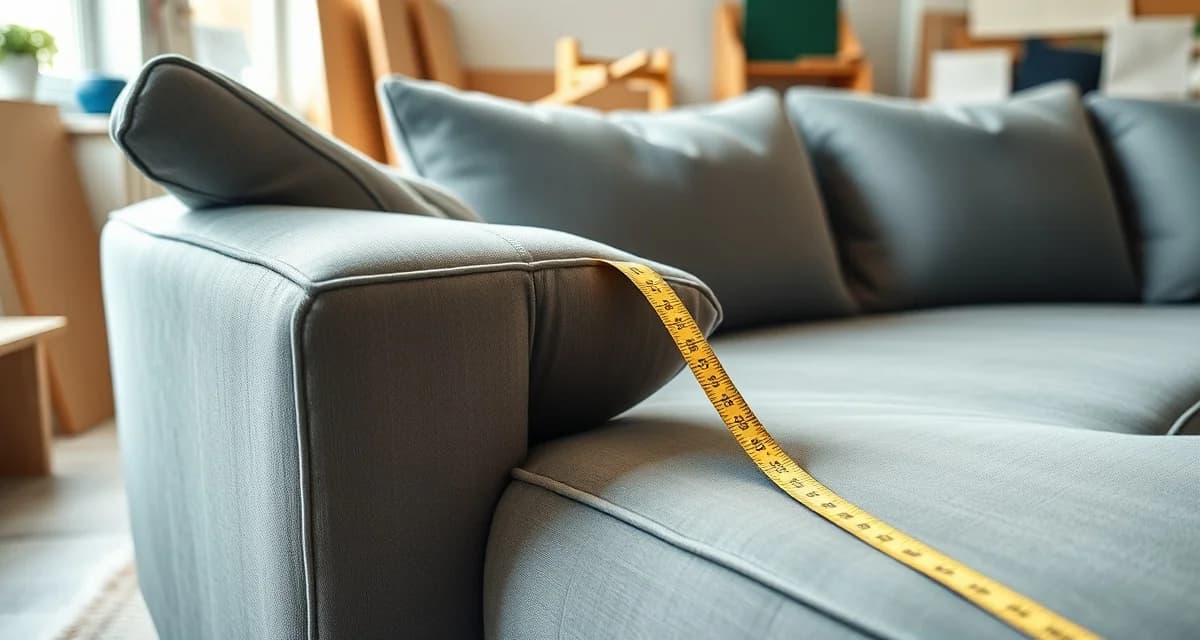
Sectional Reupholstery Yardage: How to Calculate Every Piece
Sectional yardage errors average $180 per job. That's the highest dollar-value calculation mistake in upholstery, and it happens because shops treat a sectional as a single piece rather than summing individual components.
A sectional is not one sofa. It's a collection of distinct furniture components that happen to connect. Calculate it that way and your yardage will be accurate. Try to eyeball it as a whole unit and you'll be short.
TL;DR
- Sectional yardage depends on fabric width, construction details, pattern repeat, and nap direction.
- Plain 54-inch fabric requires a baseline calculation plus 10-15% waste allowance for a standard sectional job.
- Patterned fabric adds 20-35% to base yardage depending on repeat size and the number of cutting zones that must align.
- Directional fabrics add 15-25% over plain fabric because layout optimization is restricted by nap direction.
- Always verify fabric width before finalizing yardage; COM fabric often comes in non-standard widths.
- Calculating yardage at the quote stage, not mid-job, eliminates reorders and protects your profit margin.
The Right Framework: Component-by-Component
The first step is identifying the individual components of the sectional. Most sectionals consist of some combination of:
- Corner section: the unit that turns the angle (L or U)
- Left arm section: typically a loveseat or sofa section with a left arm only
- Right arm section: a section with a right arm only
- Armless section: a section with no arms, placed in the middle
- Ottoman: sometimes attached, sometimes separate
- Chaise section: an extended section that may double as the end piece
Label each section before measuring. Give them names or numbers and record them consistently. A modular breakdown that shows how to label and measure each sectional piece before calculating total yardage is how professional shops approach this, not a single "sectional" figure.
L-Shape vs U-Shape: Yardage Comparison
| Configuration | Approximate Yardage (54" solid fabric) |
|---|---|
| Small L-shape (2 sections + corner) | 18-22 yards |
| Standard L-shape (3 sections + corner) | 22-28 yards |
| U-shape (4 sections + 2 corners) | 28-35 yards |
| Modular (6+ sections) | 32-45+ yards |
How much does an L-shaped sectional differ from a U-shape? A U-shape typically needs 8-12 more yards than an L-shape because it adds two additional seating sections and an additional corner unit.
These are baseline figures for solid, non-directional fabric. Pattern repeats compound across sectionals in the same way they compound across sofa pieces, calculate the repeat waste as a percentage of your total sectional yardage, not just the longest section.
Measuring Each Section
For each section of the sectional, measure and record:
Arms (each): inside arm height × inside arm width; outside arm height × outside arm width; arm front (boxing panel)
Back: inside back height × width; outside back height × width
Seat: seat depth × seat width; deck fabric (under cushions)
Cushions: for each cushion, top and bottom panels, boxing strips, zipper panels
Corner section: this is the most complex piece. The corner has no traditional inside arm, it's a curved or angled transition. Measure the entire inside face and outside face of the corner separately. Corner sections typically add 3-5 yards on their own.
The Corner Section: Most Underestimated Piece
Corner sections are where sectional yardage calculations consistently fall short. People calculate the arms and seats and forget that the corner is essentially an entirely upholstered transition piece with its own inside face, outside face, and top surface.
On an L-shaped sectional, the corner section can require 3-5 yards of fabric on its own. On a U-shape with two corners, that's 6-10 yards that shops frequently miss.
Use the fabric yardage calculator sectional to input each section separately, including corners with their correct dimensions. Never combine sections, the calculator needs each component as its own input.
Pattern Repeats on Sectionals
Sectionals are long, which means pattern repeats add up considerably. A 13-inch repeat that adds 3 yards to a sofa can add 8-12 yards to a full U-shape sectional.
The pattern also needs to run continuously across joined sections, the pattern on the left arm section should flow visually into the armless middle section. This continuous alignment across sections requires careful planning of where each section starts in the pattern repeat.
For any sectional with a repeat over 9 inches, add 20-30% to the base yardage figure specifically for pattern repeat waste.
What Fabric Works Best for Large Sectionals?
The sectional reupholstery guide covers fabric choice in detail, but the short answer: performance fabrics (solution-dyed synthetics, performance weaves) make the most sense for large sectionals used as primary seating. They're cleanable, durable, and typically come in 54-60 inch widths that help keep yardage down on large pieces.
Avoid directional fabrics like velvet or chenille on sectionals unless you're confident in your ability to maintain consistent direction across potentially 6-8 separate section-cutting sessions. Any inconsistency shows where sections join.
FAQ
How do I calculate yardage for a U-shaped sectional?
Label each section of the U-shape: typically two arm sections, two or three armless sections, and two corner sections. Calculate yardage for each section separately as you would for an independent sofa or loveseat section. Sum all section yardages, then add the corner yardage (3-5 yards per corner). Add pattern repeat waste on top if applicable. For most U-shape sectionals, expect 28-35 yards of solid fabric.
How much does an L-shaped sectional yardage differ from a U-shape?
A U-shape sectional typically needs 8-12 more yards than a comparable L-shape. The U-shape adds an additional arm section and a second corner unit. The second corner alone adds 3-5 yards. If you're quoting both L-shape and U-shape options to a client, the fabric difference is roughly equivalent to 1-2 additional sofa cushions per added section.
What is the best fabric for a large sectional?
Performance fabrics, solution-dyed acrylics, performance polyester weaves, and treated microfibers, are the most practical choice for large sectionals used as primary seating. They're durable, stain-resistant, and typically available in widths that make sectional cutting efficient. Avoid velvet and directional fabrics on sectionals with many sections, as maintaining consistent pile or nap direction across all cutting sessions is difficult. For formal settings, a tight-weave cotton-polyester blend can look elegant while being practical.
What is the biggest factor in yardage variation for this piece?
Pattern repeat is the biggest source of yardage variation. On plain fabric, the baseline calculation plus a 10-15% waste buffer is usually sufficient. Add a 13-inch pattern repeat and you may need 15-20% more. Add a 27-inch pattern repeat and the additional yardage can be 25-35% over the plain fabric calculation. Nap direction is the second-largest factor, typically adding 15-25% over plain fabric because layout optimization is restricted.
Sources
- National Upholstery Association
- Association of Master Upholsterers and Soft Furnishers (AMUSF)
- Upholstered Furniture Action Council (UFAC)
- Furniture Today (trade publication)
Get Started with StitchDesk
Getting yardage right on sectional jobs is the difference between a profitable quote and an expensive reorder. StitchDesk's fabric calculator accounts for all the variables that cause errors: pattern repeat by zone, nap direction, fabric width, and cushion configuration. Start a free trial and see how accurate yardage calculation affects your bottom line.